 MartinShields
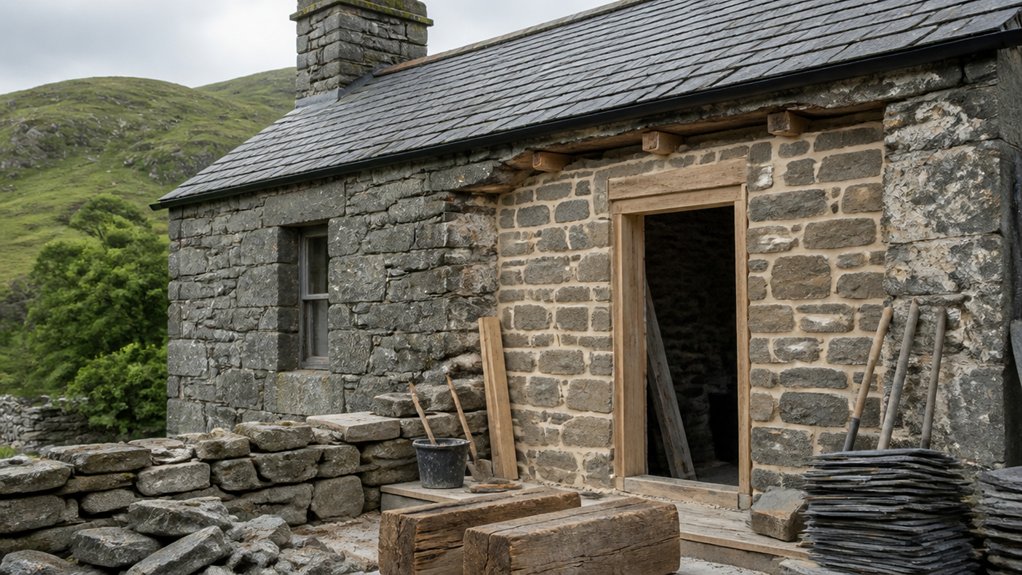
Is it true that renovating a Welsh stone cottage means choosing between modern comfort and preserving its character? You don’t have to sacrifice either, but you do need to understand the building before changing it. Start by evaluating the stonework, checking planning and building rules, and setting a realistic budget. Then choose suitable local materials and craftspeople. Damp, insulation, wiring, plumbing, and heating each demand careful decisions—and one early mistake can undermine the whole project.
Key Takeaways
- Survey the cottage inside and out, documenting structural movement, roof condition, damp, ventilation, and existing materials before starting work.
- Check planning requirements, listed-building status, and building regulations; obtain written approvals before making changes.
- Fix leaks, drainage, and other moisture sources first; use breathable lime finishes and avoid sealing historic stone with cement.
- Choose compatible local or reclaimed stone, slate, and traditional materials, and hire tradespeople experienced in Welsh cottage restoration.
- Once the structure is sound and dry, consider breathable insulation, then track costs and maintain the cottage regularly.
Assess Your Welsh Stone Cottage
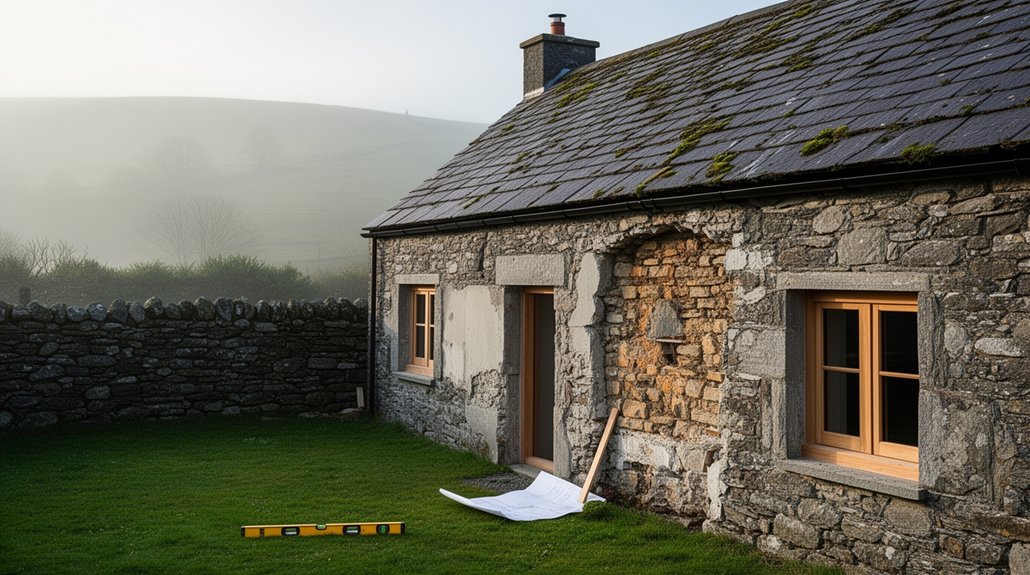
Before planning changes, assess your cottage’s condition and how it was built. Walk around the Cottage exterior and note cracks, loose stone, damaged pointing, blocked gutters, and signs of damp. Don’t assume every irregularity signals structural failure; older Welsh cottages often show movement that has stabilised.
Ask a conservation-minded surveyor to distinguish historic settlement from active problems and identify suitable repairs.
Inside, check floors, roof timbers, chimneys, windows, and ventilation. Look for musty smells, peeling finishes, soft timber, and salt deposits, which can reveal moisture sources. Record what you find with photographs and measurements before moving or removing anything.
Identify original features worth protecting, such as slate floors, beams, fireplaces, and lime plaster. These details create interior charm, but they also affect how your cottage should be repaired.
Base your renovation priorities on evidence, not guesswork.
Check Planning Permission and Building Rules
Before you alter your cottage, check whether your plans need planning permission, especially if they change its appearance or use.
If it’s listed, you’ll also need listed building consent for work that affects its character.
Confirm your plans meet building regulations, which cover safety, energy efficiency, and structural work.
Planning Permission Basics
What you can change in a Welsh stone cottage depends on its location, heritage status and the work involved. Before you commit to designs or a builder, contact your local planning authority. Ask whether your proposal needs planning permission and check the council’s local development plan, conservation area guidance and any relevant conditions.
You’ll usually need permission for major changes, such as extensions, new access, or alterations that affect the cottage’s exterior. Some minor works may fall under permitted development rights, but these rights can be restricted, especially in protected areas. Don’t assume that traditional materials or a small project make approval unnecessary.
Explain how your plans respect heritage conservation and address environmental impact. Submit clear drawings and supporting details, and allow time for review.
Get written advice before work starts; unauthorised changes can lead to enforcement action and costly reversals.
Listed Building Consent
If your Welsh stone cottage is listed, you’ll need listed building consent for work that could affect its character, inside or out—even if the changes seem minor. Contact your local planning authority before you start, and confirm the building’s listed status and grade.
Consent may cover repairs, replacing windows, altering stonework, removing internal features, or changing the roof. Don’t assume planning permission alone is enough: listed building consent is a separate approval with its own legal requirements.
Prepare clear plans, photographs, and a heritage statement explaining the cottage’s significance and how your proposals protect it. Your authority may recommend a conservation officer or specialist architect to guide the application.
Use appropriate materials and methods, and wait for written consent before commissioning work. Unauthorised alterations can lead to prosecution and costly reinstatement, so check first to support heritage preservation.
Building Regulations Compliance
Even when your cottage isn’t listed, renovation work may need to comply with building regulations, which set standards for safety, energy efficiency and structural performance. Before you begin, ask your local authority’s building control team whether your plans need approval. You can use local authority or approved inspector services, but confirm the route early to avoid delays.
Rules may apply when you alter a roof, install a bathroom, replace windows, or change heating and electrics. For a stone cottage, don’t assume modern materials suit old walls. Specify breathable insulation and lime-based finishes where appropriate; trapping moisture can damage masonry and undermine historic preservation.
Keep drawings, product details and inspection records. Arrange required checks at key stages, especially for structural work and services. Discuss energy upgrades with a conservation professional to balance compliance, comfort and environmental impact without harming the building’s character.
Plan Your Cottage Renovation Budget
Before work begins, set a realistic budget that accounts for the cottage’s age, condition, and the specialist skills traditional repairs may require. Start with a detailed survey, then list essential repairs, planned improvements, and professional fees.
Cost estimation works best when you price each task separately and confirm what your quotations include, such as access equipment, waste removal, and taxes. Check whether your plans trigger additional design or approval costs, especially after your Building Regulations review.
Set priorities before spending: address structural defects, water ingress, and unsafe services first; defer cosmetic upgrades if funds tighten.
Include contingency planning, keeping a reserve of around 15–20 percent for hidden problems behind old finishes or within walls. Don’t commit your full budget to the initial scope.
Track invoices and changes as work progresses, and review your remaining funds regularly. This gives you room to make sound decisions without compromising essential repairs.
Choose Local Craftspeople and Materials
Choose local tradespeople who understand Welsh stonework and can show you relevant projects.
Source regional stone where possible, and match it carefully to your cottage’s existing masonry.
Use traditional materials that suit the building and allow its walls to breathe.
Find Skilled Local Tradespeople
When renovating a Welsh stone cottage, hire local tradespeople who understand traditional stonework, lime mortar, and regional building methods. Ask potential builders, masons, plasterers, and joiners for references from comparable projects. Visit completed work where possible, and check how carefully they handled joints, finishes, and details. Strong craftsmanship quality protects the building and helps prevent costly repairs.
Use local trade networks to find specialists with proven experience, but verify qualifications, insurance, and recent references yourself. Discuss the scope, materials, sequence, and responsibilities before work begins. Request itemised quotes, realistic schedules, and written terms; clarify who’ll coordinate inspections and manage unexpected discoveries.
Choose tradespeople who explain their methods clearly, respect the cottage’s character, and raise concerns early. Agree on regular site updates, payment stages, and a process for approving changes. A capable local team can guide decisions and deliver durable, compatible repairs.
Source Regional Stone
Once you’ve assembled a skilled local team, work with them to source stone that suits the cottage’s geology, appearance, and repair needs.
Ask your mason to identify the existing stone by its colour, grain, and weathering, then compare it with available supplies from nearby quarries and reclamation yards. These stone sourcing methods help you find a close match without relying on guesswork.
Check that each source can provide enough material for the planned work, and inspect samples in natural light before ordering. Your builder may know which local suppliers have consistent stock and reliable delivery.
Prioritise regional craftsmanship: experienced quarry workers and stone masons understand how local stone behaves and can advise on suitable sizes and finishes.
Confirm lead times early, since limited supplies can affect your schedule and budget.
Choose Traditional Materials
To preserve a cottage’s character, choose traditional materials that suit its age and local building methods. Match lime mortar to the original stonework; hard cement can trap moisture and damage soft masonry. Use breathable lime plaster and natural finishes rather than impermeable coatings, which can cause damp problems.
For roofs, source slate that complements the existing covering and meets local planning requirements.
Ask local craftspeople to assess the building before you order materials. Their knowledge of regional techniques helps you avoid costly mismatches and repair details correctly. Look for proven Traditional craftsmanship, and check references from comparable projects.
Agree specifications, samples, costs, and timelines in writing. Salvage sound original fittings where practical, but don’t reuse damaged materials. This careful approach supports Heritage preservation while keeping repairs compatible, durable, and easier to maintain.
Find and Fix the Source of Damp
Before treating damp in a Welsh stone cottage, find out where the moisture is coming from. Check gutters, downpipes, roof valleys, and flashing for leaks. Then inspect pointing and stonework for cracks that let rain in.
Look outside for raised ground, blocked drains, or paving that slopes towards the walls. Inside, note where stains, salt deposits, mould, or musty smells appear; their pattern can help you trace the cause.
Fix defects before applying finishes. Clear gutters, repair leaks, lower ground that bridges the wall base, and repoint with a compatible lime mortar.
Don’t seal old stone with cement or install moisture barriers without expert advice; these can trap water and worsen decay.
Improve indoor ventilation by using extractor fans and opening windows when conditions allow. If damp persists, ask a conservation specialist to investigate before work continues.
Insulate Without Trapping Moisture
Because old stone walls need to release moisture, choose insulation that lets them breathe. Breathable insulation, such as wood fibre or sheep’s wool, can reduce heat loss while allowing water vapour to pass through.
Before you install it, confirm the walls are sound and the damp source has been fixed.
Avoid impermeable foam and foil-faced products on solid stone unless a specialist has designed the build-up. Moisture barriers can trap water inside the wall, encouraging decay and damaging finishes.
Instead, use compatible lime-based materials and follow a tested system suited to your cottage’s construction and exposure.
Insulate carefully around reveals and junctions, where gaps can cause cold spots and condensation.
Ask an experienced conservation professional to assess the wall and specify materials.
Don’t seal historic stone behind modern layers without checking how moisture will escape.
Upgrade Wiring, Plumbing and Heating
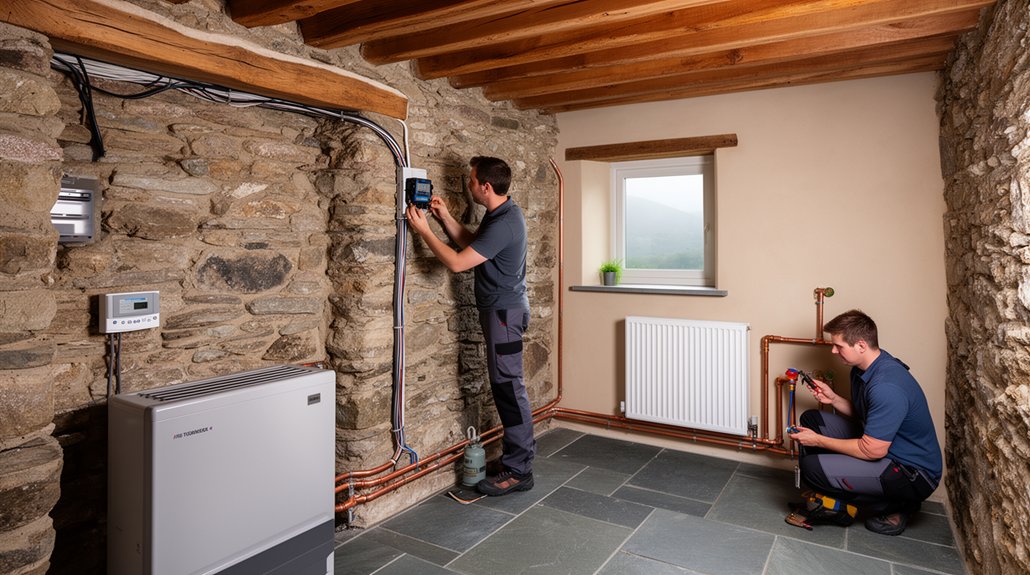
Plan electrical, plumbing and heating upgrades around the cottage’s structure, not the other way round. Before work begins, ask qualified tradespeople to inspect existing systems and map routes that avoid cutting through historic stonework.
Electrical safety comes first: replace outdated wiring, fit suitable protection at the consumer unit, and position sockets for modern use without chasing deep channels into walls.
For Plumbing upgrades, check pipe condition, water pressure and drainage before choosing new fixtures. Keep accessible pipe runs where possible, and insulate them against freezing in exposed spaces.
Select a heating system that suits the cottage’s layout and insulation level; oversized equipment wastes energy and may create uneven warmth. Your installer can compare options, including heat pumps and efficient boilers, then size controls and emitters correctly.
Coordinate trades early, document hidden services, and test every system before finishes go on.
Conclusion
Renovating a Welsh stone cottage takes patience, sound judgment and respect for its history. Assess the building carefully, secure the right permissions, and budget for skilled local craftspeople and suitable materials. Tackle damp at its source, then improve insulation, wiring, plumbing and heating without compromising the cottage’s breathability. Can you picture a warm, dry home where original stonework still tells its story? Make each decision with care, and you’ll create a durable, comfortable cottage that honours its past.