 MartinShields
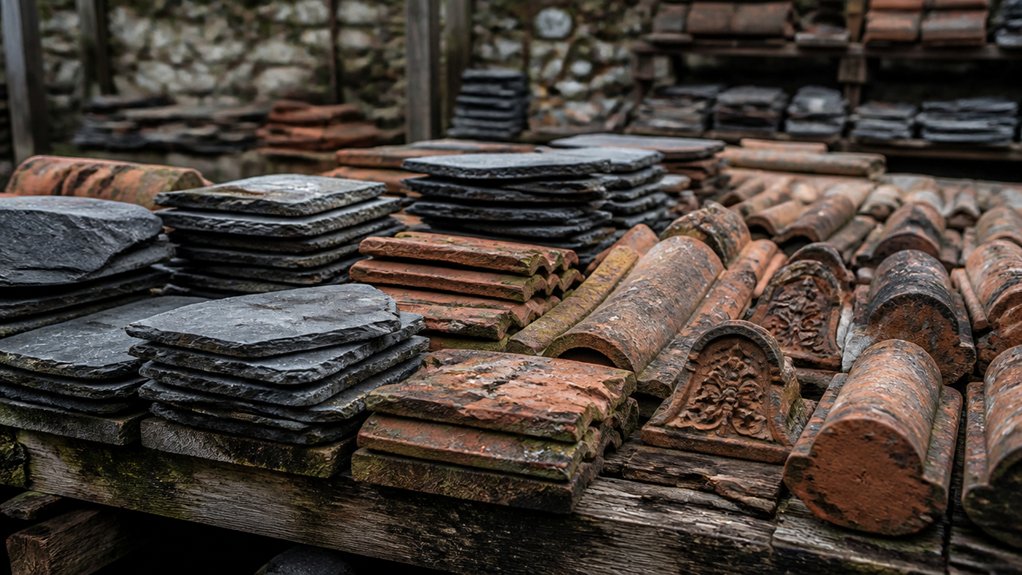
A sound slate or carved ridge finial can be a small piece of history with plenty of life left in it. If you’re planning a roof repair or restoration, reclaimed slates, tiles, and architectural features can preserve a traditional look and reduce waste—but only when they’re sound and suited to your roof. Age alone won’t tell you what’s worth saving. A careful inspection can reveal the difference.
Key Takeaways
- Reclaim sound slates, clay and concrete tiles, ridge caps, finials, and decorative features.
- Inspect every piece for cracks, chips, delamination, corrosion, warping, and worn or crumbling edges.
- Tap slates and tiles gently; a clear ring suggests soundness, while a dull sound may indicate weakness.
- Salvage architectural features carefully, photographing and marking their original positions for accurate reinstallation.
- Reuse materials only when they suit the roof’s pitch, exposure, and fixing method; age alone does not ensure performance.
Which Roofing Materials Are Worth Salvaging?
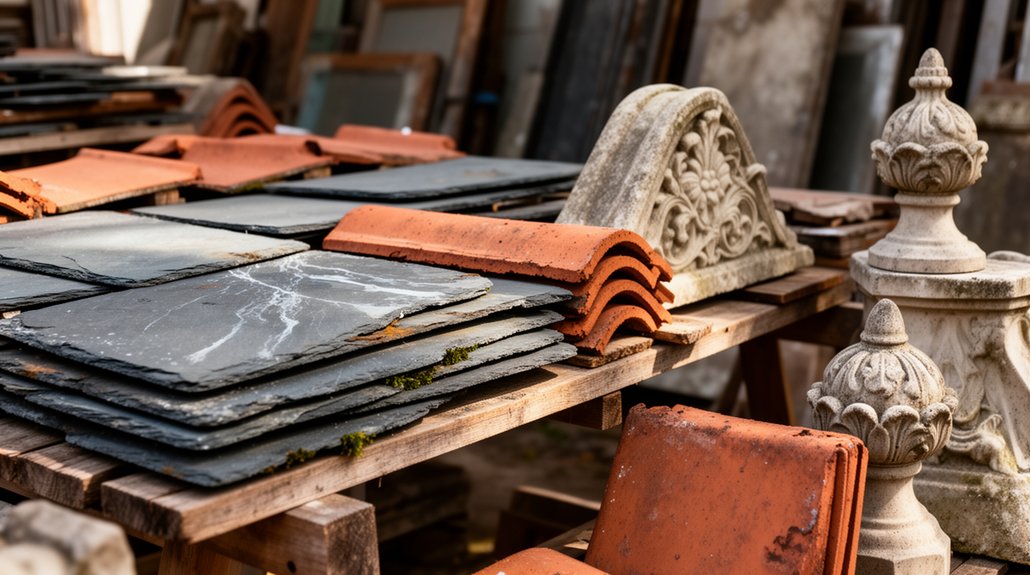
Not every roofing material is worth salvaging; prioritize durable products in good condition, such as slate, clay or concrete tiles, and some metal panels. These materials can serve again when you handle, sort, and store them carefully.
Slate often lasts for generations, while clay and concrete tiles suit many restoration and replacement projects. Metal panels may be reusable if their profiles and dimensions match your roof design.
You can also reclaim distinctive ridge caps, finials, and decorative tiles when they remain sound and fit the intended installation. Such features support historical preservation by retaining a building’s original character.
Before choosing reclaimed products, confirm that quantities, sizes, and specifications meet your project needs. Reused roofing can provide Eco friendly alternatives to new materials, but only when the products remain suitable for safe, reliable installation.
How Do You Check Roofing for Damage and Wear?
Inspect each roofing piece for cracks, chips, corrosion, and other visible damage.
Check for wear, loose fasteners, and signs of leaks, such as water stains or rot.
Don’t reuse materials that can’t provide reliable protection.
Inspect for Visible Damage
Before reusing reclaimed roofing materials, check each piece for cracks, splits, holes, warping, and missing or loose fasteners. Examine both sides in good light, and use gloves when handling sharp edges.
Look for chipped corners, delamination, corrosion, and impact marks that may signal weather related issues or rough removal. Check slate and tile for fractures around nail holes, where stress can cause failure during installation.
Inspect metal features for bent seams, punctures, and separated joints. Test questionable pieces gently; don’t force brittle materials or assume a surface mark is harmless.
Set aside damaged items, then assess whether a qualified roofer can repair them safely. Keep sound pieces separate from rejects, and record defects by type and location.
This careful sorting protects structural integrity and helps you salvage materials responsibly.
Check for Wear and Leaks
After sorting out visibly damaged pieces, check sound-looking roofing materials for wear that can compromise their performance. Examine each slate or tile for thinning, surface erosion, hairline cracks, and worn edges.
Look for softened or crumbling mortar, corroded fixings, and faded markings that may indicate prolonged exposure. A careful evaluation helps you distinguish durable salvage from pieces nearing failure.
For leak detection, inspect the underside for water stains, damp patches, mineral deposits, or daylight showing through joints. Check around nail holes, overlaps, and old flashing, where water often enters.
If you’re appraising materials still on a roof, don’t walk on fragile or uncertain areas; use binoculars or hire a roofer to inspect safely. Record defects and keep questionable pieces separate.
Reuse only materials that remain sound and can be installed securely.
What Should You Look for in Reclaimed Slate?
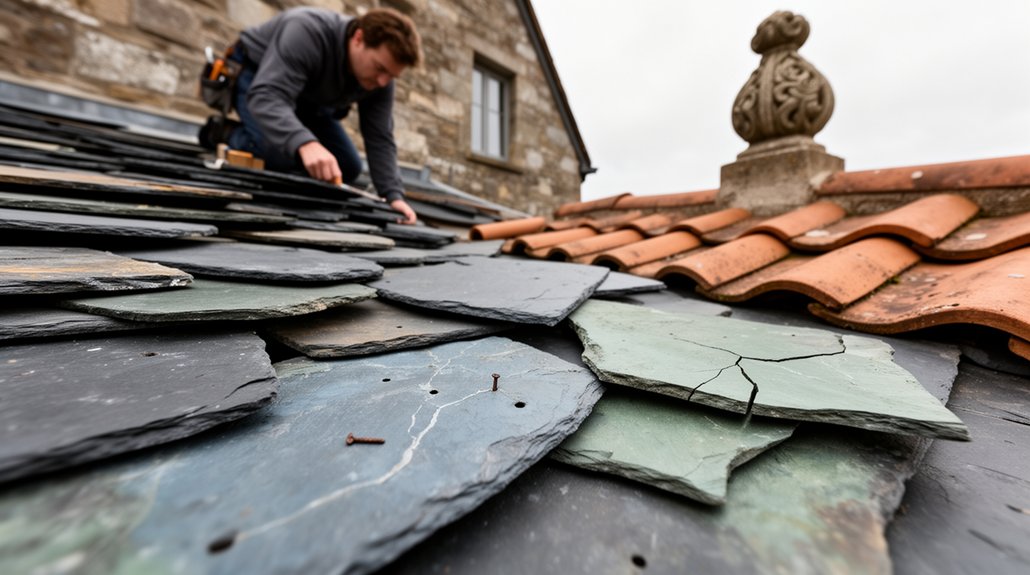
When choosing reclaimed slate, inspect each piece for cracks, delamination, and worn edges that could compromise performance.
Check that the slate’s size and thickness suit your roof’s existing layout.
Compare colors across the batch to achieve a consistent appearance.
Slate Condition
Sound reclaimed slate should be free of cracks, delamination, and severe edge damage. Check each piece in good light, looking for splits, flaky layers, soft spots, and corners that have broken away. Run your fingers over the surface; slate that sheds in thin sheets may not hold fasteners or shed water reliably.
Tap a sample gently: a clear ring often signals sound stone, while a dull response can indicate hidden fractures. Don’t rely on appearance alone. Ask how the slate was removed and stored, and reject pieces exposed to prolonged dampness or rough handling.
Sound material supports Slate durability and preserves aesthetic appeal, but even attractive slates can fail if they’re weakened. Set aside questionable pieces for closer inspection, and have a roofer assess the usable stock before installation.
Matching Size and Color
Matching reclaimed slate by size and color helps the finished roof fit properly and look consistent. Before buying, measure existing slates and check their length, width, thickness, and hole placement. Even small differences can complicate installation, expose gaps, or require extra cutting. Confirm size compatibility with your roof’s layout and the fixing method; ask your roofer to assess samples against the existing courses.
For color matching, compare several slates outdoors, where daylight reveals their true tones. Reclaimed batches may include subtle shifts, weathering, and mineral markings, so inspect the full range rather than choosing from one piece. Blend varied tones deliberately for a natural appearance, or select a closer match for a uniform repair.
Keep spare slates from the same batch for future maintenance, since later supplies may differ.
Which Clay and Concrete Tiles Can Be Reused?
Clay and concrete tiles can often be reused if they’re intact, free of cracks, and still fit securely together. Check each tile for chips, warping, surface flaking, and damaged fixing holes.
Tap clay tiles gently; a clear ring usually indicates sound material, while a dull response may signal hidden fractures. For concrete tiles, inspect for crumbling edges, exposed aggregate, or deep erosion that could weaken their hold.
Salvage only tiles that suit your roof’s profile and can be secured with compatible fixings. Clay tile restoration may include careful cleaning and replacing small quantities of matching units, but don’t reuse tiles that absorb water or shed their surface.
Concrete tile durability depends on sound edges and a stable body; discard units that feel soft or break under light handling. Have a roofer assess questionable batches before installation.
Which Ridge Tiles and Roof Features Are Worth Saving?
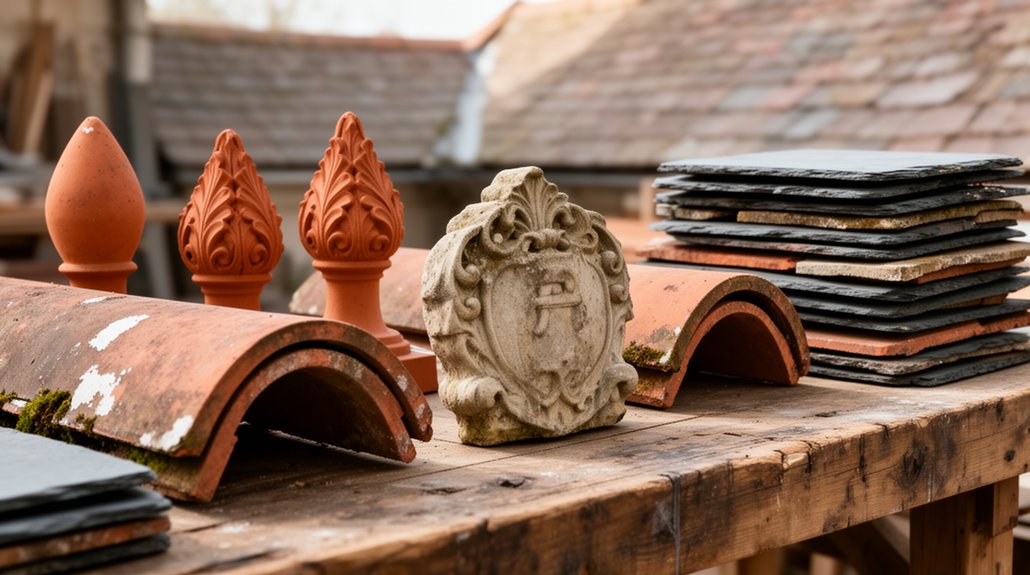
Ridge tiles and roof features are worth saving when they’re intact, weather-resistant, and compatible with the replacement roof. Inspect each piece for cracks, chips, loose joints, and signs of water penetration. Sound ridge tiles can often be reused, especially when they retain their shape and finish.
An ornamental ridge or decorative finials may also merit careful removal if they’re stable and retain their detailing.
Check how features attach before lifting them. Mortar-bedded pieces need controlled removal to avoid breakage; metal fixings may have corroded and require safe handling. Photograph their positions and mark components so you can preserve the original arrangement.
Set aside damaged pieces for assessment rather than assuming they’re unusable: a specialist may repair or replicate them. Don’t salvage elements with widespread fractures, severe erosion, or unsafe fixings; replacement is the safer choice.
Will Reclaimed Roofing Materials Fit Your Roof?
Even sound reclaimed tiles may not suit your roof. Check your existing covering’s material, dimensions, profile, weight, and fixing method before you commit. Roofing material compatibility matters: a tile’s shape must interlock correctly, while slate thickness and nail-hole positions must match your battens and fixings.
Mixing incompatible pieces can leave gaps, strain the roof structure, or undermine weather resistance.
Ask a qualified roofer to inspect your roof and compare samples with the existing covering. Confirm that your structure can carry the reclaimed material’s weight, especially if you’re replacing a lighter modern system with heavier slate or clay.
Reclaimed roofing durability depends on condition, not appearance alone; check for cracks, delamination, frost damage, and worn edges. Use sound, consistent pieces in suitable areas, and don’t assume age guarantees performance.
Your roofer can advise whether reclaimed materials will provide reliable coverage.
Where Can You Source and Store Salvaged Roofing?
You can source salvaged roofing from architectural salvage yards, specialist reclamation dealers, roofers, and carefully vetted online listings. These sourcing locations vary in stock, condition, and price, so compare options and ask about provenance, quantities, dimensions, and delivery.
A roofer may know of sound materials removed during a renovation, while a reclamation dealer can often help identify matching slates or tiles. Inspect pieces before purchase, and confirm that the batch suits your roof’s pitch, fixing method, and exposure.
Plan storage options before materials arrive. Keep slates and tiles on firm, level ground, stacked securely by type and size. Use pallets or racks to prevent contact with soil, and cover stacks loosely with a waterproof sheet that allows airflow.
Don’t overload floors or block access routes. Store fragile ridge pieces and architectural features separately, protected from impact and weather.
Conclusion
Reclaimed roofing can give a sound roof character without asking you to pay for every piece new. Choose slates, tiles, ridge caps, and finials that pass inspection; age isn’t a quality certificate, however charmingly weathered it looks. Check dimensions, fixings, and compatibility before you buy, then store each piece safely. Salvage what’s sound, reject what’s cracked, and document the details. Your roof deserves history, not a surprise leak with excellent provenance.