 MartinShields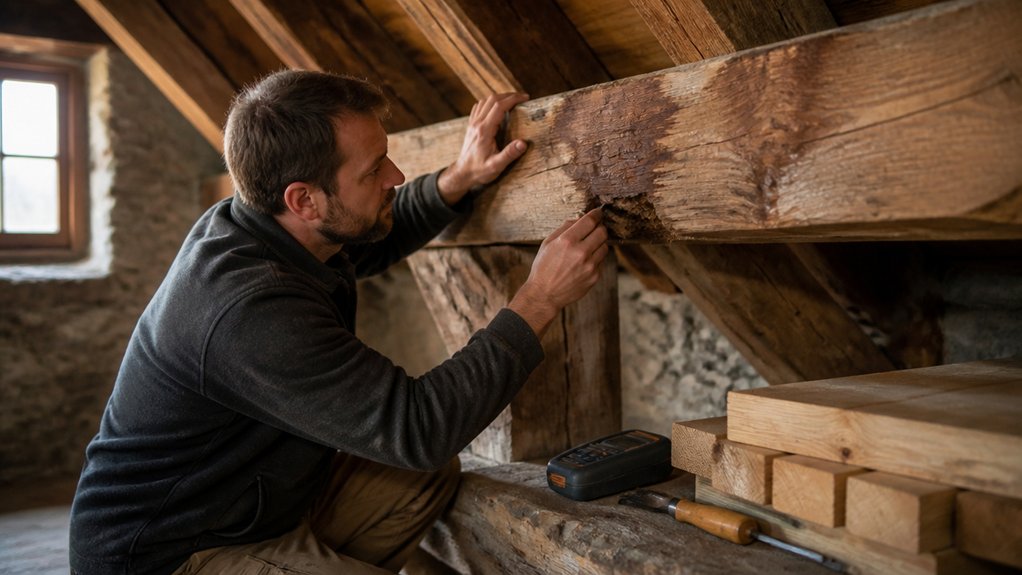
If you own an older property, don’t wait for a sagging floor or a visibly weakened beam to investigate timber damage. Soft spots, dark staining and unusual movement can point to decay, but the visible signs rarely reveal the full cause. You’ll need to find and fix the source of moisture before choosing a repair that preserves sound historic fabric. The right next step depends on how far the damage has spread—and whether the timber is still safe to support.
Key Takeaways
- Inspect lofts, basements, and damp areas regularly for stains, soft or crumbling wood, insect holes, fine dust, and sagging floors.
- Trace moisture to leaks, poor drainage, condensation, or blocked ventilation, and confirm the damage’s extent before repairing.
- Fix the moisture source first, then remove only decayed wood and splice, reinforce, or replace timbers with suitable materials.
- Support load-bearing members before repairs, use compatible fixings, and preserve sound historic timber wherever possible.
- Call a timber specialist for sagging beams, shifting joints, hidden decay, or damage near supports; monitor repairs for renewed movement or moisture.
Spot Early Signs of Structural Timber Damage
Check structural timbers regularly, especially in lofts, basements, and other damp or poorly ventilated areas. Look closely at joists, beams, roof timbers, and the ends of floorboards, where damage can remain hidden.
Watch for dark staining, softened wood, crumbling edges, or surfaces that feel spongy when pressed gently with a screwdriver. These signs may indicate Wood rot, even when the timber still appears sound from a distance.
Check for small holes, fine dust, or weakened sections that suggest Pest infestation. Listen for unusual movement or creaking, and note any floors that feel springy or uneven.
Compare suspicious areas with nearby timber, but don’t probe deeply or remove material. Photograph changes and record their locations.
If you find extensive damage or a weakened structural member, arrange a prompt professional inspection before attempting repairs.
Find What’s Causing Structural Timber Damage
Before repairing damaged timber, identify what caused it; otherwise, the problem may return. Check nearby plumbing, roofs, gutters, and ground levels for leaks or poor drainage. Look for condensation, blocked ventilation, and damp masonry that can keep timber wet.
Probe affected areas carefully and compare them with sound wood; softness, discoloration, or fungal growth can point to prolonged moisture exposure.
Also consider insect activity. Small exit holes, fine dust, or hollow-sounding timber may indicate wood-boring insects, while mud tubes can suggest termites. Don’t assume every mark is active damage: confirm the source and extent before acting.
If you can’t identify the cause, ask a qualified building professional to investigate.
Effective Moisture management means correcting leaks and improving airflow, not simply drying the surface. Good Wood preservation starts with removing conditions that invite decay or pests.
Choose How to Repair or Replace Structural Timbers
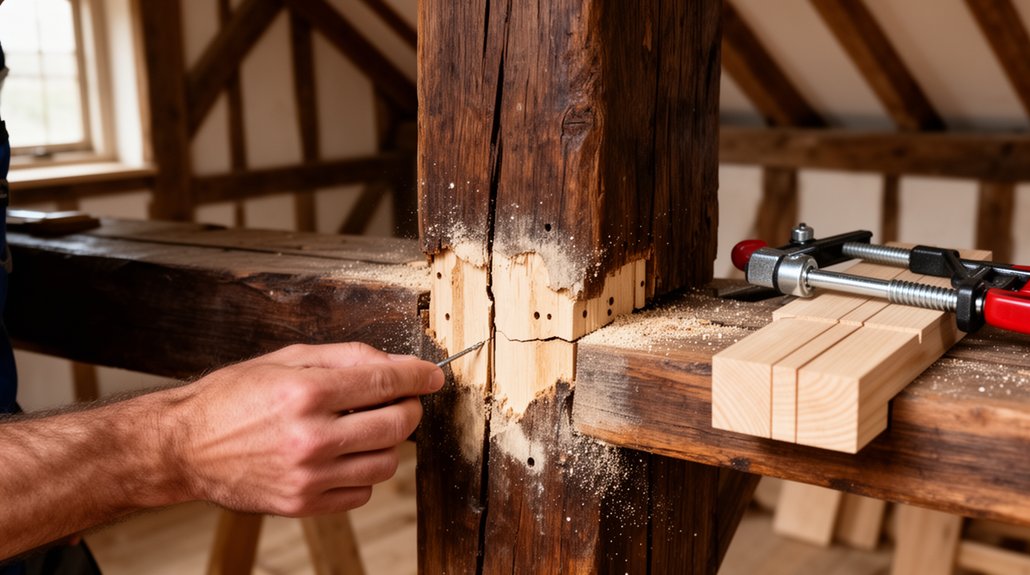
Once you’ve addressed the cause of the damage, choose a repair that restores the timber’s strength without removing more material than necessary. For local decay, you may cut back only to sound wood, then fit a carefully shaped splice of matching species and grain direction. Use compatible fixings and adhesives, and avoid trapping moisture.
If the member retains adequate capacity, reinforcement with a sister timber or discreet steel plate may preserve more original fabric than replacement. Where decay, splitting, or section loss compromises the whole member, replace it with timber of suitable strength, dimensions, and moisture content.
In Historical restoration, retain sound historic material wherever practical; Timber preservation depends on matching the repair to the damage, load, and building’s character. Document what you remove and why, and keep the repair accessible for future inspection.
Know When to Call a Structural Timber Specialist
Call a structural timber specialist when damage affects a load-bearing member, spreads beyond a small area, or leaves you unsure how much sound wood remains.
You should also seek expert advice if a beam sags, a joint shifts, or decay appears near a post base or wall connection. These signs can point to hidden deterioration that a surface check won’t reveal.
A specialist can assess the timber’s condition, identify likely causes, and explain whether repair or replacement makes sense.
In older properties, experience with Historic preservation matters: inappropriate work can remove original fabric or undermine a building’s character.
Ask about the professional’s experience with timber conservation, similar structures, and documented inspections.
If you notice sudden movement or worsening cracks, arrange an assessment promptly rather than relying on guesswork or cosmetic fixes.
Repair Structural Timbers Safely
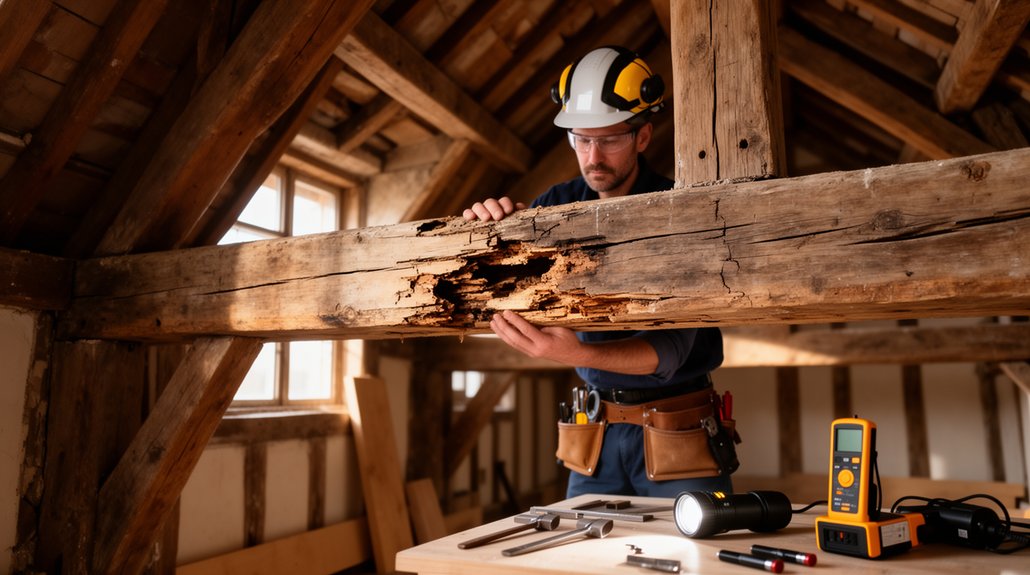
When a structural timber needs repair, stabilise the area and follow a method suited to the damage and the building. Don’t remove a load-bearing member until you’ve installed suitable temporary supports and confirmed the load path. If you’re unsure, bring in a structural timber specialist before work begins.
Choose repairs that retain sound historic fabric where practical. You might splice in matching timber, reinforce a section, or replace material that’s beyond repair. Use compatible fixings and treatments, and don’t conceal decay before you’ve found its cause.
Moisture management matters: fix leaks, improve ventilation, and let timber dry before closing the structure. Wood preservation treatments can help, but they won’t solve persistent damp or poor detailing.
Wear appropriate protective equipment, control dust, and check for hazardous coatings or contaminants. Inspect the repair regularly so you can catch movement, renewed moisture, or decay early.
Conclusion
Act early when you spot soft wood, dark stains, or movement; a small defect can become a mountain of trouble if ignored. Find and fix the source of damp before repairing the timber, or decay may return. Choose a repair that preserves sound historic fabric, and don’t guess when structural safety is uncertain. Dry the area thoroughly, use compatible materials, and arrange regular inspections. With careful work and expert advice when needed, you can protect your property for years to come.