 MartinShields
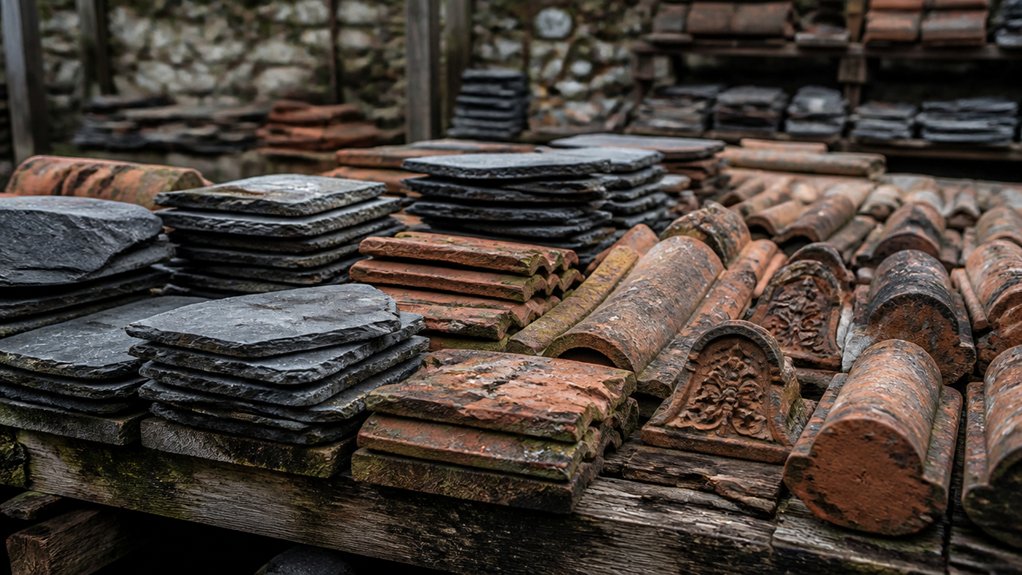
A reclaimed brick can carry the imprint of an old building into your home, while giving new resources a chance to stay in the ground. When you choose salvaged timber, bricks, or fixtures, you can reduce demand for newly made materials and keep usable items out of landfills. These choices can also add character and may lower project costs, but only if you know what to check before buying.
Key Takeaways
- Reclaimed materials reduce demand for new resources and keep usable building components out of landfills.
- Reusing materials can lower energy use, emissions, and environmental damage from extraction and manufacturing.
- Weathered timber, exposed brick, and salvaged details add texture, history, and distinctive character to renovations.
- Reclaimed materials can be cost-effective when purchase, inspection, repairs, transport, and installation are considered together.
- Careful inspections, hazard testing, and professional assessments help ensure reclaimed materials are safe and suitable for their intended use.
Why Choose Reclaimed Materials for a Renovation?
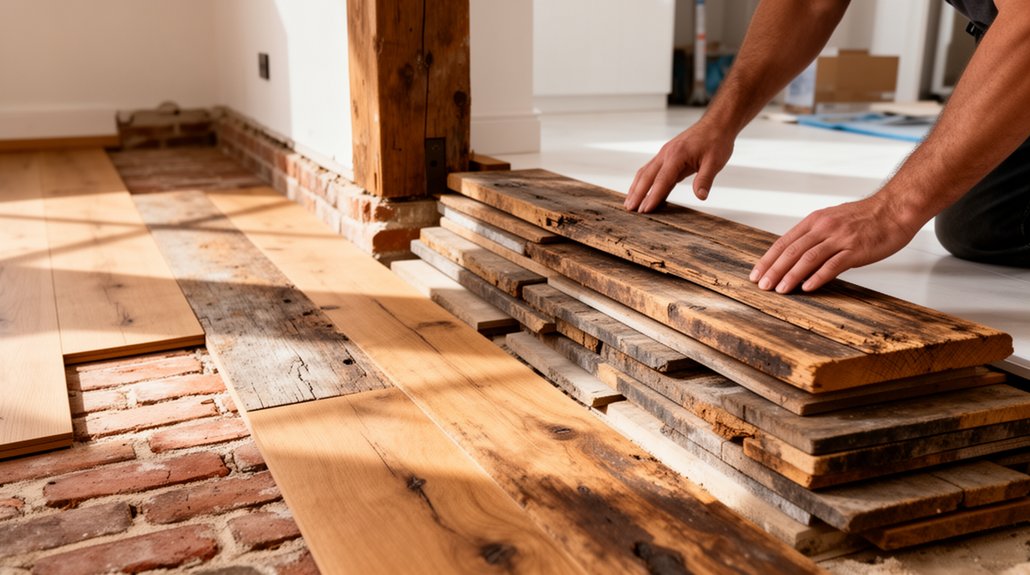
When you choose reclaimed materials for a renovation, you reduce demand for new resources and keep usable materials out of landfills. You also help limit the energy use, emissions, and extraction impacts associated with manufacturing new products.
These Eco friendly alternatives can support a lower-impact project without requiring you to compromise on performance. Assess each material’s condition, dimensions, and intended use before buying, and check for hazards such as lead paint or asbestos. Ask suppliers about sourcing, treatment, and any needed testing.
Reclaimed options can also be Cost effective solutions, especially when you compare purchase and preparation costs with the price of new materials. Factor in transport, repairs, and installation to judge true value.
With careful selection, you can meet project needs, reduce waste, and make informed choices that support sustainability.
How Can Timber, Bricks, and Fixtures Add Character?
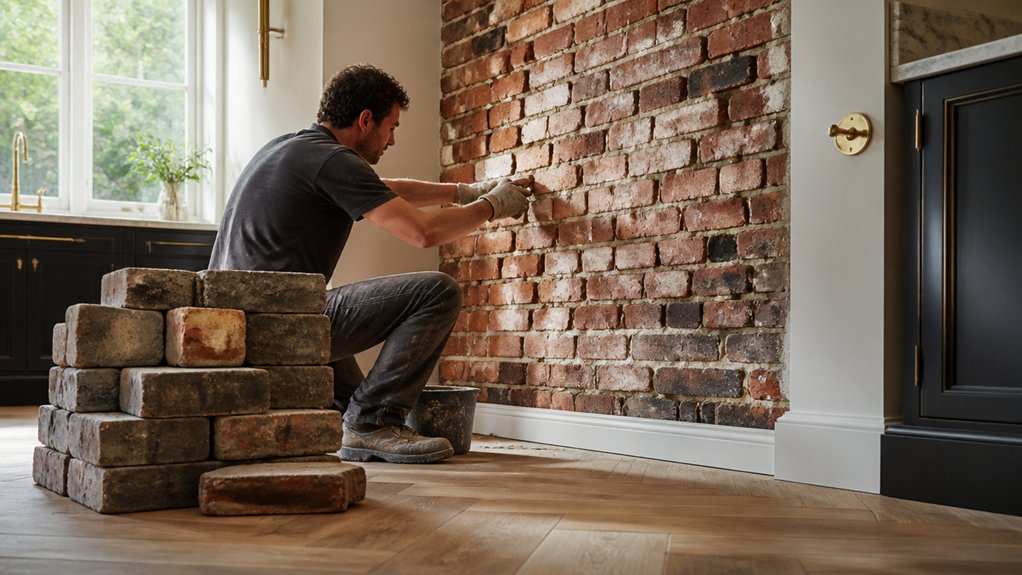
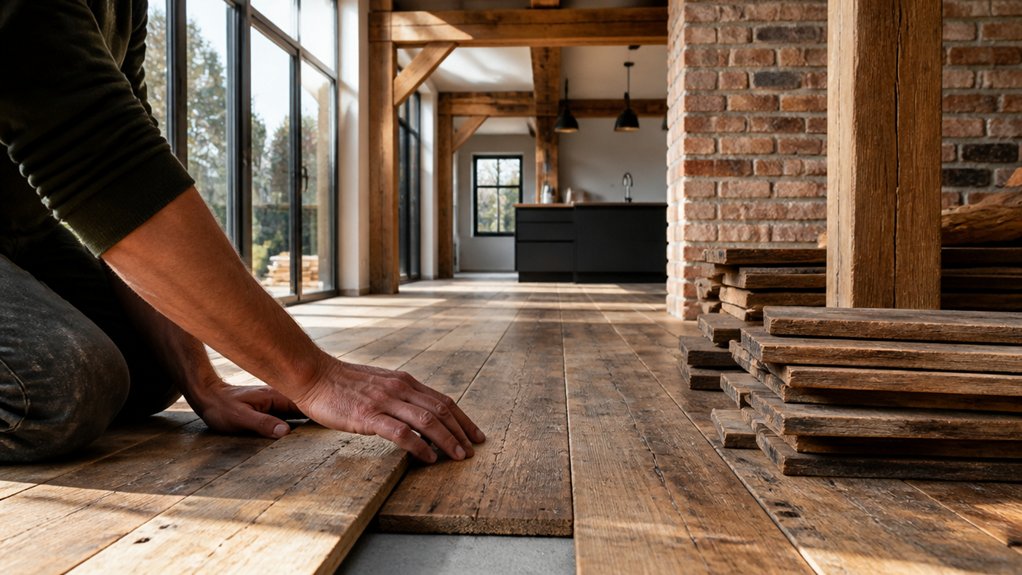
Reclaimed timber, bricks, and fixtures bring visible history and texture to a renovation, giving rooms a character new materials may lack. You can use weathered beams for warmth, exposed brick to add depth, or salvaged doors and hardware as distinctive focal points. Their Vintage charm helps you create a home that feels personal rather than uniform, while Unique textures add visual interest without relying on newly manufactured finishes.
Choose pieces that support your design and serve a clear purpose. A reclaimed timber mantel can anchor a living room, while old brick can define a kitchen wall or fireplace surround. Salvaged lighting, handles, and sinks can connect different spaces through shared details.
What Should You Check Before Buying Reclaimed Materials?
Before buying reclaimed materials, inspect their condition, dimensions, and history to make sure they’re safe and suitable for your renovation. Look for cracks, warping, corrosion, rot, and missing parts, and ask sellers about previous use, treatments, and storage.
Confirm measurements, quantities, and compatibility with your plans; reclaimed stock often varies, so don’t assume you can replace a shortfall later. Request clear photos or inspect items in person, and get written details about grading, returns, and delivery.
Check whether old paint, coatings, or finishes have been identified, and seek documentation when a material’s origin is uncertain.
Compare prices with new alternatives, including cleaning, transport, and preparation costs. Choosing sound, locally sourced pieces can reduce Environmental impact while adding Vintage charm.
Buy only what your project can use.
How Can You Use Reclaimed Materials Safely?
To use reclaimed materials safely, match each item to its intended purpose and check for hazards before installation. Inspect wood for rot, pests, and old coatings; test suspect paint for lead and arrange professional removal when needed. Check metal for corrosion, and confirm salvaged glass has no cracks or sharp edges. Don’t use materials with unknown structural strength for load-bearing work; ask a qualified professional to assess them.
Follow safety precautions during cleaning and preparation: wear gloves, eye protection, and a suitable respirator, and work in a ventilated area. Remove nails carefully, and avoid sanding hazardous finishes.
Use appropriate upcycling techniques to adapt sound materials without weakening them. Clean and seal surfaces with suitable, low-toxicity products. Keep records of material sources and treatments so you can make informed choices and maintain a safer, lower-waste renovation.
Conclusion
When you choose reclaimed materials, you conserve resources, reduce waste, and give your renovation a story that new products can’t match. Weathered timber, salvaged bricks, and vintage fixtures can bring lasting character while supporting a more sustainable home. Check each item’s condition, suitability, and safety before buying, and factor in transport and installation costs. With careful planning, you can turn yesterday’s materials into tomorrow’s foundation—beautifully, responsibly, and often economically. Your choices make every renovation count.