 MartinShields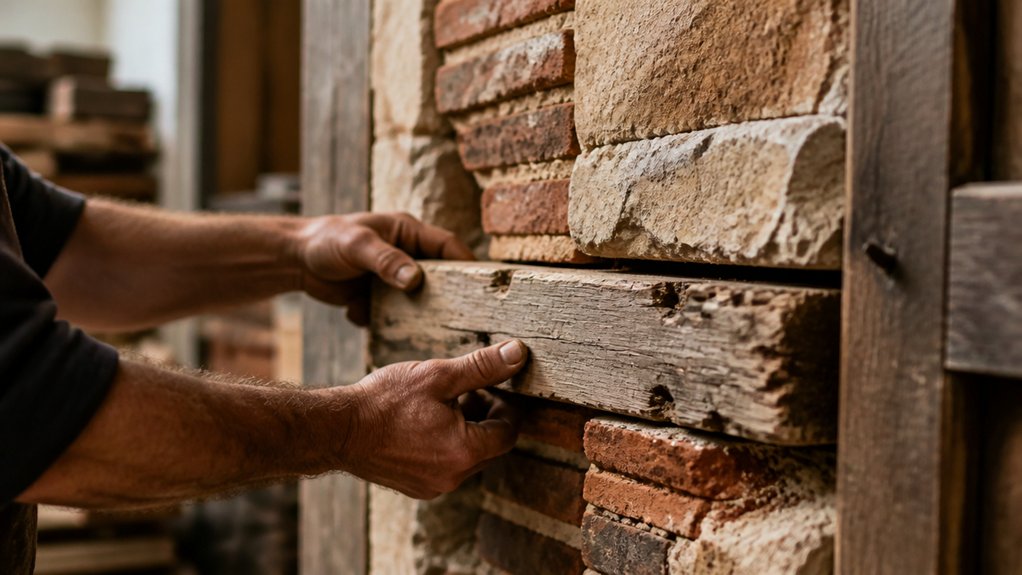
Reclaimed timber, brick, and stone aren’t just old materials with surface character; they can offer reliable clues to how a place was built and used. When you know what to look for, tool marks, maker’s stamps, mortar traces, and patterns of wear can help you assess their age and origin. Each material preserves different evidence, and one overlooked detail can change what you think you know about its past.
Key Takeaways
- Reclaimed timber, brick, and stone carry traces of their original buildings, uses, and communities.
- Tool marks, joints, maker’s stamps, and firing variations can reveal how and when materials were made.
- Patina, weathering, soot, and wear patterns offer clues to exposure, repeated use, and later alterations.
- Provenance—where materials came from and how they were recovered—helps establish authenticity and historical context.
- Careful inspection can uncover their stories while confirming reclaimed materials are safe and suitable for modern reuse.
What Makes Reclaimed Materials Historic?

Reclaimed timber, brick, and stone are historic because they come from older buildings, structures, or landscapes and retain evidence of their original use. When you examine a beam, you may find hand-hewn marks, old tool cuts, or joints shaped for a specific frame.
Brick can show variations in firing, mortar traces, and wear from decades of exposure. Stone may preserve chisel marks, weathering, or dimensions tied to earlier construction methods.
These details give materials Architectural authenticity: they reveal how people built, worked, and adapted spaces in a particular period. You can also recognize Cultural significance in materials associated with local traditions, landmark structures, or community memory.
Age alone doesn’t make a piece historic; its physical evidence, documented context, and connection to human use help establish its value. Use those clues to assess its character and suitability for a project.
Where Do Reclaimed Materials Come From?
When older buildings come down or undergo renovation, their usable materials may be salvaged rather than discarded. You’ll find reclaimed timber, brick, and stone from barns, factories, warehouses, homes, and public buildings. Demolition contractors, specialist salvage firms, and property owners often recover these materials before machines begin clearing a site.
Renovation projects can also yield doors, flooring, beams, and masonry removed during careful upgrades.
You can source reclaimed materials through architectural salvage yards, reuse centers, demolition companies, and reputable online dealers. Ask where each lot came from, how workers removed it, and whether it’s been cleaned or graded.
Sustainable sourcing depends on responsible recovery, clear documentation, and suitable transport—not simply buying old stock. When you choose materials from local projects, you may support Heritage preservation while reducing demand for newly manufactured products.
Check quantities, condition, and building-code requirements before purchase.
How Does Reclaimed Timber Reveal Its Past?
You can read a timber’s growth rings to see how quickly the tree grew and how conditions changed over time.
Look for nail holes, saw marks, and worn edges to identify how the wood was cut and used. These clues help you judge each board’s character and suitability for reuse.
Grain and Growth Rings
A timber’s grain and growth rings can reveal how it grew and what it endured before reuse. When you inspect the end grain, count the rings to estimate age, but remember that growth rates vary by species and climate.
Narrow rings often indicate slower growth; wider rings may reflect favorable conditions, though neither pattern tells the whole story. Look for eccentric rings, which can suggest a tree grew on a slope or responded to prevailing wind.
Changes in ring spacing may also point to drought, competition, or other stress. Examine the grain’s direction and figure alongside the growth pattern: these details affect stability, machining, and the finished appearance.
Wood texture can help you identify species, but compare several features rather than relying on one clue. You’ll make better choices when you assess the board as a whole.
Marks of Past Use
Beyond grain and growth rings, reclaimed timber carries clues in the marks left by work and wear. You can read nail holes, saw cuts, mortises, and tool marks to infer how a beam was milled, joined, or reused.
Dark patches may show where iron fittings sat; shallow grooves can reveal repeated handling or former flooring. Check each mark before cleaning: aggressive sanding can erase evidence and reduce the timber’s character.
Restoration techniques should stabilize damaged areas while preserving useful traces, using compatible fillers and finishes rather than disguising every blemish.
Preservation challenges include hidden metal, insect damage, moisture, and uneven wear. Inspect with a magnet, probe soft spots, and measure moisture before installation.
When you document these clues, you can make informed choices about repair, placement, and the timber’s next use.
What Can Old Bricks Tell You?
Old bricks can reveal how makers shaped, fired, and finished them. Look for maker’s marks, stamps, and other impressions that may identify a brickworks or production method.
Brick size, color, texture, and wear can also help you estimate age and origin.
Brickmaking Techniques
Brickmaking methods leave clues in a brick’s color, texture, shape, and surface. When you assess reclaimed brick, start with its clay composition. Local soils often produced distinct hues, from buff and cream to deep red, while iron content could create darker tones. Uneven color may reflect variable clay or inconsistent kiln heat, not necessarily damage.
Next, examine the faces and edges. A rough, sandy surface can indicate hand molding, while regular dimensions and smoother faces often point to machine production. Slight variations in size may suggest older, less standardized methods. Look for warped faces, rounded corners, or fused patches; these can reveal how bricks sat in the kiln and the firing techniques used.
These details help you match replacements and judge durability. Compare several bricks together, since one piece rarely tells the whole story.
Marks And Makers
A maker’s mark can turn a reclaimed brick into a clue about where and when it was made. Look for initials, names, symbols, or numbers pressed into the face, frog, or edge. You may find a maker’s surname, a brickworks logo, or a municipal stamp; compare clear examples with local archives, trade directories, and museum collections before drawing conclusions.
Photograph each mark in even light, include a scale, and record the brick’s location and orientation. Don’t scrub away residue or scrape a faint impression: gentle dry brushing usually reveals detail without damaging the surface.
These marks can guide your sourcing choices and inform Restoration techniques, especially when you need compatible replacements. Preservation challenges include worn impressions, mortar covering details, and marks mistaken for later damage, so document uncertainty rather than guessing.
Clues To Age
Beyond maker’s marks, a brick’s color, shape, surface, and firing flaws can help estimate its age and reveal how it was made.
Look for slight variations in size, uneven edges, and hand-shaped faces; these often point to older, less mechanized production.
Color can offer clues, too. A range of reds, browns, or purples may reflect uneven kiln heat, while consistent color can suggest controlled modern firing.
Check the surface for weathering, mortar traces, and softened corners, but don’t treat wear alone as proof of age.
Reuse and exposure can alter newer bricks, and cleaning can erase signs of use.
For Authentic authenticity, compare several clues and consult local building records or a specialist.
Resist Material mythology: a rustic appearance doesn’t establish a brick’s date, source, or history.
What Can Reclaimed Stone Tell You?
Reclaimed stone can reveal how a building was made, used, and altered over time. Its type, source, and original placement can point to local geology, trade routes, and the skills available to builders.
You might find limestone chosen for easy carving, granite selected for strength, or slate used where thin, durable roofing mattered. These choices carry Architectural significance: they show how a structure answered practical needs and expressed its owners’ ambitions.
Stone can also hold Cultural symbolism. A carved lintel, memorial slab, or ceremonial threshold may connect a site to religious practice, civic identity, or family history.
When you assess reclaimed pieces, note their dimensions, finish, and likely function, then compare them with the building’s documented history. This context helps you decide whether a stone suits your project and deserves preservation.
How Can You Read Marks, Patina, and Wear?
Marks, patina, and wear can help you distinguish a stone’s original use from changes made later. Look for tool marks, drilled holes, and cut edges; their shape and spacing can suggest how workers quarried, dressed, or fitted the stone.
Surface textures also reveal exposure: a smooth, rounded face may have weathered outdoors, while crisp edges can indicate later cutting. Color variations often reflect mineral content, moisture, soot, or uneven sunlight, so compare sheltered areas with exposed ones.
Check whether discoloration follows natural grain or forms a surface film. Wear patterns offer further clues: polish may mark repeated contact, and shallow grooves can point to water flow or abrasion.
Don’t treat one feature as proof. Read several clues together, and note repairs or fresh tool marks that interrupt older surfaces.
How Are Reclaimed Materials Used Today?
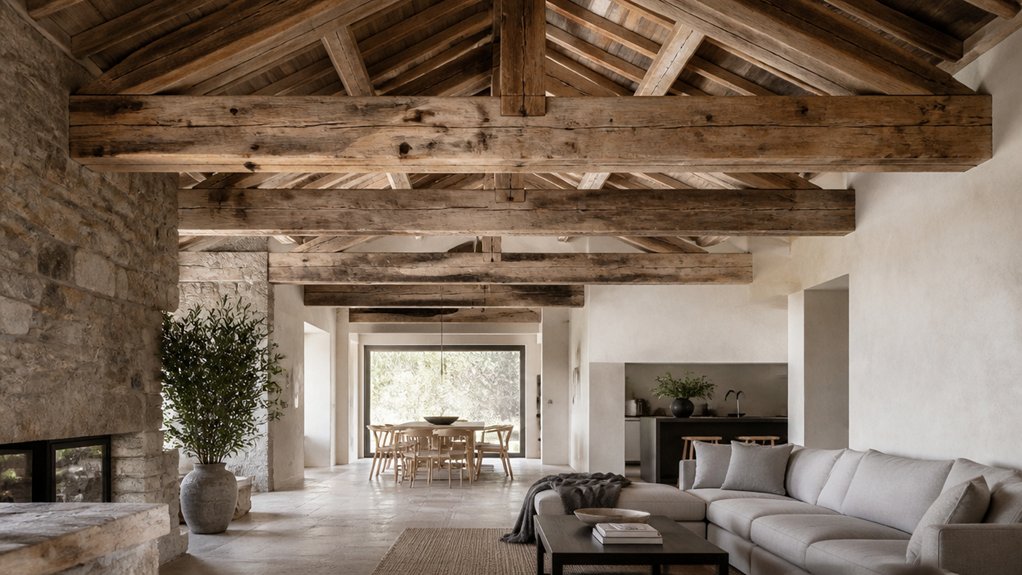
Today, reclaimed timber, brick, and stone serve both structural and decorative roles. You can use sound beams for flooring, ceiling joists, stairs, or exposed framing, but verify their dimensions, moisture content, and load capacity before installation.
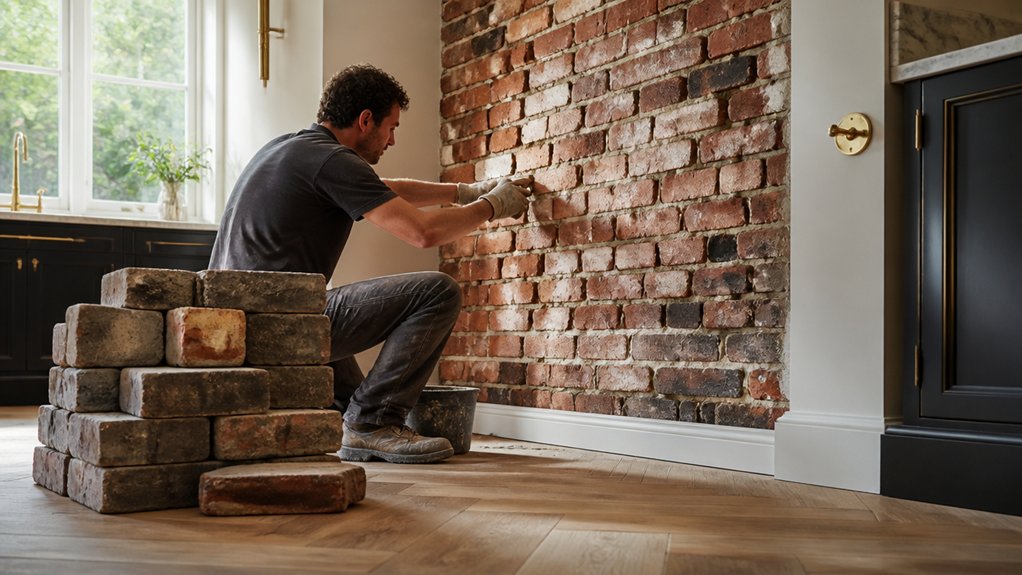
Reclaimed brick suits feature walls, garden paths, and new masonry when its condition and mortar compatibility are checked. Stone can become paving, fireplace surrounds, retaining walls, or countertops; assess each piece for cracks and stability.
Modern architectural integration works best when you pair historic materials with contemporary detailing, such as clean-lined cabinetry or steel supports. You’ll need to plan for uneven sizes, cleaning, and careful cutting, since salvaged stock rarely matches standard specifications.
Sustainable design trends favor reuse because it can reduce demand for newly quarried or harvested materials. Source locally when possible, and confirm provenance and treatment history.
Conclusion
When you choose reclaimed timber, brick, or stone, you bring more than texture into a room—you preserve evidence of how people built, worked, and lived. Look closely: a saw mark, maker’s stamp, or worn edge can connect you to a place and its past. These materials aren’t silent; they carry their stories into your home. By using them thoughtfully, you give old craftsmanship a new purpose and guarantee its history continues, one surface at a time.