 MartinShields
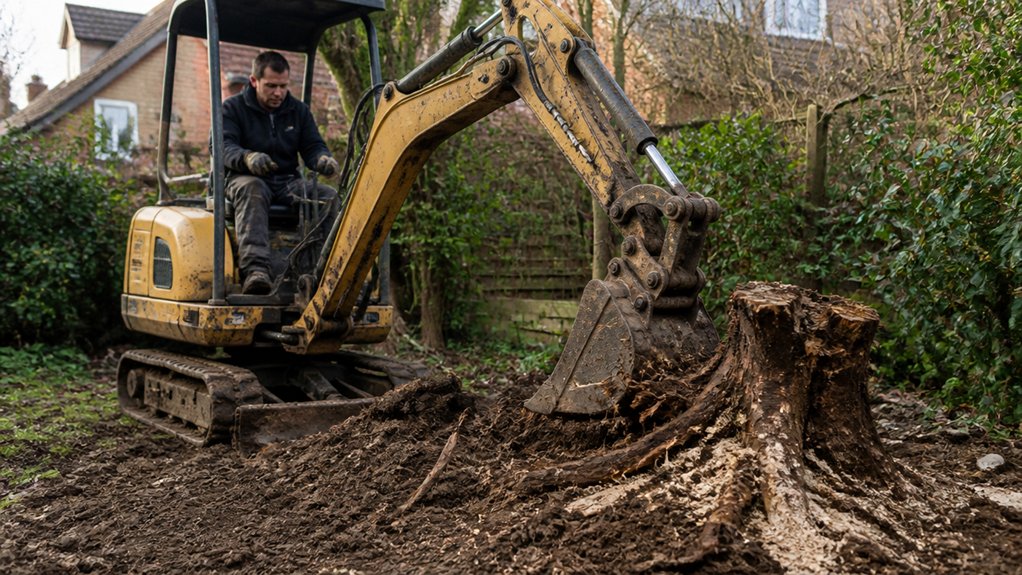
If you’re clearing a garden for a patio, a mini digger can pull out a small or medium stump and help you level the ground for the next stage of work. You’ll need to assess the stump, roots, soil and access before you start, since a machine that’s too small may struggle or create extra damage. Knowing where the limits lie can help you choose the right approach.
Key Takeaways
- Yes, a mini digger can remove many small to medium stumps by excavating around the roots and levering the stump out with its bucket.
- Shallow-rooted stumps are generally easier to remove; large, deep, or stubborn root systems may need professional equipment.
- Check ground stability, machine access, nearby structures, and underground utilities before digging to reduce risks.
- After removal, clear loose roots, backfill the hole, compact the soil, and level the ground.
- For tight spaces, sensitive landscaping, or multiple stumps, consider professional stump grinding or removal and request a quote covering cleanup and waste.
Can a Mini Digger Remove Tree Stumps?
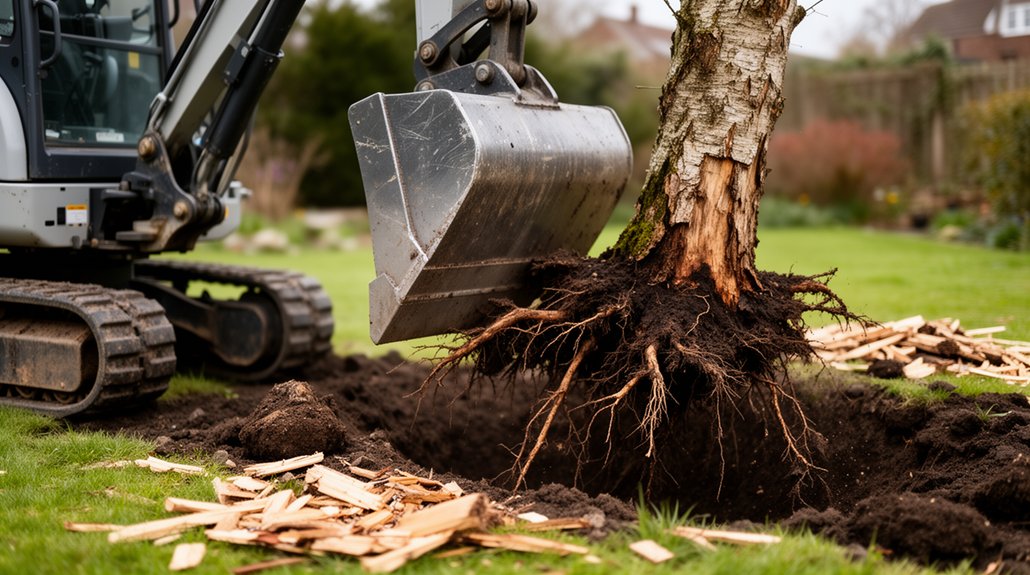
Yes, a mini digger can remove many tree stumps by digging around the roots and using the bucket to loosen and lift them. You can then clear the cavity, backfill it with suitable soil, and prepare the area for landscaping or tree planting.
Before starting, check for buried services, nearby structures, and access limits. Wear appropriate protective equipment, keep bystanders clear, and work slowly to avoid damaging paving, drainage, or garden features.
A compact machine can reduce manual digging, but stump removal still takes care and planning. Once the stump is out, remove loose roots and level the ground before beginning your renovation work.
If you’d rather avoid excavation or the stump sits in a tight spot, stump grinding may be a practical alternative. Choose the method that suits your site and finish.
Which Stumps Can a Mini Digger Handle?
A mini digger can handle many stumps, but size and depth determine whether it can lift them safely.
You’ll also need to account for tree type and root spread, since broad, stubborn roots take more work.
Check these factors before choosing your machine and planning the removal.
Stump Size And Depth
A mini digger can usually handle small to medium stumps, but size alone doesn’t determine how easily it’ll come out. Check the stump’s diameter and how far it sits below ground before you choose an approach.
A narrow, shallow stump is generally easier to loosen than a broad stump with a deep, established root spread. You’ll need enough room to dig around it and expose the main roots without undermining nearby paving, foundations, or services.
Depth also affects machine access and leverage. If the stump extends well below the surface, your bucket may not reach far enough to free it safely.
Assess soil stability before digging; loose or saturated ground can shift under the tracks. For a large, deep stump, consider a larger excavator or professional removal rather than forcing a mini digger beyond its capacity.
Tree Type And Root Spread
Which stumps a mini digger can handle depends largely on the tree’s root pattern. Shallow-rooted trees, such as spruce, often come out more easily than species with deep taproots or wide, dense root systems.
Your mini digger can usually loosen and lift small to medium stumps when you expose the main roots and cut them with suitable tools. Mature oak, beech, and poplar stumps may need more digging, greater machine capacity, or professional removal.
Check the surrounding ground before you start. Roots can run beneath paving, foundations, or utility lines, so locate services and protect nearby structures. Remove diseased wood to limit fungal infections, but check for wildlife habitats before disturbing cavities or nesting areas.
If roots extend beyond your work zone, reassess the method to avoid damaging the renovation site.
Is Your Site Safe for a Mini Digger?
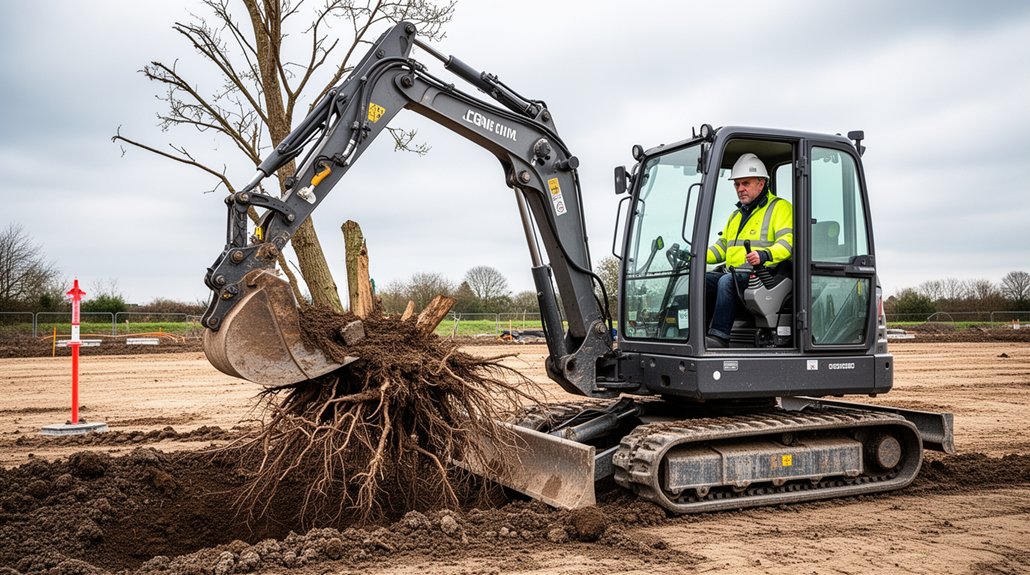
Before bringing a mini digger onto your site, check that the ground can support its weight and the route is wide and firm enough for safe access.
For effective site preparation, clear the route of rubble, branches, and stored materials. Then measure gates and tight turns against the machine’s dimensions.
Check for soft soil, slopes, drains, and recently backfilled trenches that could affect stability.
Locate underground services, including water, gas, and electricity lines, before digging; contact utility providers if you’re unsure.
Keep the work area clear of people and vehicles, and choose a level spot for loading or parking.
Review the machine’s operating instructions and confirm you’re trained to use its controls.
Good equipment safety also means checking tracks, attachments, and fluid levels before starting.
Don’t proceed until access and working conditions are suitable.
What Are the Risks of Mini Digger Stump Removal?
Before digging, locate underground utilities to avoid costly service damage.
Uneven ground or a shifting stump can destabilise your mini digger, so assess the setup before lifting.
The bucket can also damage nearby paving, foundations, and roots you intend to keep.
Underground Utility Damage
A mini digger can strike buried gas, water, electricity or telecom lines while you excavate around a stump. Even shallow roots can cross service routes, and a bucket tooth may puncture a pipe or tear underground cables.
Before you start, check site plans and request Utility markings from the relevant providers. Don’t rely on old drawings alone: routes can shift, and private services may not appear on public records.
Once marked, keep the machine and digging bucket clear of indicated routes. Use careful hand digging to expose services where required, following local guidance and provider instructions.
If you can’t confirm a line’s position, stop and arrange a professional survey rather than guessing. A damaged service can cause injury, flooding, fire, costly repairs and project delays. Treat every unverified route as live.
Equipment Instability
When you dig around a stump, uneven ground, hidden roots and a shifting load can destabilise a mini digger. If the tracks lose firm contact, the machine may tilt, slide or overturn, putting you and anyone nearby at risk.
Keep the digger on level, compact ground, and avoid working across steep slopes or near unsupported edges. Position the blade to help steady the machine, lower the attachment before repositioning, and never exceed the lift capacity listed in the manual.
Pulling hard against a stubborn stump can also shift the load suddenly, so use controlled movements and stop if the machine rocks or sinks.
Check the ground before each pass, maintain a clear work zone, and wear your seat belt. Good equipment stability supports operational safety throughout the removal job.
Property And Root Damage
Stable operation protects you from a rollover, but a mini digger can still damage nearby property and roots. Before digging, locate buried utilities, irrigation lines, drains, and cables; contact your utility provider if you’re unsure.
Check the machine’s swing radius and keep the bucket clear of fences, paving, foundations, and garden walls. Cutting major roots can destabilize nearby trees, while pulling them may crack paths or disturb retaining structures.
Work in controlled passes, expose roots gradually, and stop if you uncover a service or structural footing. On sloping ground, disturbed soil can wash away, causing soil erosion and undermining paving or planting beds.
You’ll also reduce wildlife disturbance by checking for nests or sheltering animals before excavation. Backfill the hole, compact soil in layers, and restore drainage to limit settlement.
How Do You Remove a Small Stump?
For a small stump, expose the roots with a spade, then cut through them with a mattock or pruning saw and lever the stump out. Clear away loose soil as you work, and use a pry bar for extra leverage. Wear gloves and eye protection, and check for buried services before digging.
If the trunk sits close to a wall, path, or fence, work slowly to avoid disturbing nearby structures.
Once the stump is free, remove the larger roots you can reach and backfill the hole with suitable topsoil. Compact it lightly, then level the surface for turf, planting, or paving.
This careful finish improves garden aesthetics and supports soil preparation for your next landscaping project. Keep the area clear of debris, and water settled soil before completing the renovation.
When Should You Hire a Stump Removal Professional?
Hire a stump removal professional if the stump is large, deeply rooted, or close to buildings, fences, or buried utilities. A mini digger can shift soil and damage foundations, paving, drainage, or service lines if you misjudge the root spread. A qualified contractor can assess the site, locate hazards, and choose a safe removal method.
Consider hiring a specialist when access is tight, the ground is sloped, or the stump sits near retaining walls. Stump grinding may suit a renovation where you need to preserve nearby landscaping and prepare the area for turf, paving, or planting.
If Tree removal has left several stumps, a professional can clear them efficiently and manage the waste. Get a written quote that specifies access needs, cleanup, and any repairs before work begins.
Conclusion
A mini digger can remove many small and medium stumps, but check the roots, soil and site access before you start. Underground services and unstable ground can turn a straightforward landscaping job into a costly repair, so inspect the area and work safely. In the UK, a mature tree can have hundreds of miles of roots, showing why larger stumps may need specialist equipment. If your digger can’t lift the stump cleanly, hire a professional to finish the job and leave the ground ready for renovation.