 MartinShields
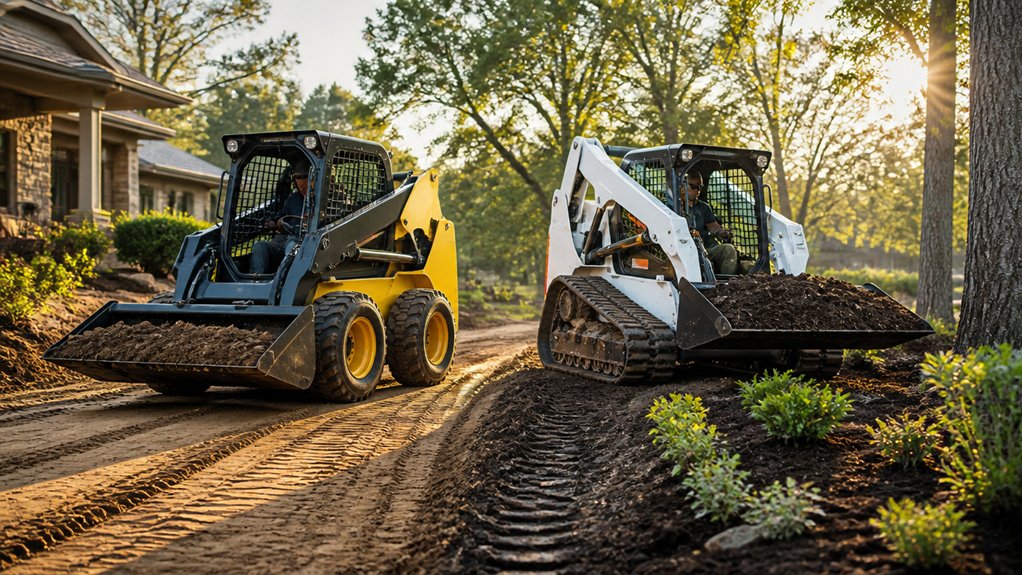
It’s no coincidence that choosing between a skid steer and a compact track loader can make or break a landscaping job: the wrong machine can rut a lawn, waste time, or strain your budget. If you’re weighing traction, maneuverability, attachment needs, and cost, start with the ground you’ll work on most. One key difference often settles the choice—but only after you consider where each machine falls short.
Key Takeaways
- Choose a skid steer for firm, dry, paved sites, tight spaces, and frequent turning.
- Choose a compact track loader for muddy, soft, uneven, or sloped landscaping sites.
- Tracks spread weight, improving traction and reducing ground damage; tires can rut soft soil.
- Both machines use common landscaping attachments; check hydraulic flow and coupler compatibility.
- Compare purchase price, access, maintenance, and typical job conditions; renting can help you decide.
Skid Steer vs. Compact Track Loader: The Quick Verdict
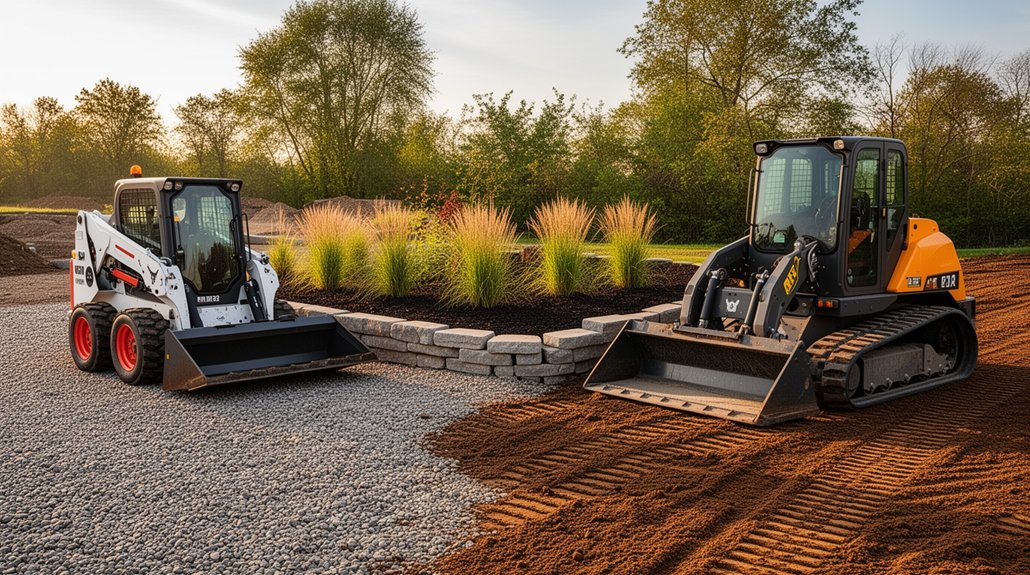
If you work mostly on firm, level ground, a skid steer is usually the more cost-effective choice. For soft, uneven terrain or lower ground pressure, a compact track loader is often the better fit.
Your decision should also account for purchase price, operating costs, and how often you’ll use the machine.
Skid steers typically cost less upfront and use tires that are simpler and cheaper to replace. Track loaders usually cost more, and their tracks and undercarriage can add expense when worn or damaged.
Compare each model’s Hydraulic systems, rated capacity, and compatibility with the attachments you already own.
Then check Maintenance requirements: both machines need routine inspections, but track tension and undercarriage care add tasks for a compact track loader.
Choose the machine that fits your ground conditions and budget without stretching either.
Which Loader Handles Landscaping Tasks Best?
For landscaping, choose based on the ground you’ll cross: a compact track loader grips soft or uneven terrain, while a skid steer suits firm surfaces.
In tight spaces, compare each machine’s turning room and footprint against your site.
Then check which loader supports the attachments you need for grading, hauling, or cleanup.
Traction and Terrain
On firm, level ground, a skid steer usually offers the traction and agility you need for routine landscaping at a lower operating cost. Its tires work well on driveways, compacted soil, and established lawns when you maintain proper Tire inflation.
However, loose sand, wet soil, and soft turf can make tires spin or leave ruts.
A compact track loader spreads its weight across a wider footprint, giving you better flotation and grip on muddy slopes, uneven ground, and freshly graded areas. Tracks can reduce ground pressure, but they won’t prevent damage if you turn sharply on delicate turf.
Check Track tension regularly and clear packed debris to protect the undercarriage.
Choose a skid steer for firm, dry sites; pick a track loader when your landscaping work regularly takes you across soft or variable terrain.
Maneuverability in Tight Spaces
In tight landscaping spaces, a skid steer’s shorter wheelbase and quick turns make it easier to work around trees, fences, and garden beds. You can pivot within a small footprint, which helps when you’re edging paths or repositioning near buildings.
A compact track loader can also turn tightly, but its longer frame may require more room to maneuver. Choose based on site layout: measure access points and turning areas before you rent or buy.
On soft ground, tracks may reduce surface damage, while tires can suit firm, finished areas. Consider fuel efficiency, too; frequent tight turns and repositioning affect consumption on either machine.
Don’t let aerial capabilities drive this choice: maneuverability at ground level matters most for confined landscaping work. If space is extremely limited, test the loader in comparable conditions before committing.
Attachment Versatility
When landscaping demands change from grading soil to moving mulch or clearing brush, attachment compatibility matters more than the loader’s name. Both skid steers and compact track loaders can run buckets, forks, augers, trenchers, grapples, and landscape rakes. Your best choice depends on the jobs you do most and the attachments available for the machine.
Check hydraulic systems before you buy. High-flow capacity lets you operate demanding tools, such as mulchers, while standard flow suits many everyday attachments. Confirm coupler type, flow rate, pressure, and attachment weight limits; compatibility isn’t universal.
A skid steer often offers nimble performance on firm ground, while a track loader adds traction on soft or uneven sites. Consider operator comfort during long attachment changes and work shifts. Match the loader to your terrain, workload, and tool inventory—not one feature alone.
Which Loader Handles Soft Ground and Slopes?
Which loader performs better on soft ground or slopes depends largely on traction and ground pressure. A compact track loader spreads its weight across a wider footprint, reducing soil compaction and helping you maintain ground stability on wet lawns, loose soil, and recently graded areas. Its tracks also provide steady grip for slope navigation, though you should still travel straight up or down when possible and follow the manufacturer’s slope limits.
A skid steer’s tires can lose traction or rut soft ground, making it less suitable after rain. On firm, dry terrain, however, tires can deliver reliable control and faster travel.
Choose tracks when your landscaping work regularly involves mud, soft soil, or uneven slopes. Choose tires when the ground stays firm and you value simpler upkeep.
In either case, slow down, keep loads low, and avoid sharp turns on slopes.
Which Loader Fits Tight Landscaping Sites?
On tight landscaping sites, you’ll need a loader that maneuvers cleanly around beds, walls, and existing features.
Compare turning radius and machine clearance to guarantee you can work without repeated repositioning or damage.
Measure narrow gates and access paths before choosing a model.
Maneuverability in Confined Spaces
In tight landscaping spaces, a skid steer’s shorter turning radius and ability to pivot in place often make it easier to maneuver around beds, fences, and trees. You can reposition quickly when shaping planting areas or working beside a patio, but that agility comes with a trade-off: the tires may disturb turf, especially on damp ground.
A compact track loader spreads its weight across tracks, helping you protect soft lawns and maintain traction on uneven soil. However, its wider footprint can make narrow gates and crowded work zones harder to navigate. Check access points before choosing, and consider what lies beneath the surface.
From an aerial view, map obstacles and travel paths so you can plan efficient passes. Also factor in noise levels: nearby residents may appreciate shorter work periods or quieter equipment.
Turning Radius and Clearance
How much room do you have to turn and pass? On a tight landscaping site, measure the working lanes and turning areas before choosing a loader.
A skid steer’s wheels let you pivot sharply, but that scrub can disturb finished turf and loosen soil.
A compact track loader often turns smoothly with less ground pressure, though its wider stance may need more clearance.
Check the machine’s full turning envelope, including the bucket or attachment, not just its listed width.
Hydraulic power helps you control attachments precisely in confined work areas, while responsive steering supports operator comfort during repeated turns.
If you’ll work near trees, beds, or hardscape, allow space to swing and reverse without clipping edges.
Choose the machine that can maneuver cleanly while protecting the surfaces you’ve already finished.
Access Through Narrow Gates
Before choosing a loader, measure the narrowest gate and the full path to the work area. Include posts, fences, turns, and overhead obstacles; the machine must clear the entire route, not just the entrance.
A skid steer often suits tight landscaping sites because its compact width and rigid frame can pass through smaller openings. Check the model’s operating width, including the bucket or other attachment.
A compact track loader may offer better traction on soft ground, but its wider stance can rule it out at narrow gates. Don’t assume tracks make a machine easier to squeeze through.
Match the loader to your site and workload. Hydraulic power matters for running attachments, while fuel efficiency affects operating costs.
If access is marginal, measure twice and confirm the manufacturer’s dimensions before delivery. That quick check can prevent a costly, disruptive equipment swap.
Skid Steer vs. Track Loader: What Does Each Cost?
Purchase price is only part of the cost difference between a skid steer and a compact track loader. A wheeled skid steer generally costs less upfront, while a compact track loader’s undercarriage raises its initial price.
Your final quote will also reflect wheel size, engine power, lift capacity, cab options, and attachments, so compare machines with similar specifications.
Ownership costs can shift the comparison. Tracks wear faster on abrasive surfaces and cost more to replace than tires, while tires may need frequent replacement on rough, debris-filled jobsites.
Track tension, rollers, and sprockets also require regular inspection and service. Both machines consume fuel, and engine power affects operating costs under heavy workloads.
Before you buy, ask dealers for maintenance schedules, parts prices, and warranty coverage. Include delivery, financing, and attachment expenses in your estimate; the sticker price alone won’t show the true cost of ownership.
Which Loader Fits Your Site and Budget?
Choose a skid steer if your site is mostly firm, paved, or compact and your budget favors a lower purchase price and simpler maintenance. Its tires handle frequent turns on hard surfaces, and you’ll usually spend less on undercarriage upkeep.
Pick a compact track loader when your landscaping work takes you across soft soil, slopes, or wet ground. Tracks spread the machine’s weight, improve traction, and reduce surface damage, but they cost more to buy and maintain.
Match the machine to your most common jobs, not occasional conditions. Check access width, ground pressure, attachment needs, and transport costs before deciding.
Compare Safety features, visibility, controls, and operator comfort across specific models; these affect productivity throughout a long shift.
If your budget is tight, rent a track loader first to confirm its benefits justify the added expense.
Conclusion
Choose a skid steer when your landscaping site is firm, access is tight, and quick maneuvering matters. Choose a compact track loader when ground is soft, slopes are steep, or traction is essential. Match the machine to your terrain, attachments, and budget—not just the purchase price. The right loader moves confidently, protects the site, and keeps work on schedule; the wrong one can rut the lawn, slow your crew, and add avoidable costs.