 MartinShields

Choosing between 1 tonne and 3 tonne dumper hire depends on more than how much material you need to move. You’ll also need to take into account site access, ground conditions and the type of work planned. A smaller dumper can suit tight spaces and lighter loads, while a larger model may save time on demanding jobs. The right choice balances capacity, manoeuvrability and cost—and one site constraint can change the decision.
Key Takeaways
- Choose a 1-tonne dumper for small projects, narrow access, and confined gardens; choose a 3-tonne model for larger sites and bulk work.
- Check payload ratings: 1-tonne dumpers carry around 1,000 kg, while 3-tonne dumpers carry around 3,000 kg.
- Measure gateways, turning space, gradients, and surface strength to ensure the dumper can travel and manoeuvre safely.
- Account for material weight and workflow: a 1-tonne dumper may need more trips, while a 3-tonne dumper can move heavier loads faster.
- Compare total hire costs, including delivery, collection, fuel, insurance, and breakdown support—not just the daily rate.
1 Tonne Vs 3 Tonne Dumper Hire: Which Should You Choose?
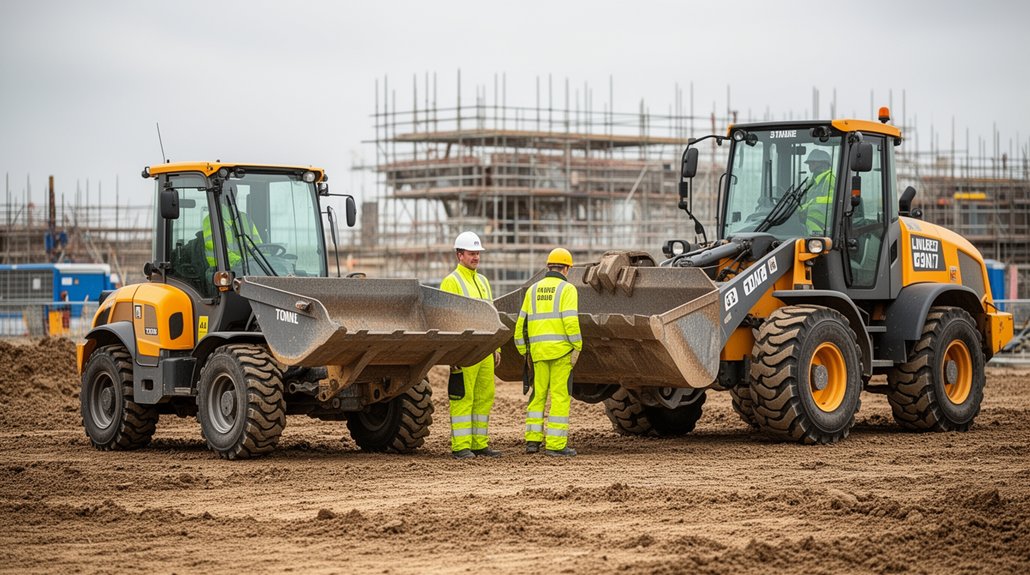
Choosing between a 1-tonne and 3-tonne dumper comes down to your site access, load size and ground conditions. A 1-tonne model suits narrow gateways, confined gardens and smaller projects where manoeuvrability matters most.
Choose a 3-tonne dumper when your site has room for a larger machine and rougher terrain calls for greater stability.
Before booking, measure access routes, check turning space and assess slopes, soft patches and surface strength.
Match the machine to your operator’s experience, too; a compact dumper may be easier to handle in tight areas.
Confirm the hire company’s Dumper maintenance checks and ask what support is available if a fault occurs.
You’ll also need to follow safety regulations, including operator training, site traffic controls and suitable protective equipment.
Consider delivery and collection access before you commit.
How Much Can Each Dumper Carry?
Although a 1-tonne dumper typically carries around 1,000 kg, a 3-tonne model can carry roughly 3,000 kg per load. These figures refer to payload, not the machine’s total weight.
Check the hire company’s rated capacity and don’t exceed it: overloading can compromise stability, damage the dumper and create hazards.
Your actual load capacity may also depend on the material. Wet soil, rubble and aggregates vary in density, so a full skip doesn’t always mean a safe load. Estimate weight, not just volume, before loading.
With lighter, frequent loads, a 1-tonne dumper may be sufficient; heavier materials or fewer trips can favour a 3-tonne model.
Follow the operator’s instructions and safety precautions, and factor dumper maintenance into reliable performance.
Keep loads balanced and secure during transport.
Will Each Dumper Fit Your Site?
Before you hire, check whether the dumper can pass through your site’s narrowest gate, doorway and access route. Compare the machine’s width and height with measured clearances, allowing room for mirrors, turning and uneven ground. A 1-tonne dumper is generally more compact, but don’t assume it’ll fit without checking its specifications.
A 3-tonne model may need wider access and more space to manoeuvre, particularly around corners or parked equipment.
Check the route’s surface, gradients and overhead obstructions, too. Confirm that bridges, ramps and temporary platforms can support the dumper’s loaded weight.
Keep pedestrians clear and use a trained operator; Dumper safety depends on planning the route as well as choosing the right size.
Ask your hire provider about dimensions and equipment maintenance before delivery, and arrange access so unloading stays safe.
Which Dumper Suits Your Project Type?
What’re you moving, and how far? For garden landscaping, short paths and small renovation jobs, a 1-tonne dumper usually handles soil, gravel and rubble efficiently. Its compact load suits frequent trips where access is tight or you’re working near finished surfaces.
Choose a 3-tonne dumper for larger groundworks, bulk excavation or longer runs, where carrying more per trip can keep material moving steadily.
Match capacity to your workflow, not just the biggest load you can carry. Check ground conditions, gradients and turning space, then consider how often you’ll need to unload.
A heavier machine may disturb soft ground more, so assess Environmental impact before choosing. Factor in Dumper maintenance too: daily checks and cleaning help keep either size dependable.
If your project combines delicate landscaping with bulk earthmoving, select the machine that suits each task.
How Do Hire Costs Compare?
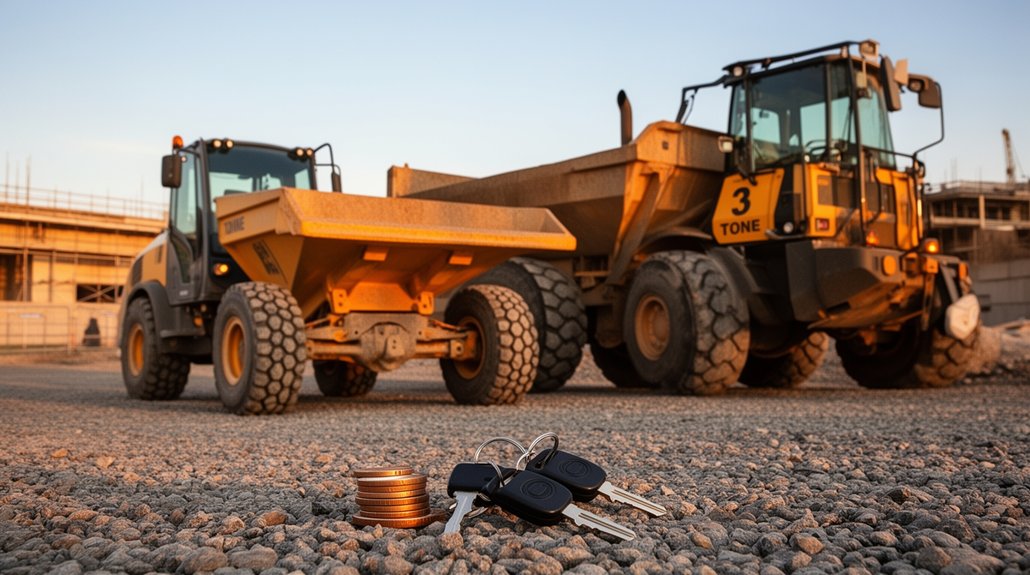
Once you’ve matched the dumper to your workload, compare hire rates alongside the cost of each trip. A 1 tonne dumper usually costs less per day, but its smaller load may mean more journeys, adding operator time, fuel use and site delays.
A 3 tonne model often carries a higher daily rate, yet fewer trips can lower your total cost on larger jobs. Check whether delivery, collection, insurance and fuel are included, and confirm the minimum hire period before booking.
Factor in access and ground conditions, too: a larger machine may need more space or preparation. Ask about maintenance costs, breakdown cover and who handles repairs during the hire.
Fewer trips can also reduce fuel consumption and environmental impact. Compare the full project cost, not just the advertised daily rate, to choose the better-value dumper.
Conclusion
Choose your dumper based on the tightest access point, the materials you’ll move, and the job’s scale. A 1-tonne model is easier to manoeuvre and can cost less for light work, while a 3-tonne dumper shifts heavier loads more efficiently on larger, rougher sites. Check site access and ground conditions before booking, and compare hire rates against the time saved. As the saying goes, “measure twice, cut once”: match capacity to your needs for safer, smoother work.