 MartinShields
You don’t need to sacrifice your cottage’s seaside character to make it more resilient. Start by checking for storm damage, then set a realistic budget, confirm permit requirements, and choose contractors with coastal experience. Salt-resistant materials, better insulation, and reliable ventilation can prevent costly repairs, but only if you address the right weaknesses first. Before you choose what to replace, consider which hidden problems deserve your attention.
Key Takeaways
- Inspect the cottage inside and out for salt corrosion, water intrusion, structural movement, damaged roofing, and drainage problems.
- Set a realistic budget with a contingency, compare written contractor estimates, verify qualifications, and track permits, inspections, and changes.
- Choose coastal-rated roofing, cladding, windows, and corrosion-resistant hardware; follow installation guidance to prevent leaks and mixed-metal corrosion.
- Improve insulation, heating, and ventilation while preserving wall airflow; seal gaps, insulate pipes, and vent kitchen and bathroom fans outdoors.
- Maintain the cottage year-round by rinsing off salt, repairing storm damage promptly, clearing drainage, and recording regular inspections.
Inspect Your Seaside Cottage for Damage

Before planning renovations, inspect your seaside cottage for damage caused by salt air, wind, moisture, and storms. Walk the exterior and note peeling paint, corroded fasteners, cracked siding, loose shingles, and gaps around windows and doors. Check foundations, decks, railings, and steps for movement, rot, or rust.
Inside, look for water stains, musty odors, soft flooring, and condensation near windows; these can signal leaks or hidden mold.
Inspect plumbing and electrical components for corrosion, especially where pipes or wiring meet exterior walls. After storms, check the roof, gutters, and drainage paths for debris or displacement.
Examine Coastal landscaping for eroded soil, exposed roots, and plants pressing against the structure. Record each concern with photos and locations.
This careful assessment helps you preserve Seaside aesthetics while identifying damage that needs attention.
Plan Your Renovation Budget, Permits, and Team
Once you’ve assessed the cottage’s condition, set a budget that covers repairs, materials, labor, permits, and a contingency for hidden damage. Careful financial planning helps you prioritize essential work while keeping funds available for surprises.
Get written estimates from several qualified contractors, compare itemized costs, and confirm what each quote includes. During contractor selection, check references, insurance, licenses, and experience with coastal properties.
Agree on a payment schedule tied to completed milestones, and keep signed contracts and receipts.
Before work begins, contact your local building department to identify required permits, inspections, and shoreline restrictions. Ask whether historic-district rules or flood-zone requirements apply. Submit complete applications early; approval can take time.
Assign one person to track deadlines, decisions, change orders, and spending. Review the budget weekly, document every adjustment, and pause nonessential work if costs threaten your contingency.
Clear records and communication help you stay in control.
Choose Seaside Cottage Materials for Salt and Storms
Because salt spray and driving rain accelerate wear, choose materials rated for coastal exposure. Inspect product specifications, not just labels, and confirm they suit your site’s exposure and local building codes.
For fasteners, hinges, railings, and exterior fixtures, select corrosion resistant materials such as marine-grade stainless steel or properly coated hardware. Avoid mixing metals that can trigger galvanic corrosion; use compatible fittings and follow installation guidance.
Choose durable cladding, roofing, and trim that resist moisture, wind-driven debris, and frequent repainting. Fiber cement, quality timber with a suitable protective finish, or coastal-rated metal can work when installed correctly. Ask suppliers about warranties and maintenance requirements.
Fit stormproof windows with impact-rated glazing and robust frames, then seal openings carefully. Check roof edges, flashing, and door thresholds for secure attachment and water-shedding details.
Reinspect exposed surfaces each year.
Upgrade Insulation, Heating, and Ventilation
A well-insulated cottage stays warmer in winter and cooler in summer, but coastal moisture makes careful installation essential. Choose thermal insulation suited to your wall construction, then seal gaps around windows, doors, and service penetrations.
Don’t block required ventilation paths or trap damp air behind insulation; ask a qualified professional to assess older walls before you upgrade.
Improve energy efficiency with a heat pump or properly sized boiler, and fit programmable controls so you heat rooms when you need them.
Insulate accessible pipes and hot-water tanks to reduce heat loss.
In kitchens and bathrooms, install effective extractor fans that vent outdoors, not into roof spaces. Keep trickle vents clear and balance fresh-air supply with extraction.
After work, check for condensation and cold spots, then adjust ventilation or heating settings promptly.
Careful detailing protects comfort and helps your upgrades perform as intended.
Maintain Your Cottage Through Salt and Storms
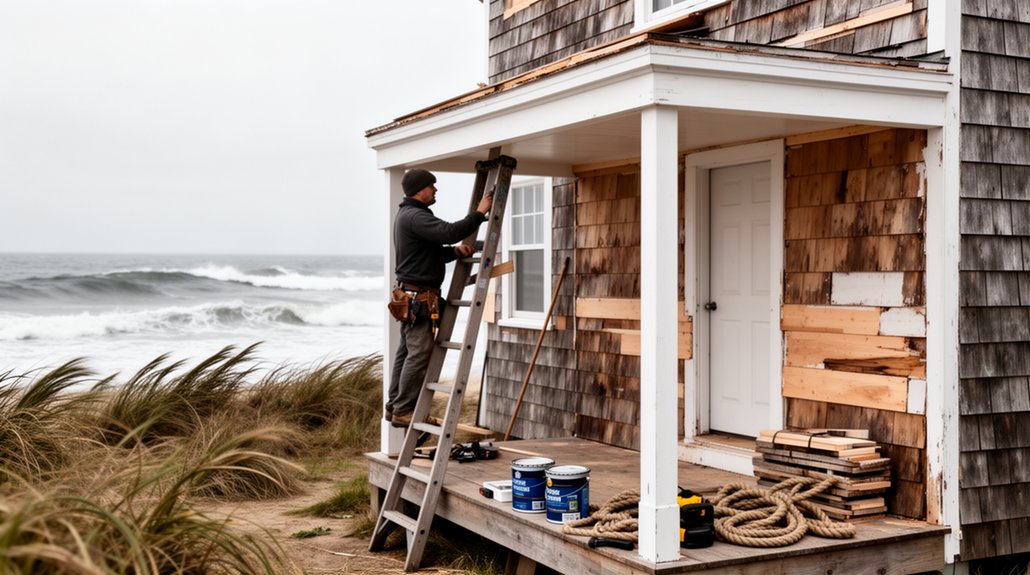
Salt-laden air and driving rain can wear down a seaside cottage faster than inland weather. Rinse salt from windows, railings, and exterior hardware with fresh water, then inspect finishes for peeling paint, corrosion, or loose seals. Recoat exposed wood and metal before damage spreads.
After each major storm, check the roof, flashing, gutters, and siding from the ground; arrange prompt repairs if you spot missing shingles or leaks. Choose Storm resistant shingles rated for local wind conditions when replacing roofing, and secure gutters to handle heavy rain.
Keep Coastal landscaping clear of the foundation and drains. Use salt-tolerant plants, maintain space around siding, and direct runoff away from the house.
Before storm season, trim weak branches, secure outdoor furniture, and review your emergency supplies. Record inspections so you can track recurring problems.
Conclusion
Renovating a seaside cottage means balancing charm with resilience: weathered shingles may frame the view, but sound flashing keeps storms outside. Inspect carefully, budget realistically, secure permits, and choose experienced tradespeople before work begins. Select materials that resist salt, strengthen insulation and ventilation, and plan for dependable heat. Then maintain your home through every season, from calm, sunlit mornings to wind-driven rain. With steady care, you’ll preserve its coastal character—and make it ready for whatever the shoreline brings.