 MartinShields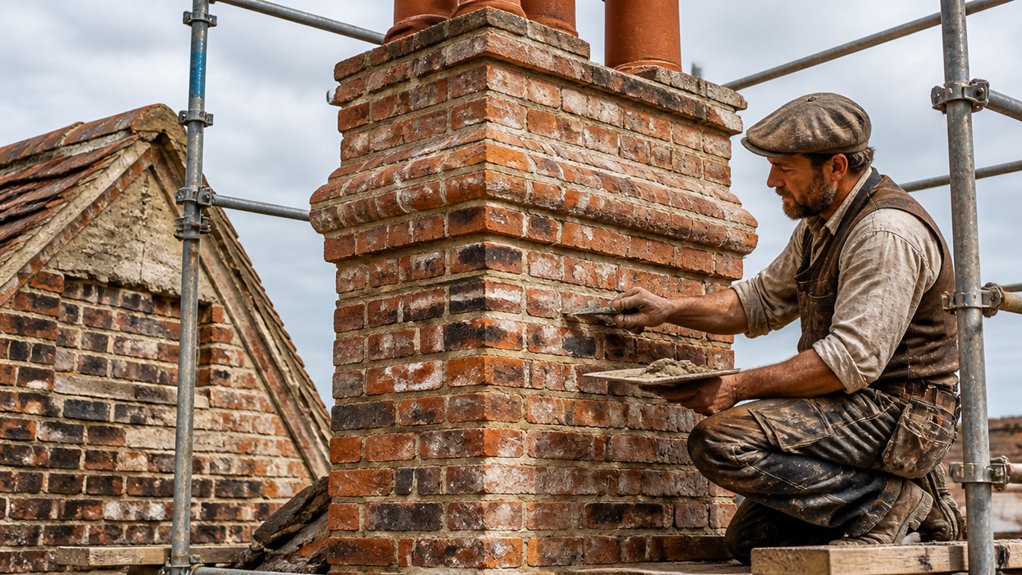
Restoring original brickwork and chimneys takes more than replacing worn bricks or filling visible gaps. You’ll need to identify what’s causing the damage, choose materials that suit the historic masonry, and protect the structure from moisture. The wrong repair can trap water or weaken the wall, while careful work preserves its character and strength. Start with a thorough inspection—what you find may change the entire repair plan.
Key Takeaways
- Inspect brickwork and chimneys for cracks, loose or spalled bricks, open joints, bulging, leaning, and damaged flashing or caps.
- Photograph defects over time and investigate moisture sources, including leaking gutters, flashing, roof joints, and salt or frost damage.
- Choose breathable, compatible lime-based mortar that is softer than the brick; test its appearance and performance on a small area first.
- Repoint carefully: remove loose mortar without damaging brick edges, dampen joints, pack mortar firmly, and match the original joint profile.
- Replace severely damaged bricks and address chimney or flashing defects; call a preservation specialist for instability, persistent leaks, or recurring damage.
Inspect Original Brickwork and Chimneys
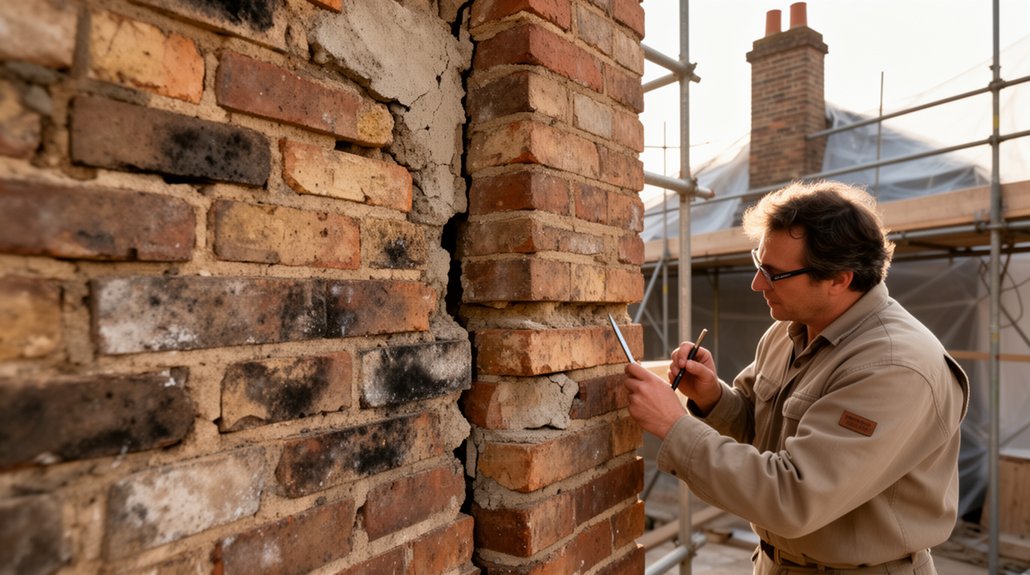
Before repairing brickwork or a chimney, inspect it closely to identify the cause and extent of any damage. Check every elevation from ground level, then use binoculars or safe access to examine upper courses, parapets, and chimney stacks.
Look for cracked, loose, spalled, or displaced bricks; open joints; bulging walls; and damaged flashing or caps. Note where defects occur and photograph them so you can compare conditions during repairs.
Assess the mortar’s hardness, color, profile, and depth, and identify the brick type, size, and bond. Don’t assume a surface stain signals structural damage. Test a small area before planning brick cleaning, since aggressive methods can erode soft brick.
Record findings before selecting repairs, and use them to guide mortar matching. If you find unstable masonry, keep clear and arrange a qualified inspection before work begins.
Trace the Cause of Masonry Damage
Once you’ve mapped the damage, trace what caused it before choosing a repair. Compare weathering patterns across the wall and chimney. Wind-driven rain often erodes exposed faces, while dampness near the base may point to rising moisture or poor drainage.
Check gutters, flashing, and roof joints for leaks that keep masonry wet. Look for open mortar joints, cracked caps, and missing crowns that let water enter. In cold climates, trapped moisture can freeze, expand, and split bricks. Salt deposits may signal repeated moisture movement through the wall.
Note whether cracks follow mortar joints, cross bricks, or widen over time; each pattern suggests a different cause. Consider nearby ground movement, vegetation, and past repairs. Address the source first, or new work may fail and compromise structural integrity.
Keep dated photographs to track changes.
Know When to Call a Brickwork Specialist
Call a brickwork specialist when damage affects stability, spreads, or has a cause you can’t confidently identify. A leaning chimney, bulging wall, loose bricks, or deep, widening cracks need prompt professional assessment. Don’t climb onto a roof or remove masonry to investigate; unstable sections can collapse without warning.
DIY troubleshooting can help you spot changes, but it can’t replace an expert inspection when damage threatens safety or involves complex construction. Contact a specialist if water keeps entering, previous repairs fail, or deterioration returns after you address its apparent source.
For older buildings, seek experience in Historical preservation. A qualified professional can assess the structure, identify risks, and recommend a suitable repair approach while respecting the building’s character.
If movement seems sudden, keep people clear and arrange an urgent inspection.
Choose Compatible Mortar for Historic Brick
For historic brick, choose mortar that’s compatible with the original—not simply the strongest mix available. Your mortar should be softer and more permeable than the brick, allowing moisture to escape through the joints rather than damaging the masonry. A hard, dense mix can trap water and accelerate deterioration.
Before repointing, assess the existing mortar’s color, texture, joint profile, and composition. You can compare samples or consult a specialist to identify suitable materials. Lime-based mortar often suits older buildings, but the right formulation depends on the original construction and exposure.
Material compatibility supports Historical preservation by protecting the brick and maintaining the wall’s appearance. Specify the binder, aggregate, and proportions carefully; don’t rely on a generic modern mix. Test a small area first, then confirm the cured mortar matches the surrounding joints in performance and appearance.
Repair or Replace Damaged Bricks
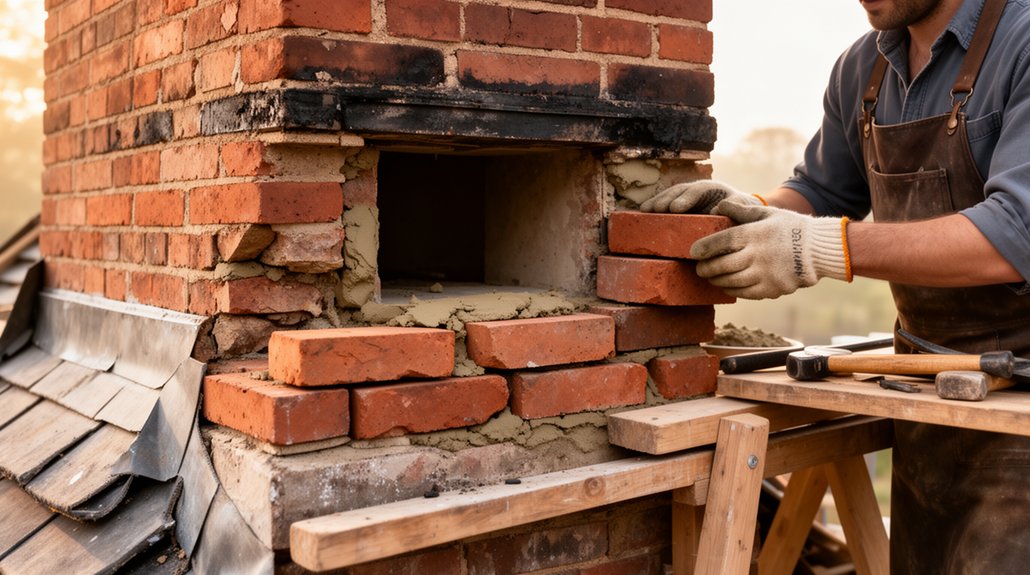
Before repairing brickwork, assess each damaged brick for cracks, spalling, and looseness.
You can often repair minor surface damage, but bricks that are deeply cracked or deteriorating should be replaced.
Match replacement bricks to the originals in size, color, and strength to protect the surrounding masonry.
Assess Brick Damage
How can you tell whether a damaged brick needs repair or replacement? Start with a close inspection, checking several sides of each suspect brick. Look for cracks that pass through the brick, crumbling faces, deep spalling, or sections that have become loose. Surface discoloration alone doesn’t prove structural damage; compare brick color with nearby masonry and note whether staining follows moisture paths.
Check the surrounding mortar, too. Assess mortar consistency and look for gaps, powdering, or joints that have pulled away from the brick. Tap gently with a wooden handle and listen for a hollow sound, which can indicate separation, but don’t rely on sound alone. Record the location and extent of each defect, then inspect after rain for leaks or persistent dampness.
If damage is widespread or the wall moves, consult a qualified mason before disturbing the masonry.
Repair or Replace Bricks
Once you’ve assessed the damage, decide whether to repair the brick or replace it. Repair sound bricks with minor surface chips or shallow cracks using a compatible masonry repair compound.
Replace bricks that are deeply cracked, spalled, loose, or weakened by water; patching won’t restore their strength and can hide continuing damage.
For replacement, choose a brick that matches the original in size, texture, and strength. Compare brick color in natural light, since new masonry may look different when dry or wet.
Remove the damaged unit carefully to protect surrounding bricks, then bed the replacement in compatible mortar. Match mortar color and composition, and avoid overly hard mortar that can damage softer historic brick.
If damage affects several courses or a chimney’s stability, consult a qualified mason before starting repairs.
Repoint Brickwork So It Can Breathe
Choose a breathable mortar that lets moisture escape rather than trapping it in the brickwork.
Match the original mortar’s composition and joint profile to preserve compatibility and appearance.
Rake out old joints carefully so you don’t chip or weaken the brick edges.
Choose Breathable Mortar
When repointing older brickwork, use a mortar that’s softer and more permeable than the bricks. Breathable mortar lets moisture escape through the joints instead of trapping it in the masonry. This supports effective moisture management and helps reduce damp-related damage, including spalling and frost deterioration.
Choose a lime-based mortar where the building’s construction and condition call for it. Its flexibility and vapor permeability can accommodate movement and drying better than a dense, rigid mix. Avoid hard, cement-rich mortar on soft historic bricks: it can restrict evaporation and transfer stress to the brick faces.
Before work begins, assess the wall’s exposure, existing mortar, and moisture sources. A breathable mix won’t solve leaks or rising damp on its own. Address those causes, then select mortar with suitable strength and permeability, and let it cure properly to protect the masonry.
Match Original Materials
To keep repointed brickwork breathable, match the new mortar to the original in composition, strength, and permeability. Start by examining sheltered joints, where weathering has altered the mortar least. Compare its color, aggregate size, and texture with sample mixes, then assess each sample when dry; wet mortar can appear misleadingly dark.
If you can’t identify the original ingredients, consult a conservation specialist before choosing a compatible lime-based mix.
Matching historical textures matters as much as matching color. Use aggregate that reflects the original sand’s grain and tone, and finish joints with tools and methods suited to the building’s age.
When selecting authentic finishes, avoid overly smooth, uniform joints that make old masonry look new. Test a small area first, checking the cured result in different light before proceeding across the wall.
Protect Brick Edges
After matching the mortar, rake out the joints carefully to protect the brick edges. Use hand tools near soft or historic bricks; a grinder can chip arrises and widen joints. Remove loose mortar to a consistent depth without cutting into the brick, then brush away dust. Dampen the joints lightly so dry masonry won’t draw water from fresh mortar too quickly.
Pack compatible mortar firmly, working from the back of each joint outward. Compact it in layers where joints are deep, and finish the surface to match the original profile. This Edge reinforcement comes from sound joint preparation and careful tooling, not hard, cement-rich mortar.
Avoid Brick sealing products that trap moisture; breathable masonry needs vapor to escape. Protect fresh work from rain, frost, and rapid drying until it cures.
Repair Chimney Stacks and Lead Flashing
A sound chimney stack and watertight lead flashing protect your roof from leaks and structural damage. Inspect chimney stacks for loose bricks, open joints, leaning, or cracked mortar.
Check the crown, pots, and flaunching for gaps that could admit water. If you spot movement or extensive deterioration, arrange a professional assessment before repairs; unstable masonry can be dangerous.
Repoint sound brickwork with compatible mortar, removing failed joints carefully to avoid damaging brick edges. Replace severely cracked bricks and secure loose pots with suitable materials.
Examine lead flashing where it meets the stack and roof. Lifted, split, or poorly dressed sections need repair or replacement by a competent roofer. The flashing should fit snugly into the masonry and overlap the roof covering correctly.
Don’t seal defective flashing with surface-applied patches; they rarely provide lasting protection. After work, check that joints shed water and all components remain secure.
Maintain Brickwork to Prevent Future Damage

Regular maintenance helps brickwork resist moisture, frost, and gradual wear. Inspect your walls twice a year, especially after severe weather. Look for cracked mortar, loose bricks, open joints, and damaged sealant around windows or pipes. Repair defects promptly with compatible materials; hard, dense mortar can trap moisture and damage softer historic bricks.
Keep gutters, downpipes, and flashings clear and sound so water drains away from the masonry. Trim plants that hold moisture against walls, and avoid pressure washing, which can erode brick faces and mortar.
If you see white deposits, identify and correct the water source before cleaning; this supports Efflorescence prevention and reduces repeat staining.
Use suitable Moisture barriers only where a specialist confirms they’re appropriate. Don’t seal damp masonry indiscriminately.
Maintain ventilation, monitor repaired areas, and consult a conservation professional when damage spreads or structural movement appears.
Conclusion
Restoring historic brickwork takes patience, compatible materials, and sound diagnosis. Don’t hide damage with hard mortar or quick cosmetic fixes; address moisture and structural causes first. For example, if your chimney bricks keep spalling after winter, check the flashing and mortar joints before replacing the facework. A qualified brickwork specialist can help you preserve original details and prevent repeat repairs. Inspect your masonry regularly, clear drainage paths, and act early to protect your home’s character and strength.