 MartinShields
A cottage’s old walls can look solid while hiding damp, unstable foundations, or outdated wiring. Before you plan new rooms or finishes, arrange a thorough inspection and record the features you want to preserve. Then you can modernize heating, plumbing, and electrics without damaging historic fabric, while choosing breathable insulation and practical updates. The challenge is knowing which changes will improve daily life—and which could quietly harm the cottage.
Key Takeaways
- Inspect and plan carefully: Document structural defects, consult specialists about movement, prioritize urgent repairs, set a contingency budget, and check preservation rules before altering original features.
- Control moisture before insulating: Repair leaks, drainage, and pointing first; choose breathable insulation and finishes, and maintain ventilation to protect old walls.
- Upgrade essential systems discreetly: Have qualified professionals assess plumbing, electrics, and heating; install efficient modern systems while protecting historic fabric and retaining sound fireplaces.
- Improve everyday comfort and function: Add well-measured storage, optimize furniture and daylight, and update kitchens and bathrooms with safe appliances and durable, low-impact materials.
- Preserve the cottage’s character: Repair original details where possible, and choose sympathetic materials, hardware, colors, and extension designs that complement its scale and style.
Inspect the Cottage Structure Before You Plan
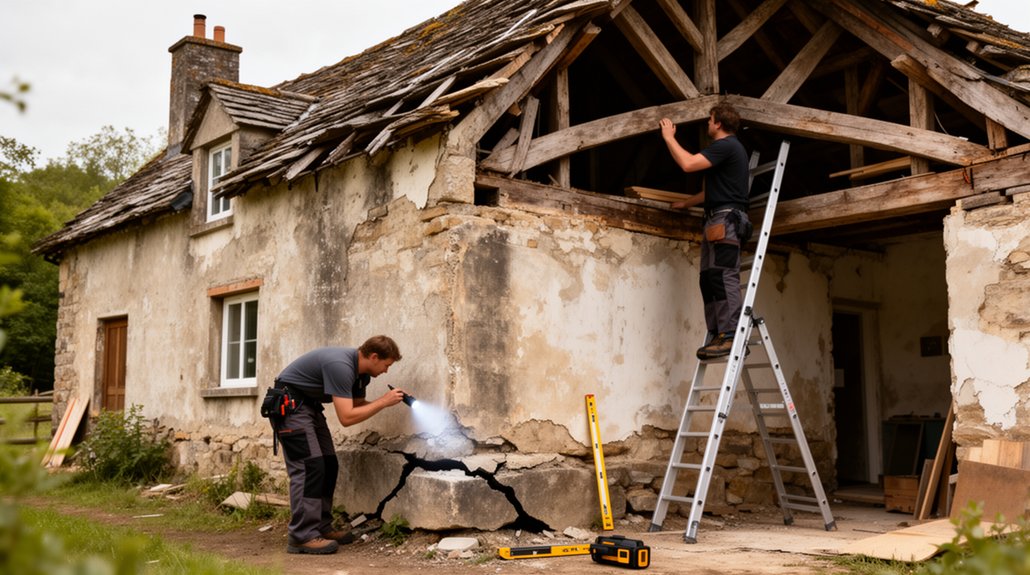
Before choosing finishes or drawing up plans, inspect the cottage’s structure to understand what’s sound and what needs attention. Walk around the exterior and look for leaning walls, cracked masonry, bulging brickwork, or gaps around windows. Check the ground for pooling water and note whether downpipes carry rain away from the house. These clues can reveal problems with foundation stability, but don’t diagnose serious movement yourself; ask a structural engineer to assess it.
From inside, inspect ceilings and loft timbers for damp, rot, sagging, or insect damage. Look for slipped tiles, daylight through the roof, and failing flashing to judge roof integrity. Check floors for springiness and doors for sticking, which may indicate movement or decay.
Record what you find, photograph defects, and arrange specialist inspections before deciding how to address structural concerns.
Plan a Character Cottage Renovation
Once you understand the cottage’s condition, plan the renovation around its needs and character. List the work in order, separating urgent repairs from improvements you can phase over time. Set a realistic budget, include a contingency for surprises, and decide which rooms must remain usable during construction.
Before changing original features, check local rules and seek advice from a preservation professional. Historic preservation doesn’t mean freezing your home in time; it means making thoughtful choices that respect its age, materials, and craftsmanship.
Keep a record of existing details, such as doors, trim, and stonework, so you can repair rather than replace them where practical.
Plan additions with care. Consider scale, rooflines, and exterior aesthetics, and choose materials that sit comfortably beside the cottage’s original fabric. Your plan should serve daily life while keeping the home’s character intact.
Insulate the Cottage Without Trapping Moisture
With the renovation plan in place, improve comfort by insulating the cottage in a way that lets its older walls dry. First, check for leaks, rising damp, and damaged pointing; insulation won’t cure these faults.
Choose materials suited to the wall’s construction, such as breathable wood fibre or sheep’s wool, and avoid sealing historic masonry with impermeable layers. Moisture barriers need careful placement: a poorly fitted membrane can trap condensation, so get advice before adding one.
Insulate roofs and floors where practical, while preserving original features and allowing the building fabric to breathe.
Pair the work with sound Ventilation strategies, including regular window opening and clear air paths through rooms.
Keep an eye on corners and window reveals after installation; early signs of damp call for prompt investigation.
Upgrade Cottage Heating, Plumbing, and Electrics
As you plan the cottage’s services, choose a modern heating system that suits its layout and insulation.
Replace ageing pipes and fittings before leaks or poor water pressure cause damage.
Have a qualified electrician check the wiring and make safe, code-compliant upgrades.
Modern Heating Systems
How can you bring a character cottage’s heating up to date without compromising its charm? Start with a survey of the existing system, insulation and draughts; a heating engineer can identify where heat escapes and recommend suitable improvements.
Keep original features such as fireplaces and exposed beams, but don’t rely on an open fire as your main heat source.
A modern boiler may suit a cottage with radiators and a gas connection, while renewable systems, such as an air-source heat pump, can work well when the building’s fabric and heat emitters are properly assessed.
You’ll need to plan carefully in an older home, where solid walls and limited space may affect performance and installation.
Smart thermostats let you set schedules room by room, helping you maintain comfort without heating unused spaces. Choose controls you’ll use, and have the system commissioned and serviced regularly.
Updated Plumbing Infrastructure
Sound plumbing is as important as a reliable heating system in a cottage renovation. Before you open walls or lift floors, have a qualified plumber inspect pipes, drains, water pressure, and the boiler’s connections.
Older cottages may hide corroded metalwork, narrow supply lines, or leaks beneath original boards; replacing these early can prevent costly damage later.
Plan new pipe routes carefully, keeping them accessible for maintenance while avoiding unnecessary disturbance to historic fabric. Where possible, reuse sound pipework and retain traditional fittings that still function well.
Choose taps, radiators, and visible pipe finishes that support aesthetic consistency without compromising performance. This balance helps protect Historical preservation while giving you dependable hot water and modern sanitation.
Confirm that drainage meets current requirements, and test every connection before closing walls or restoring finishes.
Safe Electrical Upgrades
Before disturbing walls or floorboards, have a qualified electrician inspect the cottage’s wiring, consumer unit, earthing, and circuits. Ask for a written report that identifies urgent hazards and recommends upgrades suited to your household’s needs.
Replace damaged cables and outdated fittings, and add properly rated circuits for modern appliances. Your electrician can install suitable residual-current protection, smoke alarms, and enough sockets to reduce reliance on extension leads.
Don’t tackle electrical work yourself; use a registered professional and keep certificates with your renovation records.
Plan routes carefully to limit damage to original plaster, beams, and joinery. Where visible fittings contribute to Vintage charm, choose period-style switches and lights that meet current safety standards.
For exterior preservation, avoid unnecessary alterations to historic façades; discreetly route cables and position outdoor lighting to protect the cottage’s character and fabric.
Update the Kitchen and Bathroom for Daily Life
A character cottage’s kitchen and bathroom should work as well as they look. Keep original features where they’re sound, then plan improvements around how you cook, wash, and move through each room.
Vintage appliances can suit a traditional kitchen, but choose dependable models with modern safety standards. Pair them with durable worktops and Eco friendly materials, such as reclaimed timber or low-impact tiles.
In the bathroom, replace worn fittings with efficient taps, a practical shower, and a well-sealed bath. Check that plumbing, ventilation, and waterproofing meet current requirements before you finish surfaces.
Choose finishes that tolerate daily use and complement the cottage’s age; simple colours and classic hardware rarely date. You’ll gain comfort and easier upkeep without stripping away the home’s character.
Keep every change proportionate to the room’s scale.
Add Cottage Storage and Make the Most of Natural Light
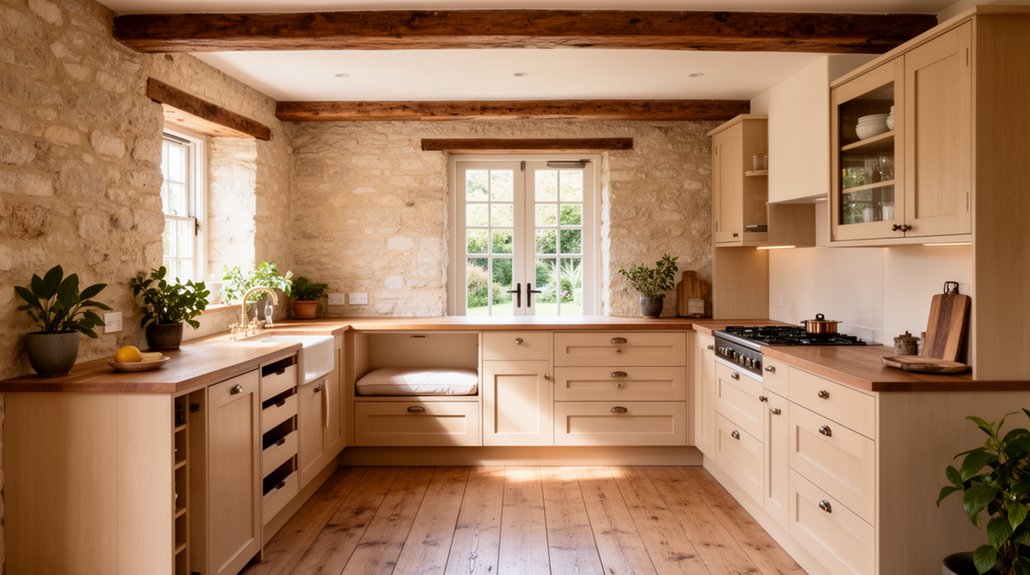
Make every inch count with built-in cupboards, window seats, and shelves that suit your cottage’s character.
Keep sightlines open and arrange furniture to carry daylight through the rooms.
Pale colors and reflective finishes can brighten dim corners without overpowering traditional details.
Built-In Storage Solutions
Thoughtful built-ins add useful storage without crowding a cottage’s rooms or blocking its natural light. Fit shallow cupboards into alcoves beside a chimney breast, and use the full height of a wall for shelves and closed cabinets.
In a narrow passage, a built-in bench can provide a place to sit, with drawers beneath for shoes and linens. Choose simple doors and traditional hardware to suit the cottage’s character.
Ask a joiner to make awkward spaces work, such as the area beneath a staircase or a sloping eave. Add hidden compartments for valuables, or use multi functional furniture, such as a window seat with a lift-up lid.
Keep shelves open where you want easy access, but reserve enclosed storage for everyday clutter. Measure carefully before ordering, and leave doors clear of original features.
Light-Enhancing Layouts
When planning a cottage layout, keep windows clear and let daylight travel between rooms. Place taller furniture against solid walls, and choose period appropriate furnishings that suit the room’s scale without crowding it.
A low settle or narrow dresser can provide useful storage while preserving sightlines. Where doors divide adjoining rooms, consider whether you can widen an opening or fit a glazed door, taking care to respect the cottage’s original character.
Arrange seating near windows, but leave enough space to move comfortably and reach shutters or curtains. Check that rooflights or new openings won’t disrupt historic rafters or the exterior restoration.
In smaller rooms, use open shelving sparingly and store everyday items in baskets or cupboards. Before changing the plan, note how sunlight shifts through the day and position work areas accordingly.
Reflective Finishes and Colors
To brighten a cottage without losing its character, use pale, light-reflecting colors on walls and ceilings, and reserve deeper shades for accents. Choose warm whites, soft creams, or muted stone tones to complement original timber and brick. These color palettes feel traditional while helping daylight travel through compact rooms.
Add reflective surfaces with care: a modest mirror opposite a window can carry light farther, while polished brass, glazed tiles, or glass cabinet doors lend gentle brightness. Avoid glossy finishes across every surface; they can look harsh and highlight uneven plaster.
Instead, balance a satin wall finish with matte woodwork and natural textures. Keep window frames light, and leave sills uncluttered. A restrained scheme will make your cottage feel more open, preserve its age-old charm, and support comfortable everyday living.
Choose Finishes That Preserve Original Features
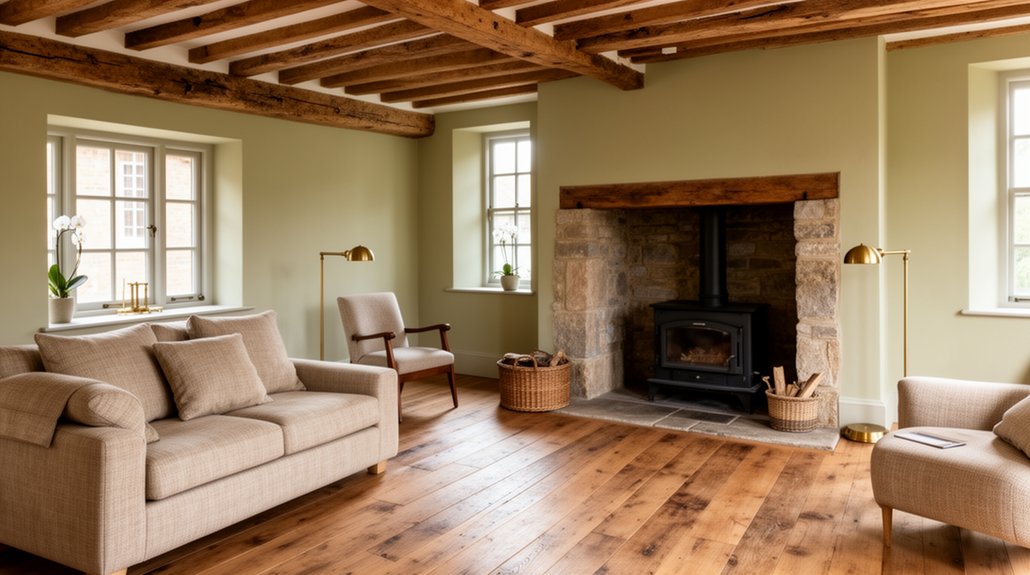
Choose finishes that complement your cottage’s original features rather than compete with them. Let exposed beams, old brick, and original joinery guide your palette and material choices. You’ll preserve their character when you use breathable limewash on historic masonry and understated paint on timber trim. Avoid glossy coatings that obscure grain or trap moisture.
For kitchens and bathrooms, select period appropriate fixtures with simple profiles, then pair them with authentic material choices such as stone, timber, and handmade tile. These traditional surfaces can handle modern use when you seal and maintain them correctly.
Match new hardware to the scale and finish of existing pieces, rather than adding ornate details that feel out of place. Before covering or replacing anything, check whether you can repair it; sound original features often bring more warmth and value than new finishes.
Conclusion
Renovating a character cottage is a careful balancing act: preserve what gives it soul, and improve what makes daily life easier. Start with the structure, plan each upgrade, and choose breathable materials and skilled tradespeople who understand older homes. Let modern comfort settle in quietly, like a well-fitted key in an old lock. Repair original details wherever you can, and make every change earn its place. With patience and sound advice, you’ll keep the cottage’s charm alive for years to come.