 MartinShields
Like Theseus finding a clear path through a maze, you’ll need a sound plan to guide your cottage renovation. Start by inspecting the structure, wiring, plumbing, and signs of moisture, then document defects and rank repairs by urgency. Set a realistic budget with a contingency for hidden problems, and sequence the work from safety fixes to finishes. Choose durable materials that suit the cottage’s character—but one overlooked issue can disrupt every step.
Key Takeaways
- Inspect the cottage from roof to foundation, document defects, and consult professionals about structural, moisture, or electrical hazards.
- Build a realistic budget from estimates and quotes; include permits, inspections, temporary housing, and a 10–20% contingency.
- Fix structural problems and water intrusion first, then complete rough plumbing, electrical, and insulation before interior finishes.
- Schedule inspections at key milestones, verify measurements before ordering materials, and track expenses, invoices, and changes.
- Preserve original features and choose durable, sustainable finishes suited to local conditions; test samples in the cottage’s natural light.
Inspect Your Cottage and Prioritize Essential Repairs
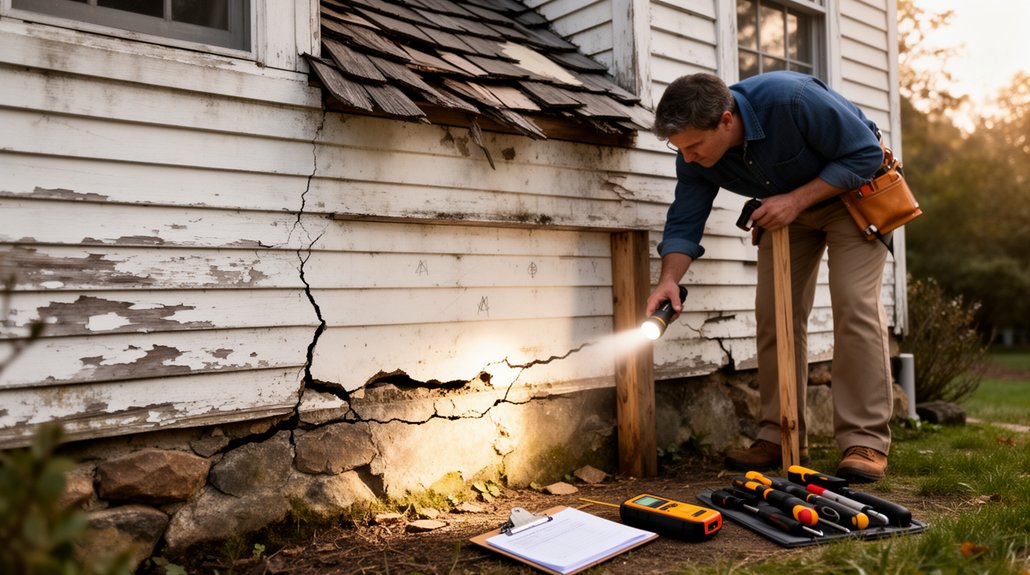
Before planning cosmetic upgrades, inspect your cottage from roof to foundation and identify repairs that affect safety, weather protection, or structural stability. Check shingles, flashing, gutters, and chimneys for damage or leaks.
Inside, look for ceiling stains, soft floors, cracked walls, and signs of pests or moisture. Test doors and windows, inspect the foundation and drainage, and note any loose railings or unsafe wiring.
Don’t dismiss small warning signs; water intrusion and shifting structures can worsen quickly. Photograph defects and record their locations so you can track what needs attention.
If you find serious cracks, sagging, persistent dampness, or electrical hazards, consult a qualified professional before proceeding. Address essential repairs before choosing a decorating style or adding vintage accents; sound, dry, secure rooms give every later improvement a reliable foundation.
Plan Your Cottage Renovation Budget
Once you’ve identified the repairs your cottage needs, set a realistic budget before choosing finishes or scheduling work. Price each repair using contractor estimates, supplier quotes, and current local labor rates. Include permits, inspections, delivery, and temporary accommodation if needed.
Use a clear Budget allocation: assign funds to essential repairs first, then divide the remainder among materials, labor, and contingency. Reserve 10 to 20 percent for hidden damage or price changes; older cottages often conceal problems behind walls or beneath floors. Don’t count that reserve as available spending money.
Apply practical Cost saving tips without compromising safety. Compare multiple written bids, reuse sound materials where appropriate, and handle simple tasks yourself only when you have the skills. Track every quote, deposit, invoice, and change in a spreadsheet.
If estimates exceed your limit, revise the scope before committing, not after work begins.
Sequence the Work and Choose Cottage-Friendly Finishes
With your budget set, sequence the work to prevent damage and costly rework: address structural repairs and water intrusion first, then complete rough plumbing, electrical, and insulation before closing walls. Next, install drywall or repair plaster, finish floors, and paint before fitting cabinets, fixtures, and trim. Schedule inspections at required milestones, and confirm measurements before ordering materials.
Choose cottage-friendly finishes that suit the building’s age and daily use. Favor Sustainable materials such as reclaimed timber, low-VOC paint, and durable natural flooring. Check that each product tolerates local humidity and temperature changes.
Preserve original features where practical, and select finishes that complement their scale and character. Use Decorative accents sparingly—simple hardware, textiles, or lighting can add warmth without clutter.
Before purchasing, test paint and flooring samples in the cottage’s changing natural light.
Conclusion
A successful cottage renovation isn’t about making everything new; it’s about giving the home a sound future while keeping its soul intact. Inspect carefully, address structural, electrical, and moisture problems first, and set aside a realistic contingency. Then sequence each task so repairs precede finishes, and choose durable materials that suit the cottage’s character. Check progress regularly and bring in qualified professionals when needed. With patience and clear priorities, you’ll create a safer, more comfortable retreat—one that’s ready to welcome the years ahead.