 MartinShields
Modernising an Edwardian house means improving comfort and function without stripping away the details that give it character. Start by evaluating the building, setting a realistic budget and checking which permissions you’ll need. Then plan repairs, energy upgrades and layout changes around the features worth preserving. The right choices depend on your home’s condition—and on how you want to live in it—so begin with the elements that matter most.
Key Takeaways
- Inspect the house thoroughly, documenting defects and identifying original features before planning any work.
- Prioritise repairs, consult qualified specialists, and secure required planning, listed-building, and building-regulations approvals.
- Set an itemised budget that includes professional fees, temporary costs, and a 10–20% contingency for surprises.
- Preserve and restore Edwardian details, protecting them during construction and choosing complementary, restrained finishes.
- Improve comfort and efficiency with breathable insulation, draught-proofing, modern heating, and carefully planned layout changes.
Assess Your Edwardian Home and Plan the Work

Before choosing finishes or booking trades, assess how your Edwardian home works and what needs attention. Walk through every room, noting damp, cracks, draughts, uneven floors and signs of wear.
Check the roof, gutters, windows, plumbing, wiring and heating; record defects and photograph areas that need closer inspection.
Look for original features such as fireplaces, joinery, tiles and decorative plasterwork. Their historic craftsmanship adds character, while period architecture can shape how you use and improve each space.
Identify what must be repaired, what you’d like to retain and where modern comfort matters most.
Ask a qualified surveyor or relevant specialist to investigate concerns you can’t assess safely.
Then group the work by urgency and dependency, so essential repairs guide later design choices and prevent avoidable disruption.
Set Your Budget and Check Permissions
Once you’ve identified the work, set a realistic budget that covers labour, materials, professional fees and a contingency for hidden defects. Budget planning should also account for temporary accommodation, waste removal and price increases.
Get itemised quotes from contractors, compare like for like, and confirm what each price includes before you commit. Keep a reserve of around 10–20 per cent; older houses can conceal problems that only emerge once work begins.
Check permissions before ordering materials or starting construction. Your home may sit in a conservation area, or have listed status, which can restrict alterations. Contact your local planning authority to confirm whether you need planning permission, listed building consent or building regulations approval.
Ask your architect or surveyor to help. Historical accuracy matters, but don’t assume it replaces formal approval; get decisions in writing and allow time for applications.
Keep Edwardian Features While Updating Your Home
Keep original mouldings wherever possible, and repair rather than replace damaged sections.
Restore sash windows to retain their character while improving their operation and efficiency.
Highlight period details with simple finishes that let them stand out without competing with modern updates.
Preserve Original Mouldings
Original mouldings—such as cornices, picture rails and skirting boards—give an Edwardian house much of its character. Before you renovate, inspect each feature for cracks, loose sections, paint build-up or water damage. Photograph details and note their profiles so you can match them if repairs become necessary.
Clean gently with a soft brush and mild detergent; avoid soaking timber or scraping ornamental plasterwork. For loose plaster, use a specialist repairer who can secure it without obscuring fine detail.
You can refresh decorative cornices with careful filling and repainting, but don’t sand away their original contours.
When updating rooms, plan new lighting, wiring and insulation around existing mouldings. Protect them during building work with padded coverings, and ask tradespeople to avoid cutting or fixing through visible features.
Preserve, repair and repaint rather than replace wherever possible.
Restore Sash Windows
Like original mouldings, Edwardian sash windows deserve repair before replacement. A careful sash window restoration can preserve their proportions while improving comfort and operation.
Start by checking for rot, cracked glass, loose joints and failed cords. A specialist can replace damaged timber, ease sticking sashes and fit new cords, weights or pulleys without altering the frame unnecessarily.
You can reduce draughts with discreet brush seals and repair the putty around each pane. Where the glass remains sound, retain it; traditional glazing contributes to the window’s character and may be worth preserving.
If you need better thermal performance, consider secondary glazing rather than replacing the original sash. Ask your contractor to assess ventilation, security and any conservation requirements before work begins.
Regular painting and maintenance will help protect the repaired windows for years.
Highlight Period Details
When updating an Edwardian home, make its period details part of the design rather than treating them as obstacles. Identify original features such as stained glass, picture rails, decorative plasterwork, tiled fireplaces, and timber floors before planning changes.
Protect them during building work, and repair damaged elements with materials and techniques suited to the period. Edwardian interiors often favour lighter rooms and restrained decoration, so don’t assume Victorian ornamentation or Georgian symmetry defines your home’s character.
Instead, use existing details to guide your choices: repeat a fireplace tile’s colour in a modern scheme, or let a picture rail define a contrasting paint line. Where a feature’s missing, research its original form before adding a replica.
This approach preserves authenticity while giving you room to update lighting, storage, and comfort.
Improve Insulation and Energy Efficiency
Improving insulation can make your Edwardian home warmer, quieter and cheaper to run, but upgrades need to suit its traditional construction. Before choosing thermal insulation, check for damp, leaks and poor ventilation; trapping moisture can damage older walls and timber. Ask a specialist to assess your home’s structure and recommend breathable materials where appropriate.
Start with straightforward energy saving upgrades: seal draughts around doors and windows, insulate the loft, and fit heating controls that let you manage temperatures efficiently.
If you have suspended timber floors, consider insulating beneath them while keeping air vents clear. For solid walls, weigh internal or external insulation carefully, since each can affect period details, room dimensions or the façade.
Choose efficient lighting and appliances, and maintain your boiler or heat pump. Tackle improvements in stages, then compare energy bills to see which measures deliver worthwhile savings.
Rework Your Edwardian Home’s Layout
Reworking your Edwardian home’s layout can make it suit modern life without erasing its character. Start by identifying how you use each room and where circulation feels awkward.
Edwardian houses often have separate reception rooms, so consider widening an existing doorway or adding a carefully positioned opening to improve flow while retaining original mouldings and proportions.
Before removing walls, ask a structural engineer to assess the building and check whether planning permission or building regulations apply.
Keep at least one quiet room for work or relaxation, and use built-in storage to reduce clutter without sacrificing floor space.
Connect indoor and outdoor areas by improving sightlines to the garden; a considered garden transformation can make the house feel more spacious.
Use consistent interior colour schemes to link adjoining rooms, while letting period details provide contrast and character.
Update Your Edwardian Kitchen and Bathroom
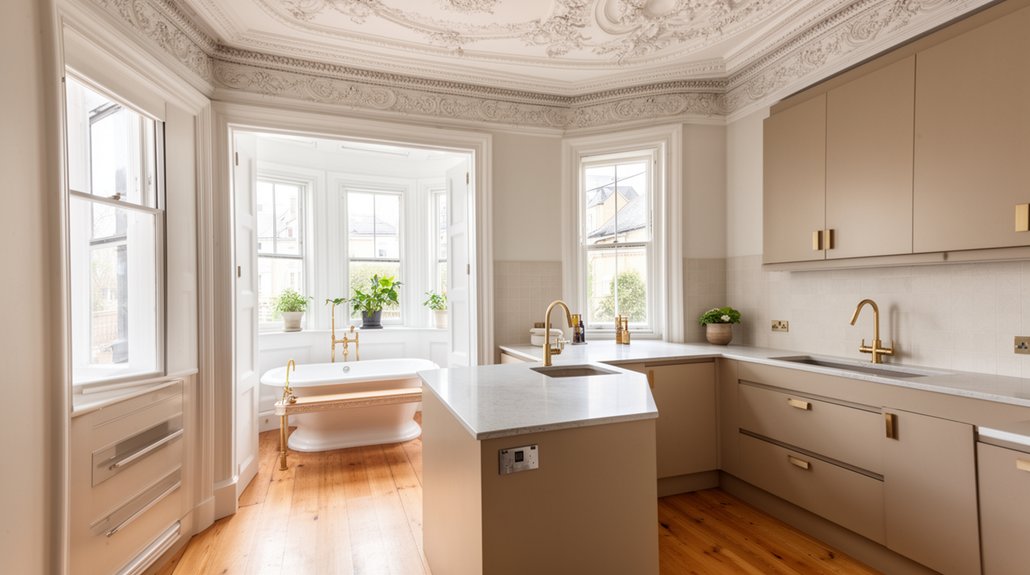
Update your Edwardian kitchen and bathroom for modern comfort while preserving their period character. Start by checking plumbing, wiring, ventilation and structural condition; address faults before installing new fixtures.
In the kitchen, improve workflow with well-planned storage, reliable appliances and task lighting, while keeping original cupboards or a range where practical.
In the bathroom, fit efficient taps, a powerful shower and effective extraction to control moisture.
Choose layouts and services that respect existing features rather than removing them unnecessarily. Historic authenticity doesn’t mean accepting poor performance: repair sound details, and document anything you alter.
Modern functionality depends on careful coordination, so plan pipe routes, electrical loads and access for future maintenance before work begins.
Use qualified tradespeople, especially for gas, electrical and waterproofing tasks, and confirm requirements with your local authority before changing protected features.
Choose Finishes That Suit Your Edwardian Home
Choose finishes that complement your Edwardian home’s original details without making rooms feel dated. Start with the features you’re keeping: stained-glass windows, timber floors, picture rails or decorative plasterwork. Let these guide your palette and material choices rather than copying a period scheme throughout.
Use warm neutrals on walls to reflect natural light, then add depth with muted greens, blues or earthy reds. Choose durable, low-sheen paint for busy areas, and test samples in changing daylight before committing.
For floors, restore sound boards where possible; use rugs to soften rooms and protect high-traffic zones.
You can borrow Victorian grandeur through a restrained patterned tile or polished brass fitting, while Colonial charm might inform a rattan accent. Keep modern fixtures simple, and repeat finishes thoughtfully so old and new feel cohesive.
Don’t overload rooms with period-style details.
Conclusion
Modernising an Edwardian home works best when you improve comfort without erasing its character. Start with a careful assessment, realistic budget and permissions, then prioritise repairs, insulation and layout changes. Restore features such as sash windows and plasterwork, and choose efficient systems and finishes that sit naturally alongside them. With experienced professionals and a phased plan, you can make your home work for today while preserving what makes it distinctive. One useful benchmark: heat loss through windows can account for up to 18% of a home’s total heat loss.