 MartinShields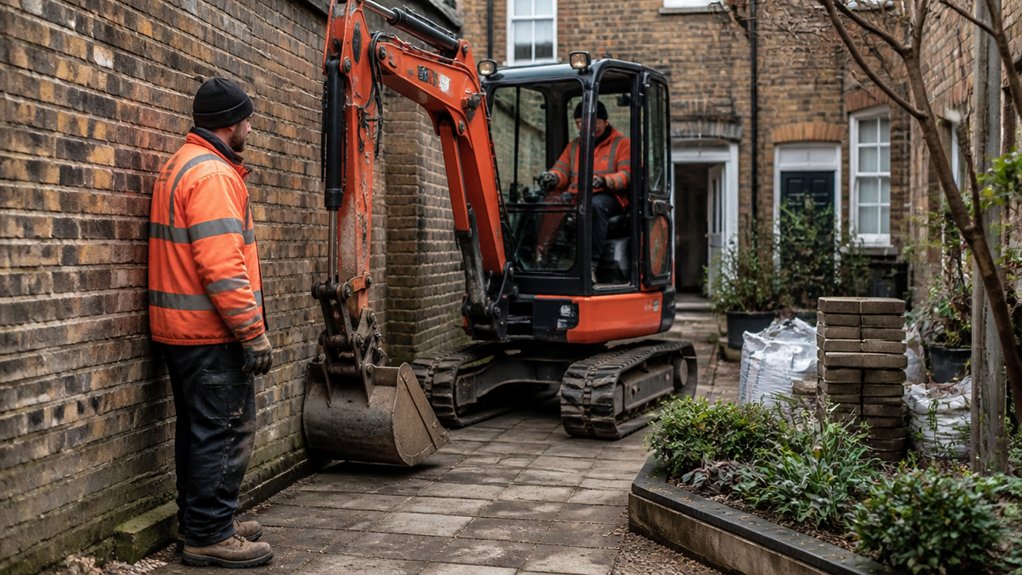
The smallest excavator isn’t always the safest choice for a tight London site. Before you hire, measure access routes, turning space and overhead clearance yourself; old plans may miss a narrow archway or a soft patch that limits where the machine can travel. Then match the excavator’s size and reach to the work, ground conditions and nearby homes. One overlooked constraint can change which machine will fit—and whether it can work safely.
Key Takeaways
- Measure gates, alleys, doorways, turning areas, and overhead clearance before choosing an excavator.
- Compare machine width, height, reach, and digging depth with site boundaries and job requirements.
- Check ground strength, slopes, soft areas, and buried services; use ground protection where needed.
- Choose attachments and lifting capacity for all planned tasks, including breaking, drilling, or spoil handling.
- Consider noise, vibration, working hours, and neighbour access; confirm operator experience and seek expert advice if unsure.
Measure Access Before Choosing an Excavator
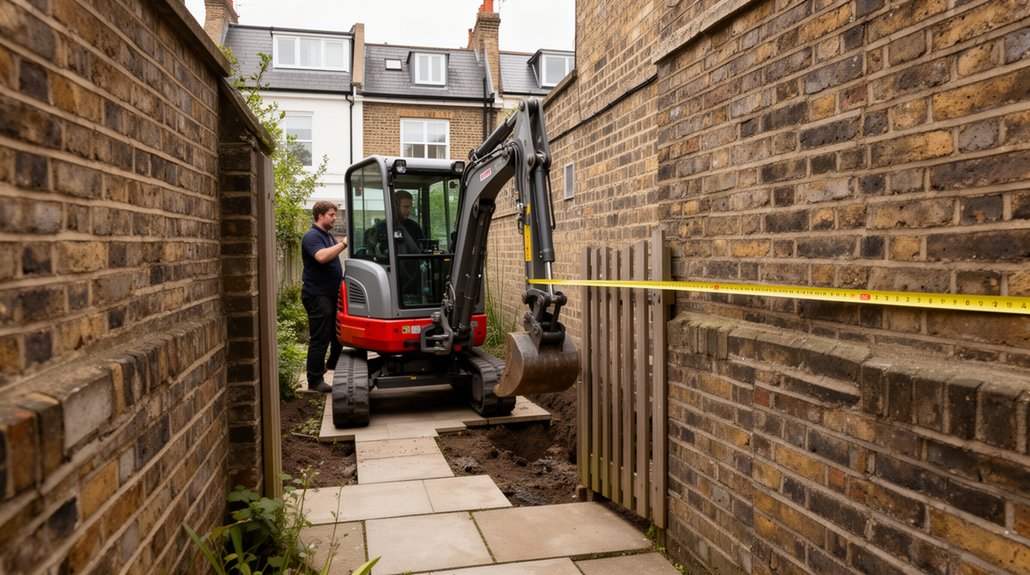
Before comparing excavator sizes, measure the route to the work area—not just the space where you’ll dig. Check the narrowest gate, alley, doorway, and passage, then note overhead obstacles such as branches, cables, and archways. Measure each pinch point yourself; old plans and rough estimates can miss awkward turns or sloping ground.
A Land survey can help confirm boundaries, levels, and access constraints, especially on a cramped London plot. Record the route’s width and turning space, plus any steps, kerbs, or soft surfaces that could complicate delivery.
Check equipment height against covered entrances and low ceilings, allowing room for safe clearance during loading and unloading. Share these measurements with your hire company before booking. Clear access details help them advise on transport and prevent a machine arriving that can’t reach the site.
Match Excavator Size to Your Site
Once you’ve confirmed the access route, match the excavator to the work area and the job. Check the available space around the dig, including boundaries, walls, overhead obstructions and room to reposition. A machine that fits through the entrance may still be too large to turn or work safely in a narrow garden.
Consider ground conditions, slope and bearing strength, too; soft or uneven ground can limit where you can operate and may require protective mats.
Compare the machine’s overall dimensions and working reach with the site plan, allowing clearance for the boom and tail swing. Equipment versatility matters on residential sites, where restricted space can make adjustments difficult.
Confirm that your operator has suitable Operator training for the machine and conditions. Keep access routes and neighbouring properties clear, and leave enough room for safe movement.
Choose an Excavator for the Job
What does the job require beyond digging? Consider the full task before choosing a machine. You might need to lift paving, break concrete, drill post holes or move spoil through a narrow passage. Match the excavator and attachments to those demands, rather than paying for capacity you won’t use.
Check the required digging depth, reach and lifting capacity against the machine’s specifications, including when it’s working at full extension.
Think through access and operation, too. Can you transport the excavator to the site and position it where the work happens? If you’re arranging excavator rental, tell the supplier what you’ll be doing and ask which attachments fit.
Confirm the operator’s experience and plan safety considerations, including clear communication, stable positioning and keeping people away from the working area. Then book the machine that suits your task.
Check Ground, Noise and Neighbour Constraints
Will the ground support the excavator without sinking or damaging buried services, paving or landscaping? Check plans for drains, cables and water pipes, then inspect the route and work area. Soft soil, basements and recently backfilled trenches may need ground protection or a lighter machine.
For Landscaping challenges, consider narrow access, delicate borders, retaining walls and limited space to turn; track width and tail swing matter as much as digging depth.
Safety considerations include checking ground stability, overhead cables and safe separation from neighbours. A compact excavator can still transmit vibration through old foundations or disturb nearby residents.
Confirm permitted working hours, explain the schedule to neighbours and choose quieter equipment where practical. If access, ground bearing capacity or noise limits remain uncertain, ask your hire supplier or a groundworks professional to assess the site before you book.
Conclusion
Choosing an excavator for a tight London site starts with measurements, not guesswork. Check access routes, archways, turning space, ground conditions, working reach, noise limits and neighbouring properties before booking. Then match the machine to the job, allowing room to operate safely without causing unnecessary disruption. If access is uncertain, arrange a site visit and confirm dimensions with the hire company. As the saying goes, “measure twice, cut once”—careful planning helps you avoid delays, damage and costly changes.