
 MartinShields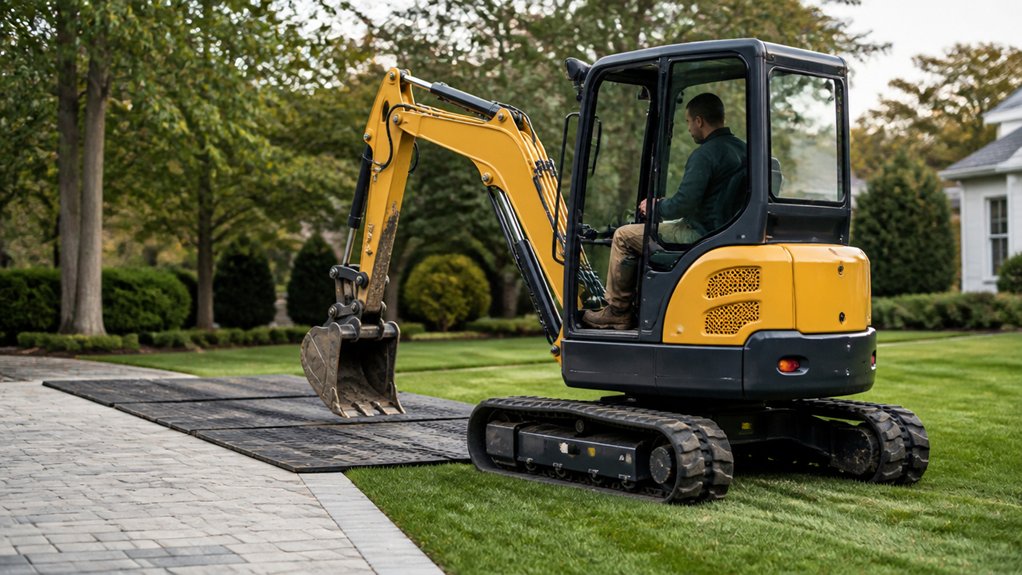
A mini digger can damage your lawn or driveway, but careful planning can reduce the risk. Its tracks may tear soft turf, while turning or crossing weak paving can leave marks or cause cracks. Wet ground, tight access and sharp manoeuvres make problems more likely. Before you bring a machine onto your property, consider the route, ground conditions and surface protection—one overlooked detail can make all the difference.
Key Takeaways
- A mini digger can damage lawns by crushing grass, compacting soil, tearing turf during sharp turns, or leaving ruts.
- Wet, saturated, loose, or thawing ground increases the risk of sinking and lasting lawn damage.
- Driveways may suffer cracked or chipped paving, loosened joints, and scratches from tracks grinding grit.
- Ground-protection mats, a clear access route, and avoiding sharp turns can reduce damage to both surfaces.
- Damage is possible even with careful operation; stop, photograph it, and check the hire agreement before arranging repairs.
Can a Mini Digger Damage Your Lawn or Driveway?
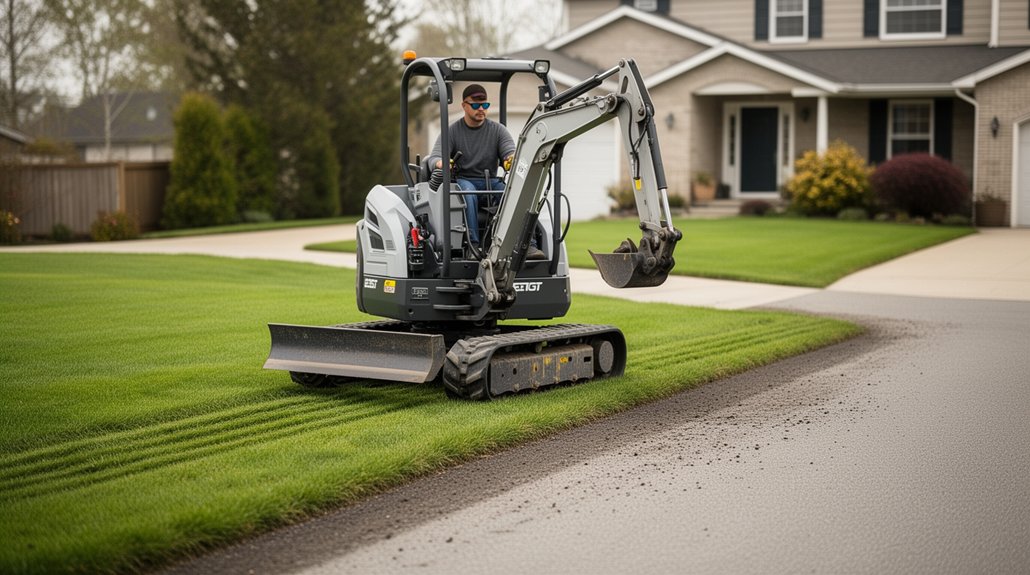
Yes, a mini digger can damage your lawn or driveway, especially if the ground is soft or the machine turns sharply. You can reduce that risk by checking the site before work begins and choosing suitable access routes. Consider the machine’s weight, the surface condition, and how much room you have to maneuver.
If you’re unsure, ask the operator to assess the area and recommend precautions. Even careful operation may leave marks, so decide whether you’re comfortable with some disruption. Protecting your lawn and driveway helps preserve your landscape aesthetics and can support your property value.
Discuss vulnerable areas, access limits, and any finish you want maintained before hiring a machine. A clear plan lets you balance the work’s benefits against the possibility of repairs, then prepare accordingly.
How Do Mini Diggers Damage Grass and Paving?
Mini diggers damage grass when their tracks press down on the soil, crushing blades and compacting the ground; sharp turns can tear up turf. Repeated passes deepen ruts and leave uneven patches that may need levelling and reseeding.
On paving, the machine’s weight can crack weak slabs, loosen joints, or chip edges, especially when you turn or pivot in place. Tracks can also grind grit across the surface, leaving scratches.
Before work begins, plan a direct route and keep turning movements to a minimum. Use boards or protective mats to spread the load across vulnerable areas.
These Landscaping tips help limit repairs, while suitable Equipment maintenance—particularly clean, properly tensioned tracks—reduces avoidable scuffing. You’ll still need to check the lawn and paving after the digger leaves and address any marks promptly.
Which Ground Conditions Make Damage More Likely?
Wet, soft ground makes damage more likely because tracks can sink, compact the soil and leave deep ruts. Clay holds water and loses strength when saturated, while loose topsoil can shift under a turning machine. If you’ve had recent rain, check whether the surface feels spongy or leaves footprints that fill with water. These signs point to poor soil stability and a greater risk of lasting marks.
Dry ground isn’t always safe. Shallow soil over a soft sub-base may give way, and gravel can move when tracks pivot. On lawns, thin turf offers little protection; on driveways, weak edges or cracked paving can fail under equipment weight.
Frozen ground may seem firm, but thawing can quickly soften it. Assess the surface, moisture and underlying support before work begins, and postpone digging if the ground can’t carry the machine reliably.
How Should You Plan a Safe Access Route?
Once you’ve checked the ground, plan a route that gives the mini digger firm, even support from the entrance to the work area. Walk the route first and note narrow gates, sharp turns, slopes, soft patches, drains, and overhead obstructions.
Measure the machine’s width, including tracks, and confirm it can pass through every pinch point without forcing a turn. Choose the shortest practical route, but avoid steep gradients and tight manoeuvres that could destabilise the digger or strain its tracks.
Keep the route clear of people, parked vehicles, and hidden services; mark boundaries so the operator can follow them. Consider landscaping aesthetics when choosing a path through visible areas, and check equipment maintenance before travel: sound tracks, brakes, and controls help the machine move predictably.
Brief the operator on hazards and stopping points.
How Can You Protect Your Lawn and Driveway?
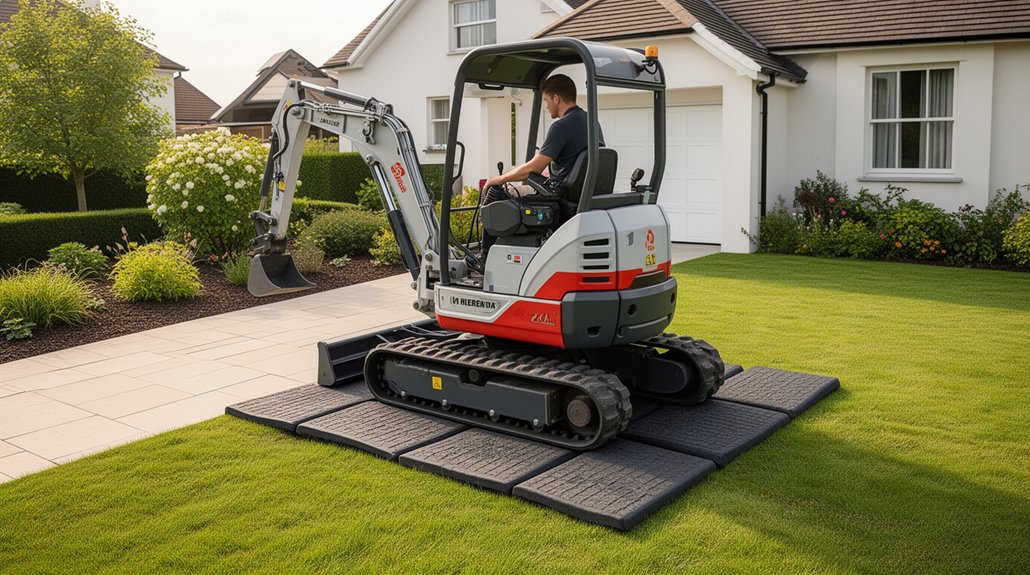
Protect the surface before the digger arrives: lay ground-protection mats or sturdy track boards along the route, especially over soft lawn, paving edges, and driveway joints. Make sure each board sits flat and overlaps securely, so tracks can’t catch an edge or expose the ground beneath.
Keep the machine on this protected path, and avoid sharp turns, sudden braking, or pivoting on the spot; these movements can tear turf and scuff paving. Ask the operator to spread the load with suitable mats when crossing vulnerable areas or positioning the digger to work.
Remove loose stones and debris first, and keep mats clean to reduce slipping. Afterward, lift them carefully rather than dragging them.
These precautions preserve Landscaping aesthetics and help protect your Property value.
What Should You Do if Damage Occurs?
If the digger damages your lawn or driveway, stop work and photograph the affected area before anyone moves mats or equipment. Note when the damage occurred, the machine’s position, and the ground conditions.
Tell the operator or hire company promptly, and keep copies of messages, photos, and any repair estimates. Check your hire agreement and insurance terms before arranging work; you may need approval or an inspection first.
For shallow ruts, wait until the soil dries, then loosen and level the ground before reseeding.
For cracked paving or deeper damage, ask a qualified contractor to assess repairs. Discuss landscaping considerations, including drainage and existing services, before restoring the area.
Ask the hire company to review operator practice and machinery maintenance, especially if a leak or mechanical fault may have contributed. Don’t restart until you’ve agreed on safer access and protection.
Conclusion
A mini digger can damage your lawn or driveway, but you can greatly reduce the risk with careful planning. Choose a firm, dry route, protect vulnerable surfaces with suitable mats or boards, and avoid sharp turns, steep slopes, and sudden movements. Even a small mistake can leave ruts that look like trenches or crack weak paving like a dropped boulder. Inspect the route first, operate slowly, and stop if the ground shifts. If damage occurs, document it and arrange repairs promptly.