 MartinShields

Like a ship testing unfamiliar waters, your micro excavator must prove its balance and pulling power on clay. Saturated ground can swallow narrow tracks, while compacted soil can strain the hydraulics and undercarriage. To judge reliability, check breakout force, track width, ground pressure, and build quality, then assess how the machine behaves under realistic conditions. One overlooked weakness can turn a capable excavator into a costly problem.
Key Takeaways
- Micro excavators can handle clay, but reliability depends on soil density, moisture, and whether gravel or hardpan increases resistance.
- Strong breakout force, wide tracks, low ground pressure, and responsive hydraulics improve traction, stability, and digging control.
- Wet clay increases slipping and buildup; travel slowly, avoid sharp turns, clear tracks, and stop if the machine sinks or slides.
- Before buying, inspect the undercarriage, hoses, cylinders, and pins, then test hydraulic response and traction on soft ground.
- Check service history, parts availability, safety features, warranty, and maintenance costs to assess long-term reliability.
Can a Micro Excavator Handle Clay?
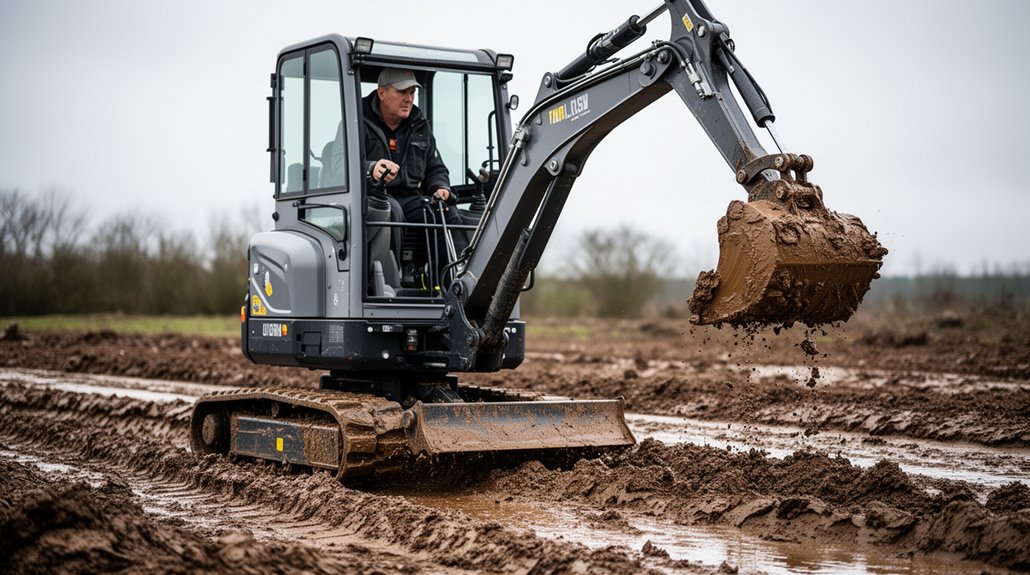
Yes—a micro excavator can dig clay, but performance depends on how dense and wet the soil is. Check the ground before you start: dry, compacted clay can resist the bucket, while saturated clay may cling to it and reduce digging efficiency. Soil composition matters, too; clay mixed with gravel or hardpan can demand more force than clean, workable clay.
Match Excavator size to the job and site conditions. A small machine can handle shallow trenches, landscaping, and limited excavation, but it may struggle with deep cuts or heavily compacted ground. Work in controlled passes, avoid forcing the bucket, and pause if the machine loses traction or the soil becomes unstable.
If you’re excavating after rain, allow the ground to drain when practical. These checks help you set realistic expectations and avoid overloading your machine.
Which Micro Excavator Features Help on Clay?
On clay, prioritize a micro excavator with strong breakout force, a low center of gravity, and wide tracks for traction and stability. These features help you penetrate dense soil while reducing the risk of tipping or sinking.
Choose a machine with a smooth, responsive hydraulic system so you can control digging and lifting precisely. A longer dipper arm can extend your reach, while a well-designed blade helps stabilize the chassis and backfill trenches.
Advanced attachment options, such as a suitable grading bucket or thumb, let you handle varied tasks without changing machines.
Look for maneuverability enhancements, including a compact tail swing and independent track control, to work efficiently in confined areas.
Check ground clearance and track durability, too; robust components better withstand repeated contact with abrasive, sticky clay.
How to Operate a Micro Excavator on Wet Clay?
Wet clay can quickly reduce traction, so move the micro excavator slowly and keep it on the firmest available ground. Before starting, assess the route, identify soft spots, and avoid sharp turns that can sink or destabilize the tracks. Travel straight across slopes where safe, keeping the bucket low to maintain balance.
Use smooth controls and Hydraulic precision: make small movements, avoid sudden swings, and don’t force the bucket through resistant soil. Dig in shallow passes, repositioning the machine as needed rather than overreaching. Keep spoil piles away from the machine and excavation edge to limit added ground pressure.
Monitor track buildup and clear packed clay when it affects grip. Minimize unnecessary passes to reduce Soil compaction and rutting. If the machine begins to slide or sink, stop, lower the attachment for stability, and retreat along the firmest route.
What to Check Before Buying a Micro Excavator
After working in wet clay, you’ll know how much traction and control matter; check a micro excavator’s operating weight, track width, ground clearance, and hydraulic response before buying. Confirm the machine’s rated lift capacity and digging depth suit your jobs, and verify that its tracks resist clogging. Ask for a demonstration on soft ground: sluggish steering, uneven travel, or delayed hydraulics can signal wear or poor performance.
Inspect hoses, cylinders, pins, and undercarriage for leaks, looseness, or damage. Review service records and parts availability, then price routine repairs. Maintenance tips from the manufacturer should cover cleaning packed clay, greasing pivot points, and checking track tension. Test visibility, seat comfort, and control layout before committing.
Follow safety precautions by confirming rollover protection, emergency stops, and stable operation on slopes. Compare warranty terms and total ownership costs.
Conclusion
A micro excavator can handle clay, but only when its strength and setup match the ground. Choose wide tracks, a low center of gravity, and strong breakout force to keep your machine steady when clay grips like glue. On wet soil, move slowly, avoid sharp turns, and spread your weight. Before buying, inspect hoses, cylinders, and undercarriage parts, then test the machine on soft ground. Careful checks and operation help you work reliably—not sink into trouble.