 MartinShields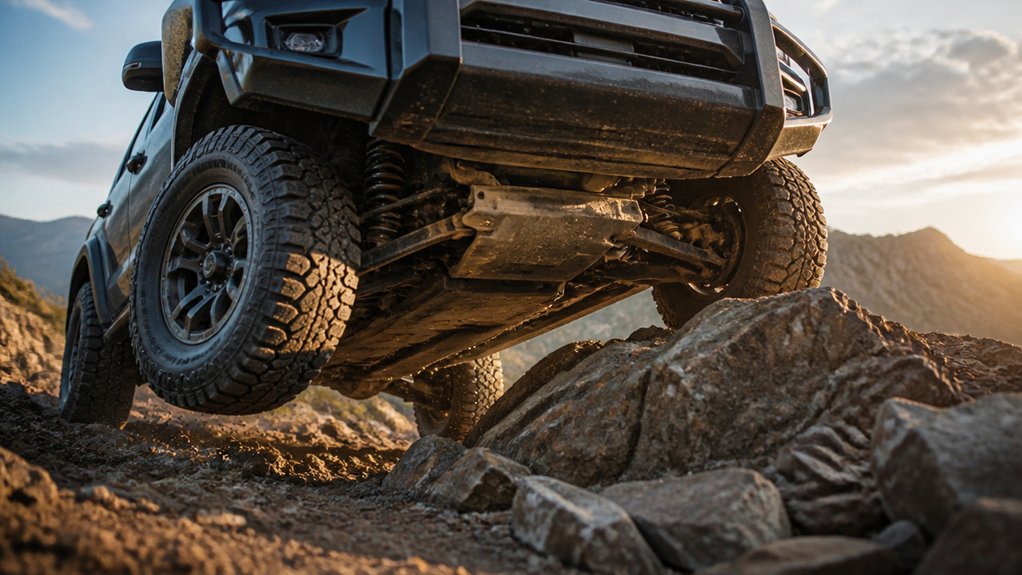
You don’t need a monster truck to tackle rough terrain, but too little clearance can leave you hung up on the first deep rut. For most work, 8 to 12 inches is a practical starting point, though the right figure depends on the obstacles you face and where your vehicle is most vulnerable. Measure with your usual load and consider suspension travel, tire size, stability, and traction—because one overlooked detail can turn extra height into a liability.
Key Takeaways
- Set clearance for the deepest obstacles you regularly encounter, not the vehicle’s maximum advertised specification.
- Measure beneath the lowest vulnerable component—such as the differential, frame, exhaust, or mounted equipment—with typical loads aboard.
- Allow enough clearance for rocks, ruts, mud, and sloped terrain; focus on the obstacle most likely to damage or high-center your vehicle.
- Remember that larger tires raise the axles only by their added radius, while also potentially affecting braking, acceleration, and handling.
- Avoid unnecessary lift: extra height raises the center of gravity, so prioritize stability, suitable suspension and tire pressure, and careful line choice.
How Do You Choose the Right Ground Clearance?
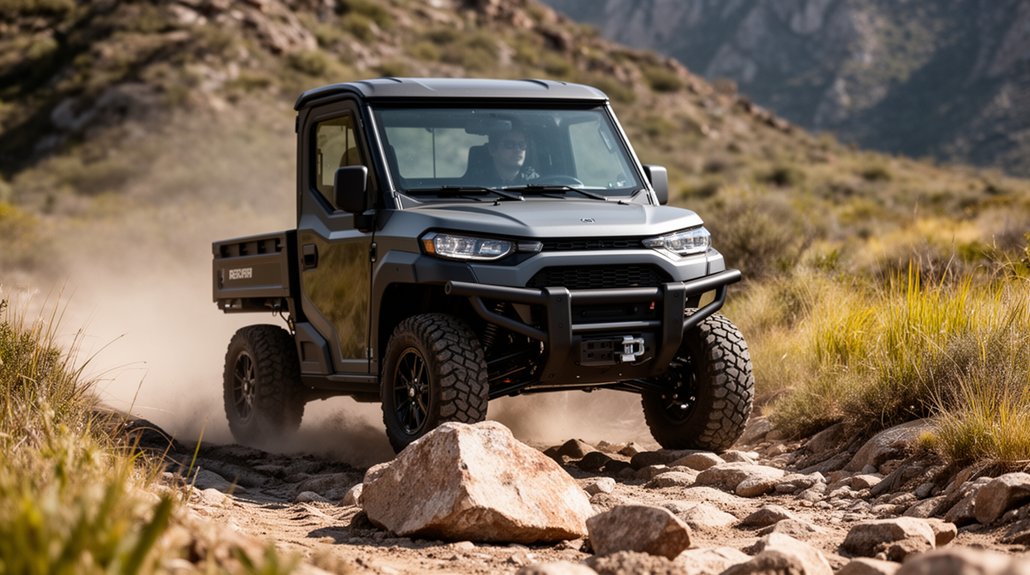
Choose ground clearance based on the obstacles you’ll encounter, not the biggest number on a spec sheet. Start by listing the loads, tools, and routes your vehicle must handle.
Then inspect the lowest points beneath it, including the differential, frame, exhaust, and any mounted equipment. A clearance measurement taken at the wrong point can mislead you, so check the component most likely to contact the ground.
Account for payload, tire size, suspension travel, and how the vehicle sits when loaded; each can reduce usable clearance.
Compare those needs with the vehicle design, not just its advertised maximum. If you’re choosing between models, favor practical protection and stable handling over extra height you won’t use.
Confirm measurements in working condition, with your usual tires and load, before committing to a setup.
What Clearance Works for Rocks, Ruts, Mud, and Slopes?
The right clearance depends on what’s under your tires: rocks call for enough height to protect the differential and underbody, while deep ruts can leave a vehicle high-centered if its belly clearance is too low.
For rocky trails, measure clearance at the lowest vulnerable component, not just the body. Larger Tire size can raise axles, but won’t lift the differential beyond the tire’s added radius.
In mud, prioritize enough clearance to keep the chassis above packed ruts, and check that your tires can clear the wheel wells.
Slopes often hide ledges or washouts, so allow extra room beneath the front and rear overhangs.
Suspension travel helps wheels follow uneven ground, but it doesn’t replace clearance under the chassis.
Match your setup to the deepest obstacle you’ll regularly encounter, then inspect it loaded for work.
How Does Ground Clearance Affect Stability and Traction?
Clearance can help you cross ruts and rocks, but raising a vehicle also lifts its center of gravity, which can make it lean more on side slopes and feel less settled in turns. You’ll notice that trade-off most when carrying a load, traversing off-camber ground, or making a quick correction.
Keep heavy gear low, slow down on slopes, and avoid abrupt steering.
Your Suspension system matters as much as lift height. A well-matched setup controls body movement and keeps tires planted; excessive lift or soft, poorly tuned springs can reduce stability and traction.
Tire size also affects clearance: larger tires raise the chassis, but they add weight and can dull acceleration or braking if you don’t adjust gearing. Choose only the clearance you need, then maintain proper tire pressure for the terrain.
More height won’t compensate for poor line choice or speed.
Conclusion
Choose clearance for the obstacles you actually face, not the biggest number on a spec sheet. Measure the lowest vulnerable points with your usual payload, tires, and suspension setup, then allow enough room for rocks, ruts, and uneven ground. Need more height? Ask whether it improves access without raising your center of gravity too far. Protect the underbody, preserve traction, and keep the vehicle stable. The right setup clears the terrain safely without adding height you don’t need.