 MartinShields
A period home can be like a layered record: lift a floorboard and you may find an old repair that changes your plans. Before you choose paint or fittings, inspect the roof, walls, and original features, then tackle structural work and essential services. From kitchens and bathrooms to stairs and bedrooms, each room needs updates that respect its age while improving comfort. The key is knowing what to preserve—and what to change discreetly.
Key Takeaways
- Start with a whole-house survey: Inspect the roof, walls, foundations, windows, floors, and services; document original features, defects, priorities, budget, and approvals.
- Repair before upgrading: Fix structural problems and damp first, then modernize heating, wiring, and insulation with qualified specialists and discreet service routes.
- Renovate kitchens and bathrooms carefully: Preserve original tiles, cupboards, ranges, and fixtures; check plumbing, ventilation, and floor strength before adding modern appliances or fittings.
- Refresh living rooms and bedrooms: Repair plaster, fireplaces, floors, and windows; improve comfort with suitable insulation, draught-proofing, storage, and flexible lighting.
- Choose finishes that suit the property: Use breathable paints and compatible materials, select period-appropriate details, and favor durable, repairable products that complement existing features.
Plan Your Period Property Renovation
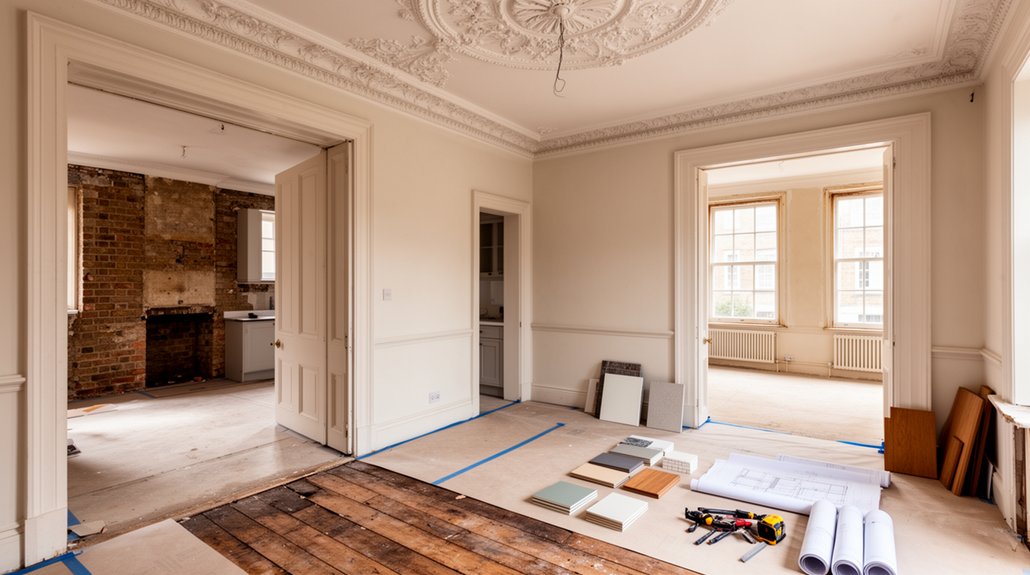
Before tackling individual rooms, plan the renovation as a whole. Define your priorities, budget, and timeline before you commission work.
List the rooms you’ll update, the changes each needs, and how those projects depend on one another. For example, settle your layout and service requirements before choosing finishes.
Set aside a contingency fund for discoveries, and confirm that your schedule allows for specialist materials and skilled trades.
Research your property’s age, original features, and any heritage restrictions. Use that evidence to guide decisions about architectural authenticity and historical accuracy, rather than relying on assumptions or current trends.
Consult a conservation professional when rules or appropriate methods aren’t clear.
Keep records of existing details, decisions, costs, and approvals.
With a coordinated plan, you can protect the home’s character, manage disruption, and make consistent choices from room to room.
Survey and Repair Roofs, Walls, and Features
Start with a careful survey of the roof, exterior walls, and original features such as chimneys, cornices, and stonework.
Arrange a professional Roof inspection to check slipped tiles, damaged flashing, sagging rafters, and blocked gutters.
Ask the surveyor to identify leaks and assess whether historic materials need repair or careful replacement.
Outside, look for bulging masonry, widening cracks, loose pointing, and signs of damp.
Don’t conceal defects with paint or cement; use compatible materials that let old walls breathe.
If movement appears active, commission an engineer to diagnose its cause before work begins.
Wall stabilization may require repointing, discreet ties, or underpinning, depending on the evidence.
Photograph details, record urgent repairs, and protect sound features during construction.
Confirm that contractors understand conservation requirements and local permissions before altering significant elements.
Upgrade Heating, Wiring, and Insulation
Once you’ve repaired the roof, walls, and period features, assess your heating, wiring, and insulation before finishing rooms.
Replace inefficient heating equipment and have a qualified electrician bring circuits up to current safety standards.
Improve insulation where it won’t trap moisture or damage historic fabric.
Modernize Heating Systems
Modernize heating, wiring, and insulation as one coordinated upgrade, since changes to one can affect the others. Begin by checking your boiler, radiators, pipework, and controls; ask a qualified heating engineer to assess capacity, efficiency, and compatibility before you choose replacements.
Retain sound period features where practical, but replace unreliable equipment and balance radiators so each room warms evenly.
Consider underfloor heating for suitable rooms, especially during a floor renovation. Confirm the floor build-up, heat output, and effect on historic finishes before installation.
Pair your system with smart thermostats, using room-by-room schedules to reduce wasted energy without overheating delicate interiors. Set realistic temperatures, then monitor comfort and running costs through the first heating season.
Keep service records and arrange regular maintenance; prompt attention to leaks, unusual noises, or uneven heating can prevent costly damage.
Upgrade Wiring And Insulation
Coordinate electrical and insulation work with the heating upgrade, since new circuits, controls, and insulation can affect system performance and access to historic fabric. Ask a qualified electrician to inspect wiring, consumer units, earthing, and circuit capacity before you close walls or ceilings.
Plan discreet cable routes that avoid damaging original plaster, joinery, and decorative features. Prioritize electrical safety with suitable protection, tested circuits, and compliant smoke alarms.
Improve thermal efficiency without trapping moisture in solid walls or roof spaces. Choose breathable insulation and compatible finishes, and address leaks, ventilation, and damp before installation.
Insulate lofts and accessible floors carefully, keeping eaves ventilation clear and maintaining safe distances around recessed lights and flues. Check whether listed-building consent or building regulations apply, and document hidden services and insulation for future repairs.
Coordinate contractors to limit repeated opening of historic fabric.
Renovate Your Period Kitchen
Before renovating your period kitchen, identify original features worth preserving, such as floor tiles, a range, or fitted cupboards. Protect and repair them where possible rather than replacing them.
Then add modern conveniences—efficient appliances, task lighting, and practical storage—without obscuring the room’s character.
Preserve Original Features
When you renovate a period kitchen, preserve original features that give the room its character, such as a range, pantry cupboards, tiled floors, or a Belfast sink. Before work begins, photograph each feature and note any damage. Ask a specialist to assess old ranges, check tiled floors for loose or cracked pieces, and inspect sinks for leaks.
Repair rather than replace wherever practical: clean tiles with a gentle, pH-neutral solution, repoint them with compatible grout, and use suitable materials to mend timber cupboards. Strip paint from decorative moldings carefully, testing a small area first to avoid damaging the detail.
If a feature needs removal for repairs, label it and store it safely. Choose antique furniture that suits the kitchen’s age and proportions, and avoid discarding original fittings without expert advice.
Blend Modern Conveniences
Once you’ve protected the kitchen’s original character, plan modern conveniences around its layout and fabric. Keep new services discreet: route plumbing and wiring through existing voids where possible, and avoid cutting into historic beams or masonry.
Choose appliances that fit the room’s proportions, then position them to create a practical work triangle without blocking doors or period features.
Improve energy efficiency with well-sealed windows, LED task lighting, and efficient appliances; don’t seal the room so tightly that ventilation suffers. A discreet extractor should vent outdoors, not into a chimney or roof space.
For smart home controls, use compatible thermostats, leak sensors, or lighting switches, and conceal hubs and cabling in accessible cupboards.
Check electrical capacity before adding high-load equipment, and have a qualified electrician assess earthing and circuits.
This approach gives you reliable comfort without compromising the kitchen’s character.
Update Your Period Bathroom

Updating a period bathroom means balancing modern comfort with the room’s original character. Start by checking the plumbing, ventilation, and floor structure; older pipes may need replacing before you install new fittings.
Choose Vintage fixtures, such as a pedestal basin or claw-foot tub, to echo the home’s era, but pair them with efficient taps and a reliable shower.
Use timeless tiles in period-appropriate shapes and colours, and confirm the substrate can support their weight. A discreet underfloor heating system can improve comfort without crowding the room.
Preserve original features where they’re sound, repairing rather than replacing mouldings or encaustic flooring.
Plan storage carefully: a recessed cabinet or compact vanity keeps essentials accessible while maintaining clear circulation.
Before work begins, verify waterproofing, electrical safety, and local requirements with qualified tradespeople.
Refresh Living Rooms and Bedrooms
With the bathroom planned, turn to living rooms and bedrooms, where careful repairs can preserve period character while improving everyday comfort. First, inspect plaster, floorboards, sash windows, and original fireplaces; repair sound features rather than replacing them. Address draughts with discreet seals, and check for damp before decorating.
Choose breathable paint and paper suited to older walls, preparing surfaces carefully so finishes last. Layer Vintage textiles through curtains, upholstery, and cushions, but check fabric condition and fire safety before reuse.
Pair antique lighting with modern wiring: ask a qualified electrician to inspect fittings, install suitable circuits, and confirm safe operation. In bedrooms, improve comfort with appropriate insulation and well-fitted window coverings, avoiding changes that trap moisture.
Balance period details with practical storage and flexible lighting, so each room feels inviting without compromising the building’s fabric or your daily routine.
Improve Hallways, Stairs, and Storage
Although hallways and stairs take heavy daily use, you can improve their safety and function without losing period detail. Start by checking stair treads, handrails, and balusters for movement or damage; secure loose parts and repair uneven steps before adding finishes.
Improve hallway lighting with layered sources: a well-positioned ceiling fixture, wall lights, and switches at both ends of a passage or stair run. Choose bulbs that provide clear visibility without glare, and have an electrician assess old wiring.
Make circulation easier by clearing narrow routes and planning storage around door swings. Built-in cupboards beneath stairs can provide stairway storage for coats, shoes, and cleaning supplies, while shallow hallway cabinets keep essentials accessible without obstructing movement.
Measure carefully, preserve access to services, and guarantee doors open fully. Use secure fixings for heavy items.
Choose Period-Friendly Finishes and Details
Once structural work is complete, choose finishes that suit the property’s age and character without compromising modern performance. Research the home’s original period, then use surviving features, photographs, or local examples to guide your palette and materials.
Match paint colors to the room’s light, and select breathable finishes for older walls to help manage moisture. Choose timber, stone, tile, or flooring that complements existing details rather than competing with them.
For kitchens and bathrooms, pair discreet modern fittings with period appropriate fixtures, such as traditional taps, handles, and light switches. Add authentic decorative details, including cornices, picture rails, or door hardware, where evidence supports them.
Check dimensions and fixing methods before ordering replacements. Prioritize durable, repairable products, and keep samples on site so you can assess how finishes look together before installation.
Conclusion
Renovating a period property works best when you plan from the roof down, repair before replacing, and choose upgrades that respect its original character. Keep a record of details as you go, and route modern services discreetly so each room feels cohesive. Even a small choice matters: a 10-centimetre strip of original skirting can help you picture the craftsmanship carried through an entire home. Take your time, and you’ll create lasting comfort without losing the features that make your property distinctive.