 MartinShields
You may not realise that a farmhouse’s original lime plaster, timber beams and wide-plank floors can be damaged by modern materials that trap moisture or hide their character. Before you plan new kitchens, bathrooms or heating, identify which features deserve careful repair and which updates can improve comfort without changing the home’s feel. The right order of work matters—and one seemingly practical choice can affect the whole project.
Key Takeaways
- Document original features, assess their condition, and repair valuable details such as timber beams, stone hearths, wide-plank floors, and handmade hardware.
- Plan renovations in phases, set a realistic budget, and check heritage rules before making structural changes.
- Choose compatible, breathable materials and finishes that suit the farmhouse’s age, construction, and original character.
- Improve comfort with draught-proofing, suitable insulation, repaired windows, efficient heating controls, and discreet renewable energy systems.
- Update kitchens, bathrooms, lighting, and furnishings with durable, simple designs that balance modern convenience with traditional details.
Choose Farmhouse Features to Preserve
Before planning updates, identify the farmhouse features that give it a sense of history and place. Walk through each room and note original materials, craftsmanship, and details that connect the house to its working past. Look closely at wide-plank floors, exposed beams, stone hearths, timber doors, and handmade hardware.
Check their condition before deciding what to retain, repair, or replace; age alone doesn’t make a feature sound, but wear can reveal a valuable patina.
Consider how the building sits within its landscape, too. A deep porch, modest windows, or an old outbuilding may contribute as much character as interior details.
Prioritise features that express Rustic charm and Farmhouse authenticity, and record them with photographs and notes. This inventory helps you protect the home’s identity as you make informed choices later.
Plan Your Farmhouse Modernisation
Once you’ve identified the farmhouse features worth preserving, plan the work around the home’s needs and your priorities. Set a realistic budget, then rank repairs and changes by urgency, value, and impact on the building’s character. A phased schedule can help you manage costs while keeping original details protected during construction.
Before work begins, document existing materials and consult a conservation-minded architect or builder, especially for structural changes. Check local planning rules and any heritage restrictions; early approvals can prevent costly delays. Ask tradespeople to explain how proposed methods will affect historic fabric, and choose sustainable materials that suit the farmhouse’s age and construction.
Keep samples, photographs, and written specifications so decisions stay consistent. Where replacement proves necessary, use historical accuracy as a guide: match the original form, scale, and finish rather than adding details that merely look old.
Improve Comfort and Energy Efficiency
With the work planned, focus on making the farmhouse more comfortable without compromising its character. Start by sealing draughts around doors, windows and floorboards, while allowing older buildings to breathe.
Repair original sash windows where possible; discreet secondary glazing can improve warmth without replacing historic frames. Add insulation carefully, choosing breathable materials suited to traditional walls and roofs to reduce damp risks.
Upgrade heating controls so you can warm rooms when needed rather than heating the whole house. Smart thermostats make schedules easier to manage and can help lower energy use.
If you’re replacing a boiler or adding renewable energy, assess the building’s fabric and local conditions first. Heat pumps or solar panels may suit some properties, but plan their placement to protect historic features and views.
Ask a conservation professional to guide sensitive upgrades.
Update Farmhouse Kitchens With Durable Materials
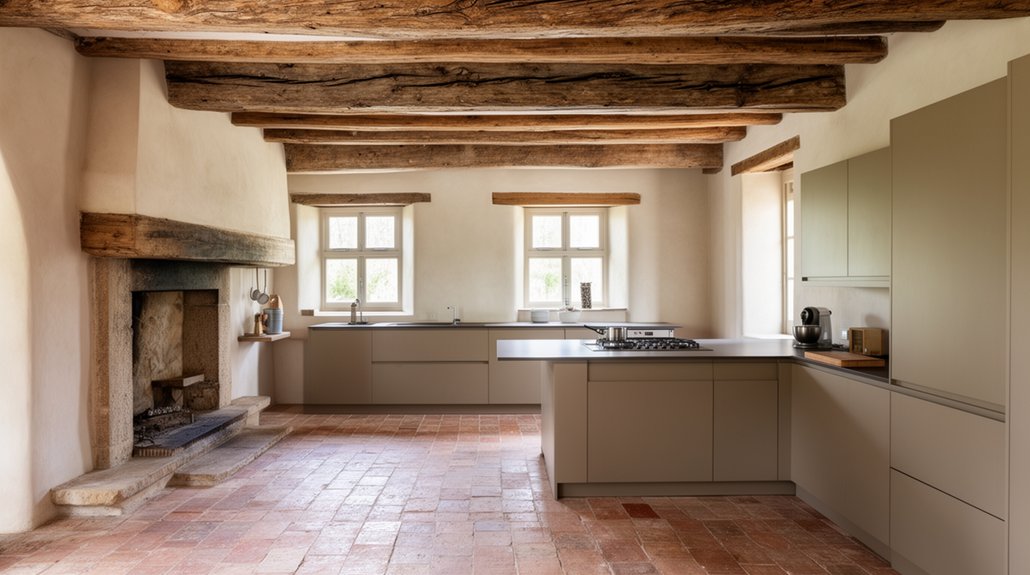
A farmhouse kitchen should work hard without losing its sense of history. Choose durable surfaces that suit the building’s age and your daily routines. Stone, solid timber and reclaimed brick can handle heavy use while adding texture; seal or finish them appropriately to resist stains and moisture.
For sustainable materials, consider responsibly sourced wood, recycled tiles or locally quarried stone, and check maintenance needs before you buy.
Keep cabinetry simple and repairable. You can refresh sound cupboards with paint, new hinges or timber worktops rather than replacing them.
Pair modern appliances with antique fixtures, such as a restored pantry latch or farmhouse sink, to preserve character without sacrificing function.
Use task lighting where you prepare food, and protect original features from unnecessary alteration.
Let practical upgrades sit comfortably alongside the kitchen’s inherited details.
Modernise Bathrooms to Suit Your Farmhouse
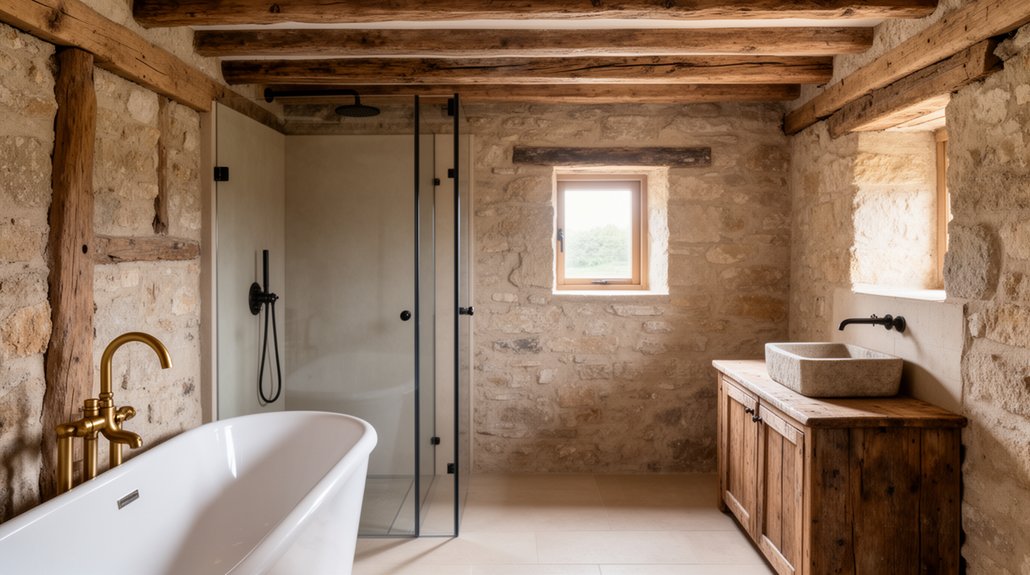
Like the kitchen, a farmhouse bathroom should balance everyday performance with respect for the building’s age. Start by checking the plumbing, ventilation and floor structure; older homes may need upgrades before you install new fittings.
Choose a walk-in shower or compact bath that suits the room’s proportions, and add discreet storage to keep daily essentials organised.
You can preserve character with vintage fixtures, such as a restored basin or traditional taps, provided they work reliably and meet current requirements. Pair them with modern, water-efficient fittings where needed.
If you retain original boards or a freestanding bath, protect them from moisture and guarantee the floor can carry the load.
Use rustic decor sparingly, drawing on the farmhouse’s existing details rather than adding features that feel staged or historically out of place.
Choose Colours and Finishes for Old and New
Choose colours that let original stone, timber and brick sit comfortably beside newer elements. You’ll create balance by pairing heritage details with restrained, complementary tones rather than copying old finishes everywhere.
Choose durable, timeless finishes that’ll age gracefully and suit the farmhouse’s character.
Balance Old and New
To balance old and new, let the farmhouse’s original materials guide your palette. Look closely at exposed beams, stonework, brick, and existing floorboards; their undertones can help you choose complementary colours for updated rooms.
Use contrast with care. Pair a contemporary, restrained wall colour with an original feature, or bring a deeper shade into a new kitchen to give it presence while respecting nearby heritage details.
Antique charm comes from allowing timeworn materials to remain visible, not disguising them with competing finishes. Add modern elements in measured doses, so they support rather than dominate.
This balance creates rustic elegance and lets your farmhouse feel lived-in, coherent, and unmistakably its own.
Choose Timeless Finishes
A timeless finish palette can unite a farmhouse’s original details with its modern updates. Start with the materials you can’t easily change: exposed beams, stonework, brick, and historic floors. Let their natural tones guide your choices, then use warm whites, muted greens, or soft earth colours to complement them. You don’t need to match every surface; a restrained palette helps old and new elements sit comfortably together.
Choose durable finishes that suit each room’s use. Matte paint can soften uneven plaster, while washable finishes work well in busy kitchens.
Pair simple, contemporary fittings with rustic hardware that respects the house’s age. Bring in vintage textiles for colour and pattern, and repeat their tones in cushions or curtains. Test samples in changing daylight before committing, since farmhouse rooms often have deep reveals and varied exposure.
Add Lighting, Heating and Insulation
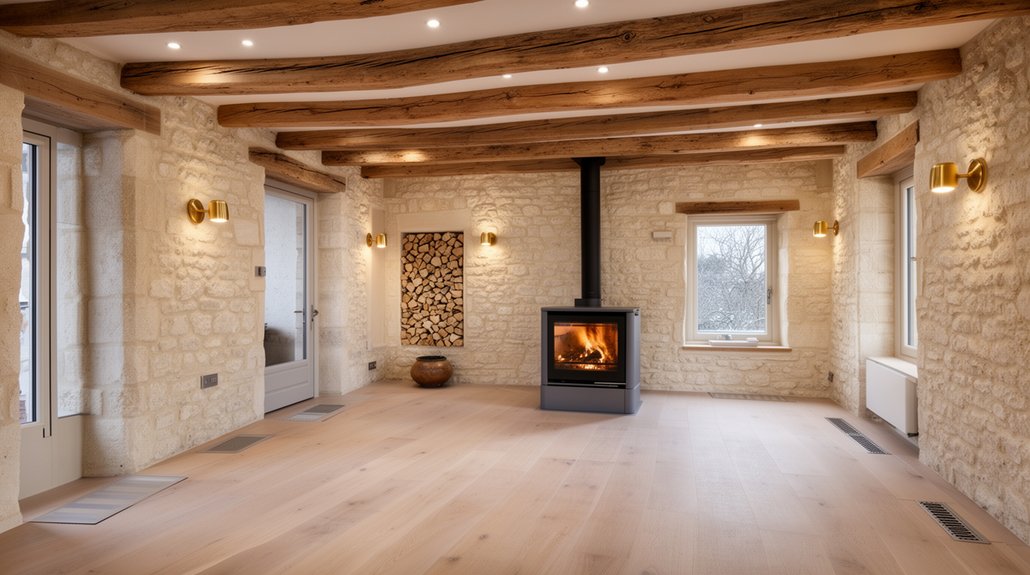
Layer warm, subtle lighting to bring out original beams, stonework and joinery without overwhelming them.
Improve insulation and heating to make your farmhouse more comfortable and efficient.
Choose discreet upgrades that respect the building’s character and allow its historic features to breathe.
Layer Warm, Subtle Lighting
Because a farmhouse’s original beams, stonework and uneven walls deserve to remain in focus, plan lighting around their character rather than covering them with bright, uniform fittings. Choose warm-toned bulbs to bring out natural materials without making rooms feel overly yellow.
Layer ceiling lights with table lamps, wall sconces and discreet floor lights, so you can adjust brightness for different tasks and times of day. Use shaded fittings to soften glare, and position lamps to create an ambient glow across textured surfaces.
In kitchens and work areas, add focused task lighting where you need it, keeping fittings simple and in proportion to the room. Dimmers let you shift from practical brightness to subtle ambiance in the evening.
Select finishes that complement existing ironwork or timber, and keep cables neatly concealed without disturbing historic features.
Improve Insulation and Heating
Once lighting suits the farmhouse’s character, improve comfort by upgrading insulation and heating with care. Begin with a survey to identify draughts, damp, and heat loss before choosing materials.
In older walls, breathable lime-based finishes help manage moisture; avoid sealing historic masonry with impermeable products. Add advanced insulation where it won’t trap damp or obscure original features, such as in the loft or beneath suspended floors.
You can improve comfort with discreet draught-proofing around doors and windows, while preserving their original frames.
Choose energy efficient heating sized for your rooms and insulation levels. A well-controlled heat pump or modern boiler can reduce running costs, but check the building’s suitability first.
Use zoned controls and thermostats to heat spaces only when needed. Keep vents clear, monitor humidity, and ask a conservation specialist to assess sensitive fabric before work begins.
Mix Modern Furniture With Farmhouse Character
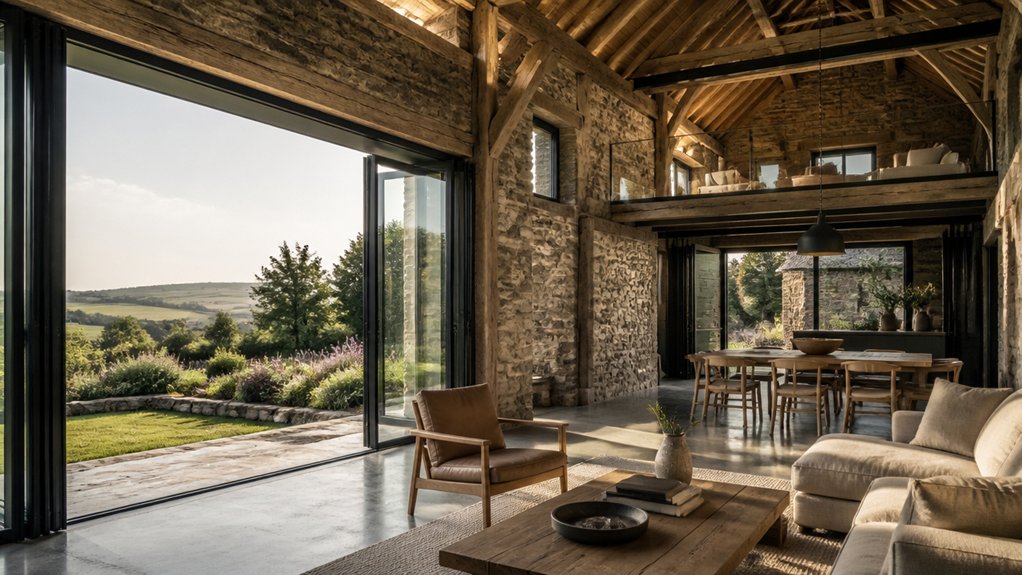
Pair clean-lined modern furniture with the farmhouse’s original features rather than trying to make every element match. A simple sofa or streamlined dining table can bring comfort and function without competing with exposed beams, stone walls or original floorboards.
Choose pieces with natural materials, muted colours and durable finishes, so they sit comfortably alongside the building’s age.
Use Rustic decor thoughtfully: a reclaimed timber bench or woven basket adds texture, but too many distressed finishes can make the room feel staged. Vintage accessories, such as a well-made mirror or ceramic jug, can connect newer furnishings to the farmhouse’s history.
Keep walkways clear and scale furniture to each room, especially where low ceilings or narrow doorways shape the layout.
You’ll create a balanced home that feels current yet rooted in its original character.
Conclusion
Modernising a farmhouse works best when you treat its history as a guide, not an obstacle. Preserve sound original features, plan upgrades around the building’s structure, and choose compatible materials for kitchens, bathrooms and finishes. Improve comfort with discreet insulation, efficient heating and thoughtful lighting, then add modern furniture that complements rather than competes. Like a well-worn beam beside a new window, each update should feel at home. You’ll create a more comfortable farmhouse while keeping its character intact.