
 MartinShields
You don’t need property expertise to question a valuation that seems unusually high. Ask the agent to show how recent local sales, your home’s condition and current market trends support the figure. If they offer vague promises of buyer interest or urge you to sign quickly, treat that as a warning—not proof your home is worth more. A few simple checks can help you tell whether the price is realistic and what to do next.
Key Takeaways
- Compare the valuation with recent completed sales of similar homes in your area, adjusting for differences in condition, size, and features.
- Ask the agent to explain their figure with specific comparable sales and evidence of current buyer demand.
- Be wary of a valuation far above local sale prices, especially if the agent offers no clear supporting evidence.
- Check whether the agent has considered market trends, competing listings, time to sell, and recent price reductions.
- Treat vague promises, ignored property drawbacks, or pressure to sign quickly as warning signs; compare several local agents’ evidence.
What Evidence Should Support an Estate Agent’s Valuation?
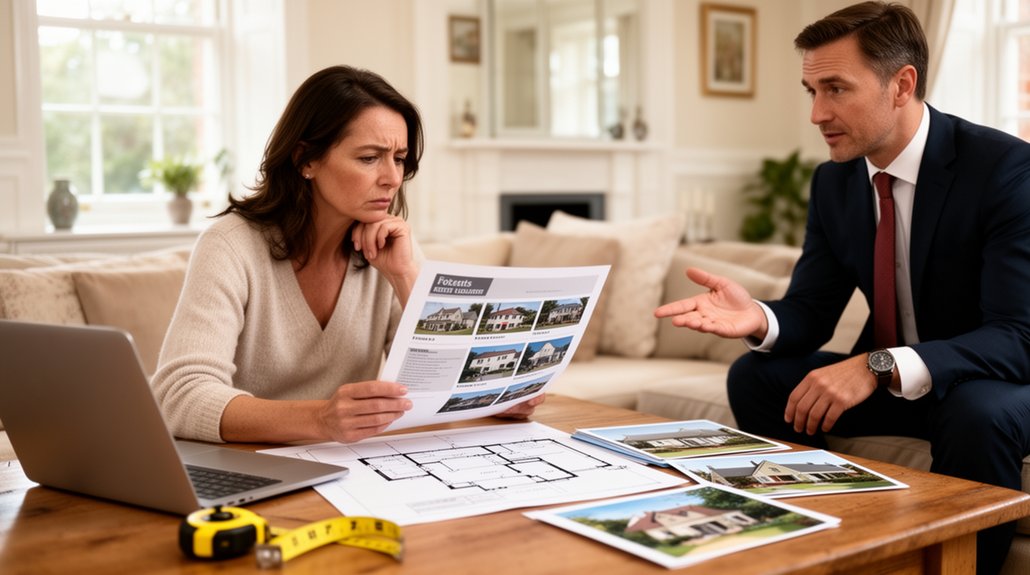
A credible valuation should rest on recent evidence, not an agent’s promise of a high asking price. Ask your agent to explain the figures and show how they arrived at the recommended price. Their valuation techniques should account for your property’s condition, size, layout, location, and any features that affect buyer demand.
They should also consider Market trends, including changes in buyer activity and the direction of prices, rather than relying on outdated assumptions. Request a written valuation report that identifies the evidence used, explains any adjustments, and states the assumptions behind the estimate.
Check whether the agent has inspected your home in person; a brief online estimate may miss important details. A confident figure without clear support isn’t enough. You deserve a reasoned assessment, not a sales pitch.
How Can You Compare It With Local Sales?
Once you have the agent’s evidence, compare the valuation with recent sales of similar homes nearby. Use Land Registry records or reputable property portals to check completed sale prices, not just asking prices.
Focus on homes with comparable size, condition, age, layout and outdoor space, ideally within the same neighbourhood. A larger house on a different street may offer little useful guidance.
Adjust for meaningful differences: a renovated kitchen, parking or a larger plot can affect price. Check when each sale completed, too; Market trends may have shifted since then.
Compare several properties rather than relying on one unusually high or low result. This gives you a grounded benchmark for valuation accuracy and helps you judge whether the agent’s figure reflects what buyers have recently paid for genuinely comparable homes in your area.
How Can You Tell If an Agent Is Overvaluing Your Home?
If an agent’s valuation sits well above your local sales evidence, look for signs it’s designed to win your instruction rather than reflect the market. A credible agent should explain the figure with recent comparable sales, your home’s condition and current demand. If they rely on vague claims about buyer interest or promise a quick sale at a premium, ask what supports those claims.
Check whether the agent has considered Market trends, including how long similar homes take to sell and whether asking prices are being reduced. Their Pricing strategies should make sense: an ambitious launch price may attract attention, but only with a clear rationale and review plan.
Watch for pressure to sign immediately or assurances that ignore drawbacks, such as needed repairs. A valuation without evidence, caveats or transparent reasoning deserves scrutiny.
What Should You Do If the Valuation Seems Too High?
Before accepting a valuation that seems too high, ask the agent to show the recent comparable sales and explain how they arrived at the figure. Check whether those properties match yours in location, size, condition, and sale date.
Ask how current buyer demand and competing listings affect the estimate. A sound Market analysis should support the price with evidence, not promises.
Then seek valuations from two or three other local agents. Compare their evidence and proposed Pricing strategy, including the likely asking price and review points.
Don’t choose an agent solely because they quoted the highest figure. An inflated price can reduce viewings and leave your home on the market longer.
If you proceed, agree when you’ll review interest and price, and set a realistic adjustment plan before listing.
Conclusion
A high valuation can feel like a golden ticket, but check what’s behind the number before you sign. Ask for comparable sales, a clear pricing rationale, and evidence that reflects your home’s condition and local market. If the agent can’t provide them—or promises a quick sale without proof—seek another opinion. Compare advice from several agents, then choose the one whose valuation is grounded in facts, not flattery. A realistic price gives your sale solid footing.