 MartinShields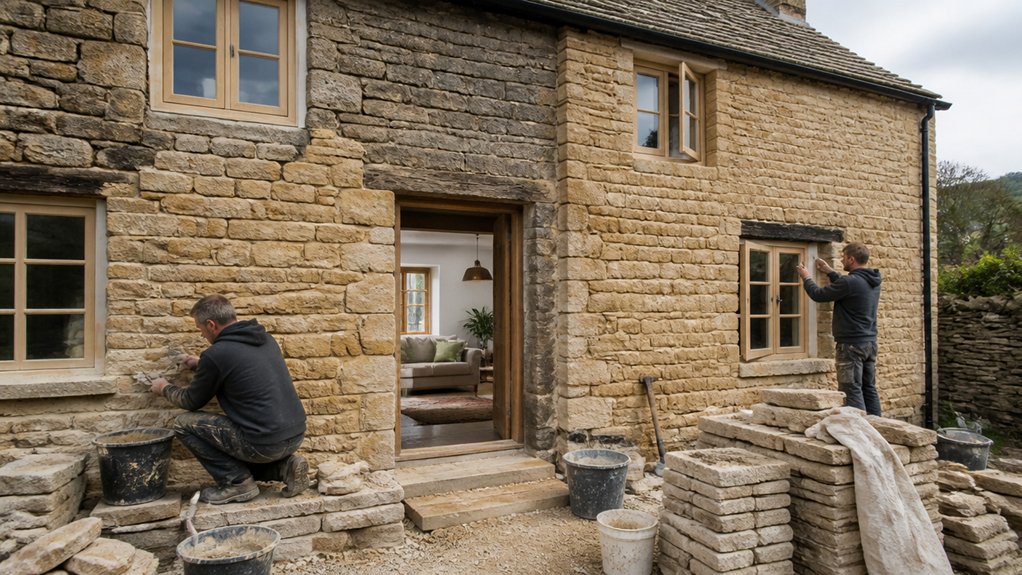
Renovating a Yorkshire stone home is a conversation with the past—and every repair shapes what comes next. Start by inspecting the walls, roof, drainage, and original features before planning the work. You’ll need compatible stone and lime mortar, careful damp management, and advice on permissions and specialist trades. Get those choices wrong, and even well-meant upgrades can cause lasting damage; the right approach begins with one often-overlooked detail.
Key Takeaways
- Inspect the property inside and out, documenting masonry, mortar, roof, drainage, damp, structural movement, and original features.
- Check planning, listed-building, and building regulations requirements before work; budget for surveys, specialist advice, labour, fees, and contingencies.
- Repair stonework with compatible local stone and breathable lime mortar, matching the original texture and joint profile.
- Resolve leaks and drainage problems before addressing damp; avoid impermeable coatings and seek expert advice on breathable insulation.
- Preserve historic features while updating interiors with suitable finishes, layered lighting, and carefully routed wiring.
Inspect Your Yorkshire Stone Home Before Work
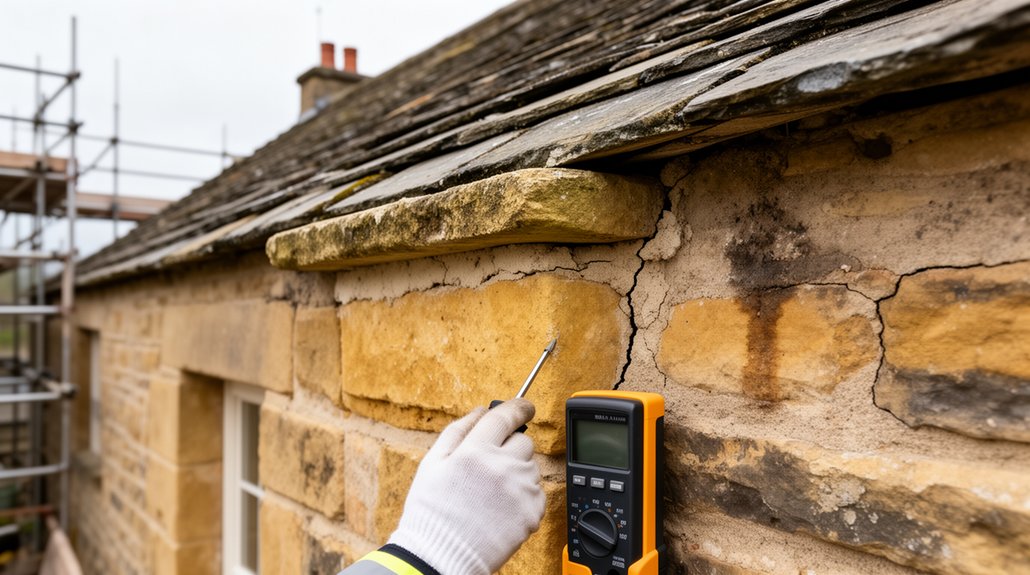
Before planning renovations, inspect your Yorkshire stone home to understand its condition and spot problems that could affect the work. Walk around the exterior and look for cracked or loose masonry, eroded mortar, damp patches, and blocked drainage. Check the roof, chimneys, gutters, and window surrounds, since leaks often cause hidden damage to stone and timber.
Inside, note uneven floors, sticking doors, musty smells, and cracks around openings. These signs can point to movement, moisture, or previous alterations that need closer attention. Photograph defects and record where you find them; this gives you a clear baseline as the project develops.
Look carefully at original features, including stone fireplaces, lintels, and exposed beams. Understanding what’s sound and worth retaining helps you balance Historical preservation with Modern design, while shaping a renovation that respects your home’s character.
Check Permissions, Costs, and Specialist Trades
Once you’ve assessed your Yorkshire stone home, check whether the planned work needs planning permission or listed-building consent, particularly if it affects the exterior or original features. Contact your local planning authority before appointing contractors; conservation-area rules may also apply. Ask whether Building regulations approval is required, and confirm who’ll arrange inspections and certificates. These checks support Historical preservation and help prevent costly delays or enforcement action.
Set a realistic budget that includes surveys, application fees, professional advice, labour, access equipment, and a contingency for hidden problems. Get itemised quotes from contractors experienced with historic stone properties, and compare their scope, exclusions, insurance, and references—not just the total.
Use a conservation-accredited architect or surveyor where the work is complex. Agree responsibilities, payment stages, and a written programme before work starts, and keep approvals and correspondence together.
Repair Yorkshire Stone With Compatible Materials
When repairs are needed, use stone and mortar that match the original in strength, texture and vapour permeability. Source replacement stone from the same geological type where possible, and check its colour, grain and finish against the existing wall. A salvaged piece from the property can provide a useful reference.
For mortar matching, ask a specialist to assess the original mix before repointing. A breathable lime mortar usually suits traditional Yorkshire stone better than hard cement, which can damage softer edges. Match the joint profile, too, and avoid covering the stone faces.
Use gentle stone cleaning methods; harsh chemicals and pressure washing can erode the surface. Test any cleaner in a discreet spot, then let the wall dry before judging the result.
For cracked or loose masonry, consult a conservation-minded stonemason before patching.
Manage Damp and Insulate Traditional Stone Walls
Because Yorkshire stone walls need to manage moisture as well as heat, start by finding and fixing the source of any damp rather than sealing the surface. Check gutters, downpipes, roof coverings, pointing and ground levels; repair leaks and keep soil below the wall’s base.
Don’t use impermeable coatings or cement-rich repairs, which can trap moisture in the stone. For effective Damp prevention, maintain sound lime pointing and allow walls to dry naturally.
Then choose Insulation techniques suited to your property’s condition and exposure. Breathable internal insulation can improve comfort, but it needs careful detailing around floors, windows and joists to limit cold spots and condensation.
External insulation may alter the building’s appearance and needs appropriate consent. Ask a conservation-minded surveyor to assess the walls before you specify materials or begin work.
Update Interiors Without Losing Stone-Home Character
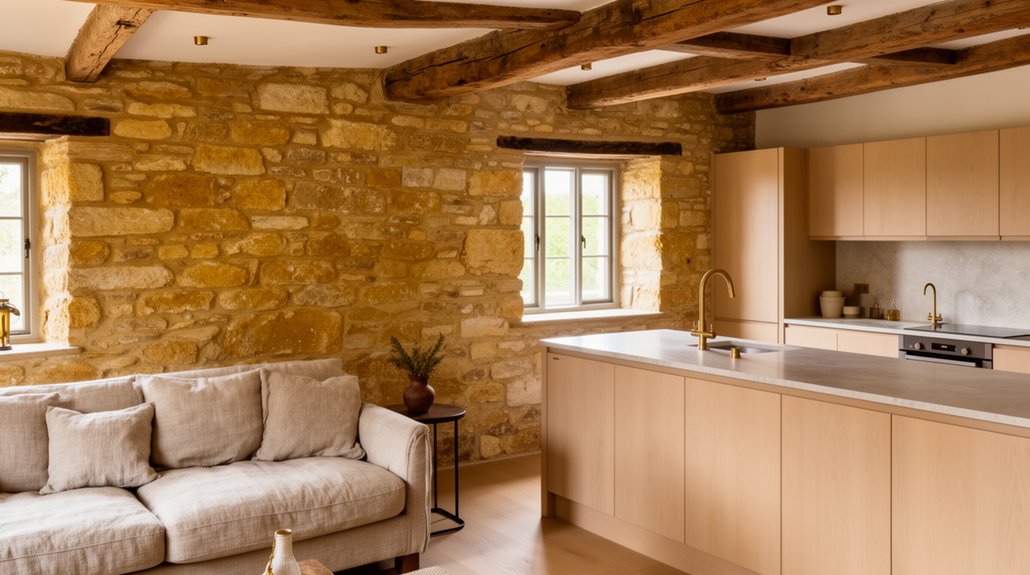
To update a Yorkshire stone home without losing its character, keep original features such as exposed stone, timber beams, fireplaces and deep window reveals in view as you plan. Let these details guide your choices rather than compete with them.
Use breathable limewash or muted paint on adjoining walls, and avoid covering stone with impermeable finishes.
Choose contemporary furnishings with simple shapes and natural materials, such as oak, wool and linen, to bring comfort without overwhelming the room.
Plan interior lighting in layers: discreet ceiling fittings provide general light, while wall lights and table lamps highlight texture and create warmth.
Check that new wiring and fittings won’t damage historic fabric.
Keep circulation routes clear, and use rugs, curtains and carefully placed storage to soften rooms without hiding architectural features.
Conclusion
As you finish renovating your Yorkshire stone home, let its original character guide every final choice. Check that repairs, drainage and ventilation work together, and keep records of specialist advice and permissions. Then step back: the stone should feel settled, the rooms comfortable, and the old beams and fireplace ready for another chapter. With patient maintenance and materials that let the walls breathe, you’ll protect the home’s history while making it a welcoming place to live.