 MartinShields
A Georgian townhouse can hide significant structural movement behind plasterwork that appears perfectly intact. Before you plan decorative upgrades, inspect the building for damp, water ingress, and damage to original materials, then address urgent problems first. If your property is listed, even modest alterations may require consent, so check the rules before work begins. The key is knowing which features to repair, which services to modernize discreetly, and where traditional materials matter most.
Key Takeaways
- Survey every room, the roof, services, and garden; prioritize water ingress, structural movement, and safety issues before cosmetic work.
- Confirm listed status and obtain required planning and listed-building consents before making changes; document proposals and follow approval conditions.
- Preserve original sash windows, shutters, doors, mouldings, and other period features through careful repair using compatible materials.
- Restore floors, fireplaces, and plaster with specialist advice and traditional materials, such as lime plaster, while retaining sound original fabric.
- Plan discreet service upgrades and choose breathable, heritage-compatible materials to improve comfort without trapping moisture or damaging historic fabric.
Assess Your Georgian Townhouse and Set Priorities
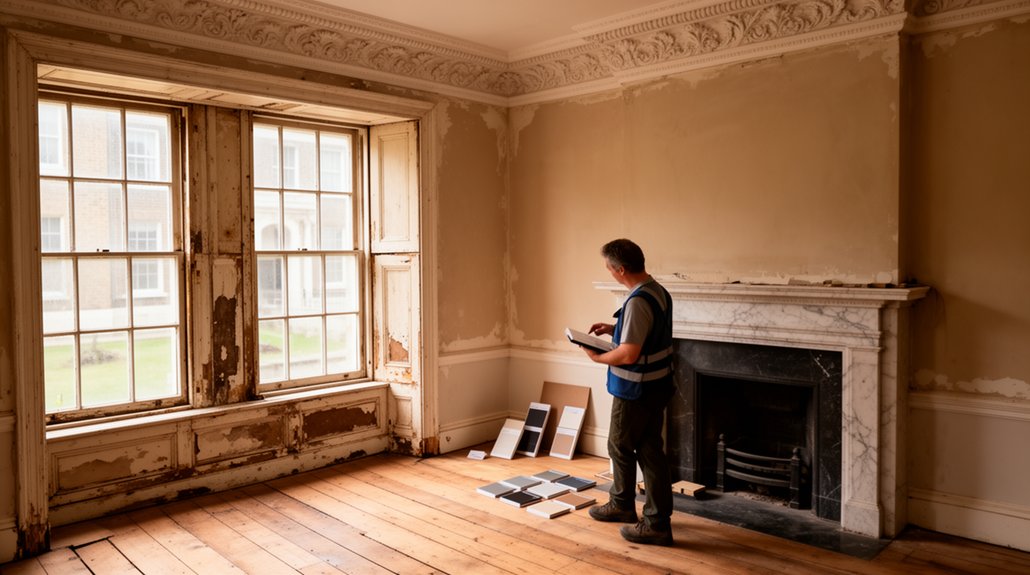
Before you plan changes to your Georgian townhouse, assess its condition, character and constraints. Walk through each room, noting damp, cracks, uneven floors, draughts and signs of movement. Check the roof, rainwater goods, windows and services; record defects before you choose finishes or layouts.
Identify features that give the house its period character, such as staircases, mouldings, fireplaces, shutters and original doors. Photograph details and map their locations so you can protect them during work.
Next, rank needs by urgency, cost and impact. Address water ingress, structural concerns and unsafe services before cosmetic upgrades. Decide which rooms need improved function, storage or accessibility, and where interior lighting could support daily use without obscuring historic details.
Review garden landscaping for drainage, privacy and a practical connection to the house. Set a realistic budget and contingency, then sequence priorities accordingly.
Check Listed-Building Rules and Get Permission
If your Georgian townhouse is listed, check its designation and consult your local planning authority before altering it. Listed status can cover the whole building, including features you might consider later additions. Ask which works require listed-building consent; planning permission may also apply. Don’t begin until you’ve received written approval.
Prepare clear drawings, photographs and a schedule of proposed work. Explain how each change affects historic fabric, and discuss alternatives with your conservation officer.
Modern insulation can harm traditional materials if specified or installed poorly, so seek advice on compatible methods. Energy efficient appliances may improve performance, but plan their placement and services to avoid damaging significant interiors.
Use experienced professionals, keep consent documents on site, and follow every condition. If plans change, obtain approval before proceeding; unauthorised work can lead to enforcement or costly reversal.
Repair Sash Windows and Protect Period Features
Repair original sash windows wherever possible rather than replacing them: a skilled joiner can splice decayed timber, renew cords and pulleys, and improve draught-proofing while retaining historic glass and fittings.
Before work begins, photograph each window and record its condition, profiles, and hardware. Choose compatible materials and finishes, and ask your joiner to match existing details rather than introduce modern substitutes.
Sash window restoration can improve comfort without erasing the craftsmanship that gives your townhouse its character.
Check whether your windows are listed or subject to local controls, and secure any required consent before altering them.
For Heritage feature preservation, protect original shutters, architraves, and window surrounds during repairs.
Keep removed fittings labelled and stored safely; repair them where practical, and reinstall them in their original positions.
Inspect completed work carefully.
Restore Floorboards, Fireplaces, and Plasterwork
With the sash windows protected, turn to the floors, fireplaces, and plasterwork, preserving original fabric wherever possible. Lift loose floorboards carefully, number them, and retain sound boards for reuse. You can secure movement with discreet fixings and patch damaged sections in matching timber, rather than replacing an entire floor.
For fireplaces, document each surround before work begins. Remove soot with appropriate dry methods, and ask a specialist to assess cracked marble, tiles, or carved stone; aggressive cleaning can erase historic surfaces.
Repair plaster with compatible lime-based materials, not hard gypsum, which can trap moisture and damage older walls.
Restoration techniques should follow the building’s materials and evidence. Preservation challenges include hidden repairs and fragile finishes, so test small areas first. Keep records, consult a conservation professional when needed, and accept slight irregularities as part of the townhouse’s character.
Upgrade Heating, Wiring, and Plumbing With Care
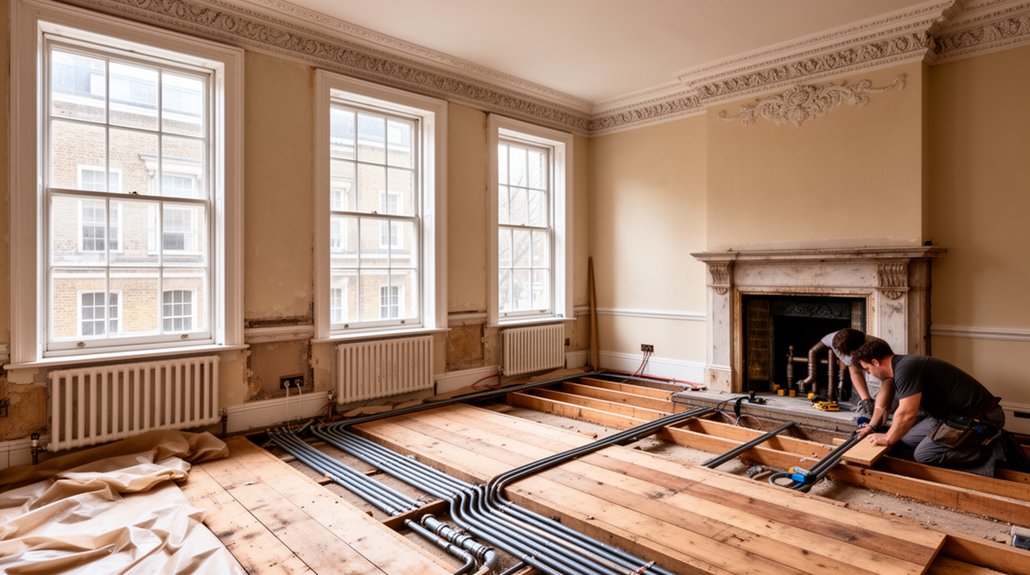
Before upgrading services, map existing pipework, wiring, and heating routes to avoid damaging historic fabric. Record fragile lath-and-plaster walls, original joists, and concealed features. Then plan access through existing voids wherever possible. Ask qualified specialists to assess capacity, safety, and conservation constraints before you approve any work.
Choose efficient heating that suits the building’s structure; zoning and smart technology can improve control without intrusive alterations. Insulate carefully, since modern insulation may trap moisture or obscure significant details if installed indiscriminately. Improve ventilation alongside insulation to protect timber and plaster.
Run new cables and pipes discreetly, avoiding cuts to historic beams and floorboards. Where routes must cross original fabric, require minimal, documented intervention and repair promptly. Test systems thoroughly, retain clear service records, and ensure future maintenance won’t require repeated damage to important architectural features. Don’t conceal defects behind new installations.
Choose Materials and Finishes for a Georgian Home
Choose materials that reflect your townhouse’s Georgian proportions and original construction. You’ll preserve its character by matching period-appropriate timber, stone, and plaster where practical.
Select heritage-friendly finishes that protect historic fabric without obscuring its detail.
Choosing Period-Appropriate Materials
A Georgian townhouse’s materials should respect its original fabric while meeting the demands of modern life. Begin by surveying what survives: brickwork, stone, timber, plaster, and ironwork can reveal the building’s age and construction.
Repair sound elements rather than replacing them, and match any necessary additions to the original material’s scale, texture, and performance.
For structural work, choose compatible lime mortar and reclaimed or carefully matched brick; hard cement can trap moisture and damage historic masonry.
Select timber species and profiles that suit existing floors, stairs, and joinery, checking that new boards won’t overwhelm worn originals.
In the dining room decor, let authentic architectural elements guide furniture choices.
Extend the same care outdoors: coordinate garden landscaping with historic paving, boundary walls, and drainage.
Consult a conservation specialist before altering significant fabric.
Selecting Heritage-Friendly Finishes
Once the building’s original fabric is secure, select finishes that complement its age without imitating it crudely. Match surviving paint layers and historic photographs to establish a restrained palette; choose mineral or breathable paints for traditional plaster and limework. You’ll protect the building by avoiding impermeable coatings that trap moisture.
For floors, repair original boards where possible, then use compatible oils or waxes rather than glossy sealants. Modern sustainability can guide choices without compromising character: specify low-VOC products, responsibly sourced timber, and durable finishes that reduce future replacement.
Introduce Contemporary contrasts selectively, perhaps through a discreetly modern light fitting or a deep, contemporary accent in a secondary room. Keep historic joinery, mouldings, and ironmongery legible.
Test samples in changing daylight, and document products and colours before application.
Conclusion
A Georgian townhouse rewards patience: assess its condition, secure the right permissions, and repair rather than replace wherever possible. Restore sash windows, floors, fireplaces, and plaster with skilled hands; upgrade services discreetly and choose breathable, sympathetic materials. Each decision protects more than appearance—it preserves the building’s history. Before you close the final wall or apply the last coat, pause: what original detail might still be waiting beneath it, ready to shape the home’s next chapter?