 MartinShields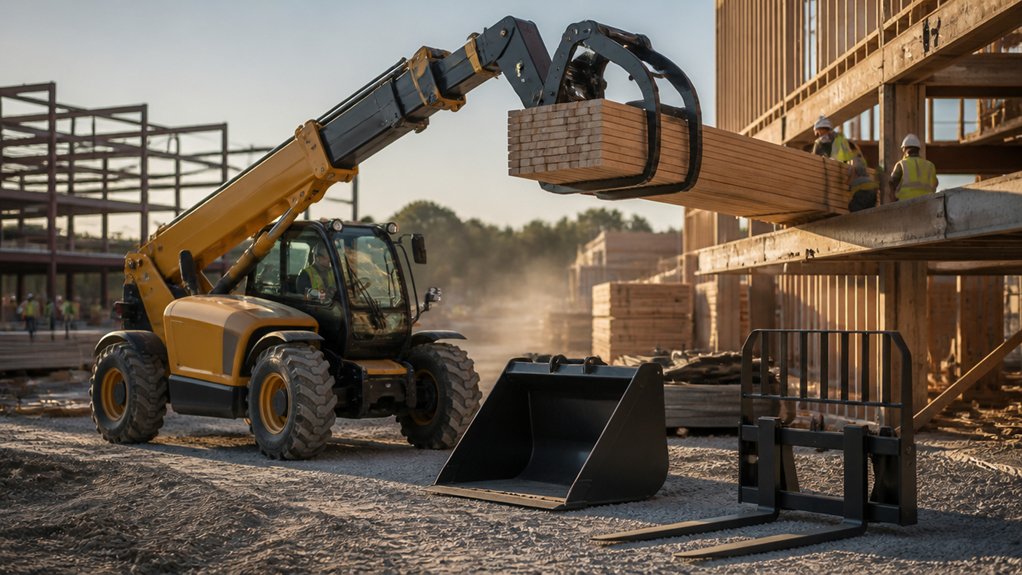
Your telehandler can sit idle between tasks, or it can become a more productive tool with the right attachment. Forks, buckets, jibs, and platforms help you handle different jobs without bringing in extra equipment, but only when they fit your machine and the work ahead. Choose carefully, and you can move materials faster while keeping lifts controlled. Start by checking the details that determine whether an attachment will actually improve your site’s workflow.
Key Takeaways
- Pallet forks speed up moving materials; choose forks rated for the load and insert them fully beneath stable pallets.
- Buckets handle soil, sand, and aggregates efficiently; match bucket capacity and design to the material and task.
- Grapples make quick work of irregular or loose materials; secure the load and keep it low while traveling.
- Jibs extend lifting versatility for suspended loads; verify capacity, secure approved rigging, and engage all locking pins.
- Augers accelerate drilling and site preparation; select the right bit, check for underground utilities, and work on firm, level ground.
Check Telehandler Attachment Fit and Capacity
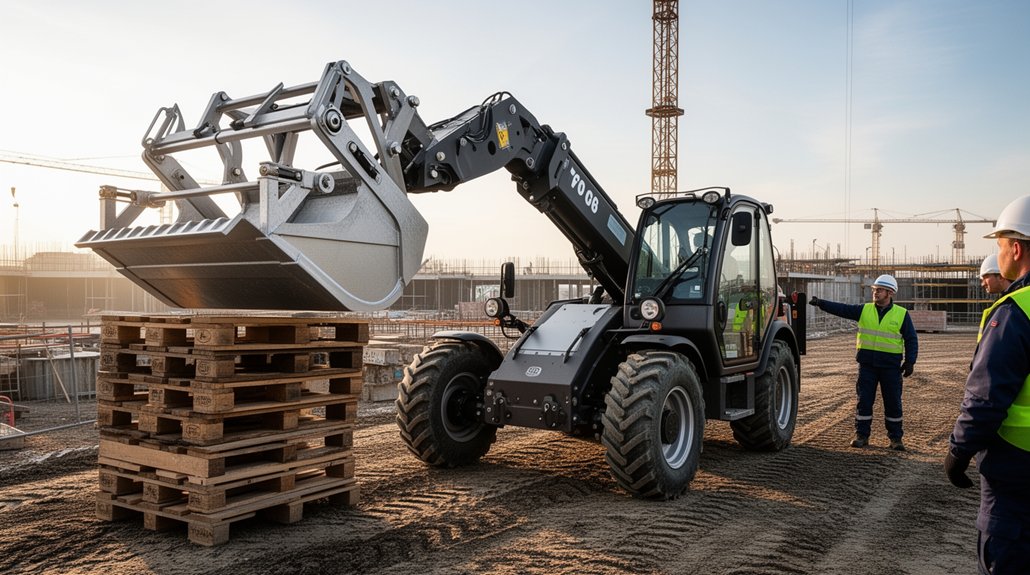
Before using an attachment, confirm it’s approved for your telehandler’s make and model and that its mounting system locks securely to the carriage. Check the attachment plate, pins, hoses, and couplers for damage, wear, or leaks. Don’t rely on appearance alone; consult the operator’s manual and attachment documentation to confirm attachment compatibility, including any required hydraulic flow or electrical connections.
Complete capacity verification before lifting. An attachment can change your telehandler’s rated capacity, load center, and reach, so check the machine’s load chart for that specific attachment and configuration.
Account for the load’s weight, dimensions, and position, along with boom angle and extension. Never exceed the chart’s limits.
If the attachment’s rating or fit is unclear, stop and contact your dealer or supervisor. Secure the attachment fully, then test its controls at low height before starting work.
Use Forks to Move Pallets Faster
Use pallet forks to move loads efficiently, but match the forks to the telehandler and the pallet’s weight and dimensions. Before lifting, check the machine’s load chart for the planned boom reach and height.
Inspect each pallet for damage, loose wrapping, or an uneven load; don’t lift anything unstable.
For faster Pallet handling, set both forks at equal spacing, wide enough to support the load near its outer edges. Confirm Fork positioning before you approach: keep the forks level, aligned with the pallet openings, and fully inserted beneath the load.
Drive slowly, raise just enough to clear the ground, and tilt the carriage back slightly to secure the pallet. Keep the load low while traveling, maintain a clear route, and avoid sudden turns or stops.
Set the pallet down squarely, then withdraw the forks carefully.
Choose Buckets for Loose Materials
Choose a bucket that matches the material, task, and telehandler’s capacity. For sand, soil, or grain, select a general-purpose bucket with enough volume to reduce trips without exceeding the machine’s rated capacity. A wider bucket can speed loading, but it may limit visibility and make precise placement harder. Check the attachment chart to confirm the bucket’s weight and dimensions suit your telehandler.
Prioritize material compatibility and bucket durability. Abrasive aggregate calls for reinforced wear edges and stronger construction; lighter, free-flowing materials may work well with a larger, lighter bucket. If you’ll handle damp soil or sticky material, consider a shape that releases contents cleanly and resists buildup.
Inspect cutting edges, welds, and wear plates regularly, and replace damaged parts before they affect loading or stability. Match the bucket to your typical workload, not just its maximum volume.
Use Lifting Jibs for Loads Off the Ground
When a load needs to be lifted clear of the ground, a telehandler jib can extend the machine’s reach and provide a secure attachment point for suspended loads. Use lifting jibs to position pipes, steel sections, or machinery where forks can’t reach safely.
Before lifting, confirm the jib suits your telehandler’s model and capacity, then check the load’s weight, balance, and attachment points. Keep within the machine’s rated capacity at the required boom angle and extension; capacity decreases as you reach farther.
Secure the load with approved slings or chains, and make sure the locking pins engage fully. Move slowly, keep the load low while travelling, and avoid sudden turns or braking.
Use a spotter when visibility is limited, and never stand beneath a suspended load. Plan each lift before raising a load off ground.
Add Work Platforms for Safe Access at Height
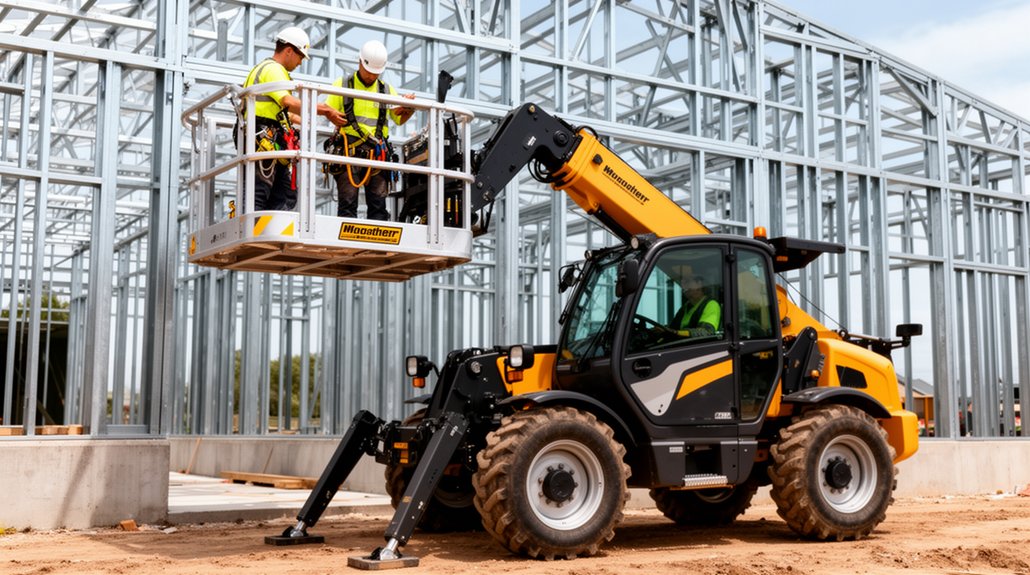
A telehandler work platform gives you a stable, guarded space for tasks at height, such as maintenance or installation. Before lifting anyone, confirm the platform’s compatibility with your machine and check the combined load against the telehandler’s capacity at the required reach.
Secure the attachment as specified, inspect gates, guardrails, floor, and locking points, and verify that the operator can see and communicate with occupants.
Work platform safety depends on firm ground, a level setup, and controlled movement. Keep workers inside the platform, close gates, and never use ladders or boxes to gain extra height.
Follow the manufacturer’s instructions and applicable Height access regulations, including requirements for fall protection and operator training.
Don’t travel with workers elevated unless the equipment’s instructions and site rules explicitly permit it. Stop work if conditions become unsafe.
Handle Irregular Loads With Grapples
For uneven or loosely grouped materials, a telehandler grapple can help you grip and control the load during lifting and placement. Its Hydraulic claws close around items such as brush, logs, scrap, or demolition debris, keeping them contained as you move.
Match the grapple’s capacity to your telehandler and the material’s weight; an oversized or unbalanced load can compromise stability.
Before lifting, position the attachment squarely, spread the claws enough to capture the material, then close them securely. Check that no pieces can slip through or shift during travel.
Keep the load low while moving, use smooth controls, and avoid sudden turns or stops.
For reliable Load gripping, inspect hoses, pins, and claw movement before each shift. Follow the attachment’s operating limits and your site’s load-handling procedures.
Speed up Groundwork With Telehandler Augers
A telehandler auger lets you drill post, footing, and fence holes faster than manual methods.
Choose a bit suited to your soil and hole diameter for clean, consistent results.
You can also use augers to prepare ground for posts, signs, and other site installations.
Faster Hole Drilling
When groundwork calls for precise holes in less time, a telehandler auger can drill through soil for fence posts, footings, and planting. Choose a bit diameter and length that match your plans and ground conditions.
Before drilling, position the machine on firm, level ground, set the boom for a clear approach, and mark each hole location. Lower the auger vertically, then apply steady pressure while keeping the bit centered. This control improves hole alignment and helps prevent wandering, especially in compacted soil.
Clear spoil from the bit as needed, and avoid forcing it if you hit rock or buried debris. A suitable attachment and consistent operating technique boost drilling efficiency, reduce rework, and help you complete repetitive holes on schedule.
Check the manufacturer’s limits for your telehandler and auger.
Versatile Ground Preparation
Beyond drilling individual holes, a telehandler auger can help prepare ground for a full project. With the right bit and a capable operator, you can loosen compacted soil, break through tough layers, and create consistent conditions across a work area. This speeds up preparation for fence lines, planting zones, drainage runs, and foundation work.
Use the auger to mix amendments into soil where soil stabilization is needed, following project specifications and local requirements. For landscape grading, loosen high spots before you move material with a suitable bucket or grading attachment.
Check underground utility locations before drilling, and match bit diameter and depth to the task. Clear debris regularly, keep the telehandler level, and work within its load chart. These steps help you prepare more ground with fewer machine changes and less downtime.
Check Load Charts and Secure Every Lift
Before lifting, check the telehandler’s load chart for the exact attachment, boom position, and operating conditions. The attachment can change the machine’s rated capacity.
Confirm the listed Load capacity covers the load’s weight, including pallets, rigging, and materials. Account for reach, lift height, ground slope, and any restrictions specified by the manufacturer. Never estimate or rely on the machine’s maximum rating when the boom extends.
Inspect the attachment, locking pins, forks, and hydraulic connections before use. Secure the attachment fully, then verify it’s compatible with the telehandler and intended task.
Follow site Safety protocols: keep people clear of the load path, communicate with a spotter when visibility is limited, and move smoothly. Carry loads low, travel on firm, level ground, and stop if conditions change.
Recheck the chart whenever you change attachments or lifting conditions.
Conclusion
Choose telehandler attachments that match your machine, material, and task to make every move count. Forks, buckets, jibs, platforms, grapples, and augers can speed handling, earthmoving, lifting, access, and drilling when they’re properly fitted. Before work starts, check attachment compatibility, capacity, and load charts, then secure each load and follow safe operating procedures. You’ll cut delays, control risks, and keep your crew productive. Make the right attachment part of your plan, and turn site challenges into smooth, steady progress.