 MartinShields
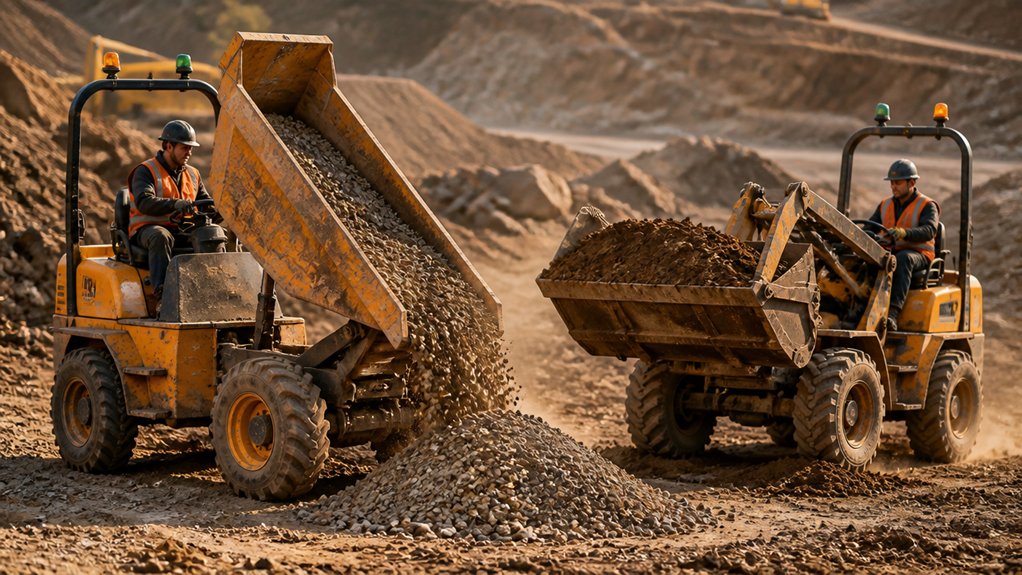
You might not realise that two dumpers with similar capacities can handle a renovation site very differently. A forward tipping dumper suits open routes and quick loads, while a skip-loading model can scoop and place material where access is tight. Your choice affects more than manoeuvrability: it can change hire costs, loading time and how easily you protect finished areas. Before you book, consider which machine fits your site’s layout and workflow.
Key Takeaways
- Forward-tipping dumpers carry material in a front-mounted skip and discharge it ahead, making them effective for short trips to ground-level piles or trenches.
- Skip-loading dumpers can scoop material with a built-in loader and tip it forward, helping reduce handling and enabling precise placement.
- Choose forward-tipping for open routes with firm, level tipping areas; choose skip-loading for narrow or confined sites where loading and placement are challenging.
- Compare rated payload, skip volume, ground conditions, gradients, and access before hiring; never exceed the machine’s rated capacity.
- Forward-tippers typically cost less to hire, while skip-loaders may reduce trips; select based on total workflow, fuel use, and site needs.
Forward Tipping vs Skip Loading Dumpers
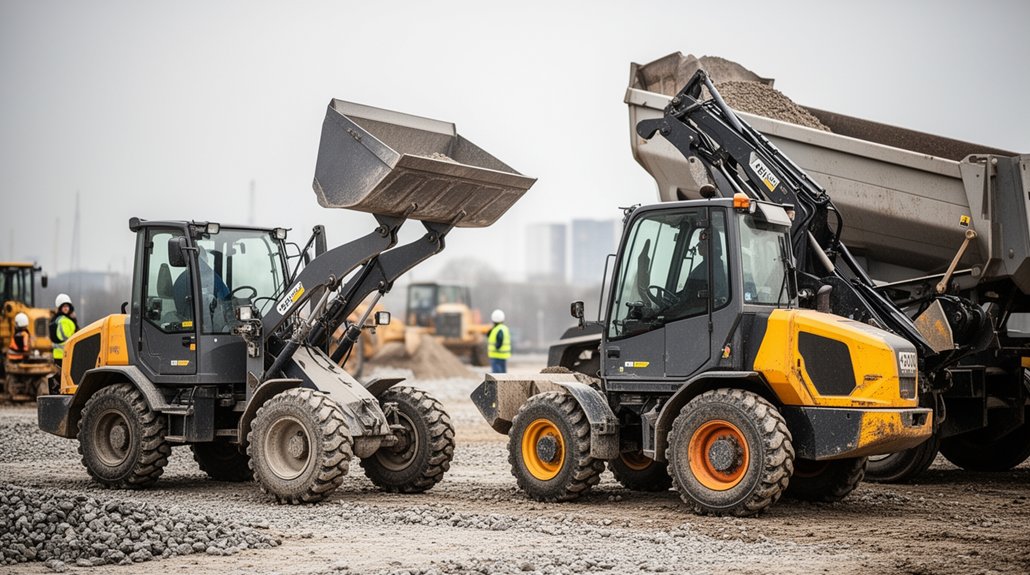
When choosing between forward-tipping and skip-loading dumpers, focus on how you’ll load and unload materials on your renovation site. A forward-tipping dumper carries its load in a front-mounted skip, then tips it forward at the drop point. You’ll find this practical for moving soil, rubble, or aggregates into a ground-level pile or trench.
A skip-loading dumper uses a skip that loads and unloads from the front, so you can place materials more precisely and work with compatible loading equipment.
Consider your crew’s routine: forward tipping suits straightforward transport and dumping, while skip loading can simplify controlled placement during indoor or confined renovation work.
Material handling affects how smoothly each machine fits your workflow.
For Safety considerations, keep people clear of the discharge area, use stable ground, and follow the dumper’s operating instructions.
How Do Their Capacity, Access and Costs Compare?
When planning renovation work, compare each dumper’s load capacity with the amount of material you’ll move per trip.
Check whether its size and turning room suit your site’s access routes.
Then weigh hire, fuel and labour costs to see which option fits your budget.
Load Capacity
Load capacity depends on the dumper’s size and design, but forward-tipping models generally offer more choice, from compact machines for tight renovation sites to larger options for heavier loads.
Check each model’s rated payload and skip volume before you hire; a full skip can exceed the safe limit when you carry dense rubble, soil or broken concrete.
Skip-loading dumpers suit repeated trips with loose material, while forward-tipping machines give you flexibility across mixed renovation tasks.
Match capacity to the amount you’ll move per load, not just the total project waste.
Overloading strains the machine and can make tipping unstable.
Review the manufacturer’s guidance, load evenly and use the Safety features provided.
Good Material handling helps you keep each trip productive without compromising stability or risking damage to the dumper.
Site Access
Site access can determine which dumper works best, even if both models meet your load needs. A forward tipping dumper suits open routes and straightforward unloading: you can drive close to a skip or spoil pile, then tip forward. Its turning space and discharge area may be limiting in narrow renovation plots.
A skip loading dumper can collect and carry material through tighter spaces, then lift its skip to load a larger vehicle. You’ll need enough clearance for the raised skip and a safe loading position.
Check gateways, floor strength, overhead services and turning points before choosing either machine. Site safety depends on clear routes and stable ground; plan deliveries to reduce reversing.
Consider environmental impact too: avoid damaging landscaping, paving or drainage while moving materials across your site.
Operating Costs
Operating costs depend on how much material you move and how efficiently the dumper fits your renovation site. A forward tipping dumper usually costs less to hire and suits frequent, quick loads of rubble, soil, or spoil. Its smaller capacity may mean more trips, so factor in operator time, fuel, and disposal charges.
A skip loading dumper often carries more per cycle, reducing repeat journeys when you’re shifting bulky waste across a larger project. However, its hire rate can be higher, and tight access may slow loading or require extra labour.
Compare total costs, not just daily rates. Material handling affects productivity: choose capacity that matches your waste volume and route. Safety considerations matter too; stable loading, clear tipping space, and trained operation help prevent delays, damage, and costly incidents.
How Do These Dumpers Load and Tip?
When you load a dumper, its skip design affects how easily you can collect rubble in tight renovation spaces.
A forward-tipping dumper raises its skip and discharges material over the front edge.
A skip-loading dumper lets you load from ground level, then tips its skip to place waste where you need it.
Loading Mechanism
The key difference is where you position the dumper to unload: a forward-tipping model raises its skip to discharge material over the front, while a skip loader lifts the skip over the operator’s station and tips it forward.
For renovation work, choose based on where you need to place spoil, rubble, or aggregates. A forward-tipping dumper suits a clear drop-off point ahead; a skip loader can help when you need to tip into a skip or container positioned nearby.
Both use a powered mechanism to raise and pivot the loaded skip, but their discharge paths differ. Check the load’s weight and balance before raising it, and keep the route and tipping area clear.
Safety considerations include stable ground, adequate clearance, and keeping people away from the moving skip. Plan material handling around access and disposal points.
Forward Tipping
Unlike a skip loader, a forward-tipping dumper raises its skip and discharges the load over the front.
You fill the skip with soil, rubble, or aggregate, then drive to the chosen drop point. Once the machine stands on firm, level ground, release the tipping control and let the load fall ahead of the wheels.
This direct material handling suits renovation jobs where you need to place spoil into a pile, trench, or waiting container. You can make several short trips through tight site access, but check that the discharge area has enough clearance.
For safety considerations, keep people clear of the skip’s path, avoid tipping on slopes, and don’t exceed the rated load. Lower the empty skip before travelling, especially across uneven ground or near workers.
Skip Loading
How does a skip-loading dumper unload its cargo? You raise the skip, then tip it forward over the front of the machine, directing soil, rubble, or aggregate into a trench, skip, or tight work area.
Unlike a forward-tipping dumper, which empties its load ahead, this design lets you place material close to the dumper’s front wheels. That can help when you’re renovating a narrow driveway or working beside an excavation.
For efficient Material handling, match the load to the skip’s capacity and approach the drop point on firm, level ground. Keep the route clear, and don’t raise the skip while moving.
Safety considerations matter: check overhead obstructions, keep people clear of the discharge zone, and lower the skip before travelling. Use the controls smoothly to avoid spills or sudden shifts.
When Does a Forward Tipping Dumper Work Best?
When your renovation site needs a simple, direct way to move soil, rubble, or aggregate, a forward tipping dumper works best on short, clear routes with space to tip at the destination. You can load it quickly, drive to the drop point, and discharge the load without extra handling. That makes it practical for shifting spoil from an extension trench, clearing demolition debris, or feeding aggregate near a work area.
Check that the route is firm, wide enough, and free of tight turns that could slow your runs. Material handling stays efficient when you keep loads within the machine’s rated capacity and avoid overfilling.
Safety considerations matter: tip on level ground, keep people clear of the discharge area, and watch for overhead obstructions. Choose this dumper when direct travel and tipping suit your site layout.
When Is a Skip Loading Dumper the Better Choice?
A skip loading dumper is the better choice when you need to scoop material from ground level as well as transport it. During renovations, you can use its loading shovel to collect soil, rubble, or aggregate without relying on a separate loader. That makes it useful when you’re clearing a garden, digging foundations, or moving spoil through a confined site.
Compared with a forward tipping dumper, it combines loading and hauling in one machine, reducing extra handling and equipment movements. This can simplify material handling when your work involves repeated collection and short trips to a skip or stockpile.
Consider safety considerations too: keep the load within the rated capacity, travel with the shovel lowered, and maintain clear sightlines. Choose this type when integrated scooping will save time across your renovation tasks.
How Do You Choose the Right Dumper for Your Site?
To choose the right dumper for your renovation site, match its loading method, capacity, and size to the work and access available.
A forward-tipping dumper suits repeated trips to a nearby skip or stockpile, while a skip-loading model can place spoil directly into a skip, reducing extra handling.
Check your typical load: a larger capacity may save journeys, but it won’t help if narrow gates, tight turns, or weak ground restrict access.
Compare ground conditions, gradients, and travel distance before deciding.
Safety considerations include stable loading, clear sightlines, suitable braking, and enough room to manoeuvre; don’t exceed rated capacity.
Also assess Environmental impact: fewer trips can cut fuel use, while electric models may reduce emissions and noise around occupied homes.
Choose the dumper that handles your materials safely without compromising access or site efficiency.
Conclusion
Choose a forward tipping dumper when your renovation site has room for quick, straightforward hauling; choose a skip loader when access is tight and precise placement matters. Compare capacity, manoeuvrability, and hire costs before deciding—because wrestling an oversized dumper through a narrow doorway isn’t a productivity strategy. Match the machine to your site, material, and route, and you’ll move rubble efficiently without turning a simple renovation into an obstacle course for you, your crew, and your patience.