 MartinShields
An ageing cottage can hide structural problems behind features that look perfectly sound, so don’t assume a cosmetic update will be enough. Before you commit, compare the cost and disruption of rebuilding with the value of retaining the existing structure. You’ll also need to balance modern comfort with heritage rules, original materials, and practical limits on the site. A careful survey can reveal which choices will shape the entire project.
Key Takeaways
- Hire a structural engineer to assess foundations, walls, roof, and floors; rebuild if widespread damage makes renovation unsafe or unreliable.
- Check heritage protections, planning rules, and building-control requirements before deciding whether to renovate, rebuild, or alter historic features.
- Survey the cottage, compare detailed renovation and rebuilding budgets, and include permits, waste removal, contingency, and restoration costs.
- Preserve significant features and choose compatible, breathable materials that respect the cottage’s character while supporting modern comfort.
- Upgrade insulation, heating, ventilation, plumbing, and windows in planned phases, coordinating experienced contractors and protecting completed areas.
Decide Whether to Rebuild or Renovate
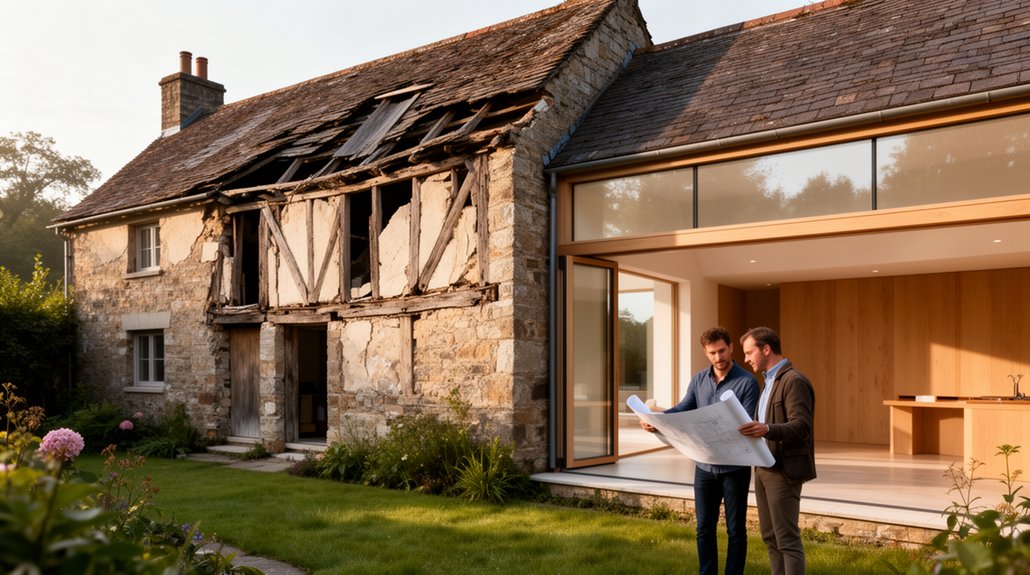
Before you plan the work, find out whether the cottage’s structure can support renovation. Ask a structural engineer to assess the foundations, walls, roof, and floor framing.
If the cottage has widespread rot, movement, or unsafe materials, rebuilding may offer a safer, more reliable route than patching major defects.
If its frame remains sound, renovation can preserve original features while upgrading services and insulation.
Compare each option against your priorities. Renovation often protects Historic charm, but hidden damage can expand the scope and limit layout changes.
Rebuilding gives you greater control over space, energy performance, and Future comfort, though you may lose distinctive details.
Check local heritage rules before deciding; they may restrict demolition or require specific repairs.
Choose the path that best balances structural safety, character, and the home you need.
Survey the Cottage and Set Your Budget
Once you’ve chosen to rebuild, commission a detailed survey to identify what must be removed, repaired, or protected. Ask a qualified surveyor to inspect the roof, foundations, walls, floors, drainage, wiring, and plumbing.
Request photographs and a written record of defects, urgent repairs, and areas that need specialist assessment. This evidence helps you set priorities before work begins.
Build your budget from measured quantities and contractor estimates, not rough guesses. Include design and survey fees, materials, labour, waste removal, temporary accommodation, and a contingency of at least 10–15 percent for hidden damage.
Price landscape preservation and antique restoration separately, so you can compare options and protect valued features. Review quotes line by line, confirm what each includes, and update your budget when survey findings change the scope.
Check Permissions and Plan for Period Features
Check planning and building-control requirements before you finalise the design or start work. Ask your local authority whether the cottage is listed, lies in a conservation area, or needs consent for alterations. Confirm which applications, drawings, surveys, and approvals you’ll need, and allow time for decisions. Don’t assume permitted development rights cover changes to historic buildings.
Record original features before work begins. Photograph fireplaces, beams, doors, windows, floorboards, and decorative details, noting their condition and location. Ask a conservation officer or heritage specialist how to protect significant elements and meet heritage preservation requirements.
Agree which features need repair, careful removal, or specialist restoration, and document approved methods and materials. Check that contractors understand these conditions. Keep consent documents and records on site; they’ll help you maintain historical accuracy and demonstrate compliance throughout the rebuild.
Design a Modern Layout Around Cottage Character
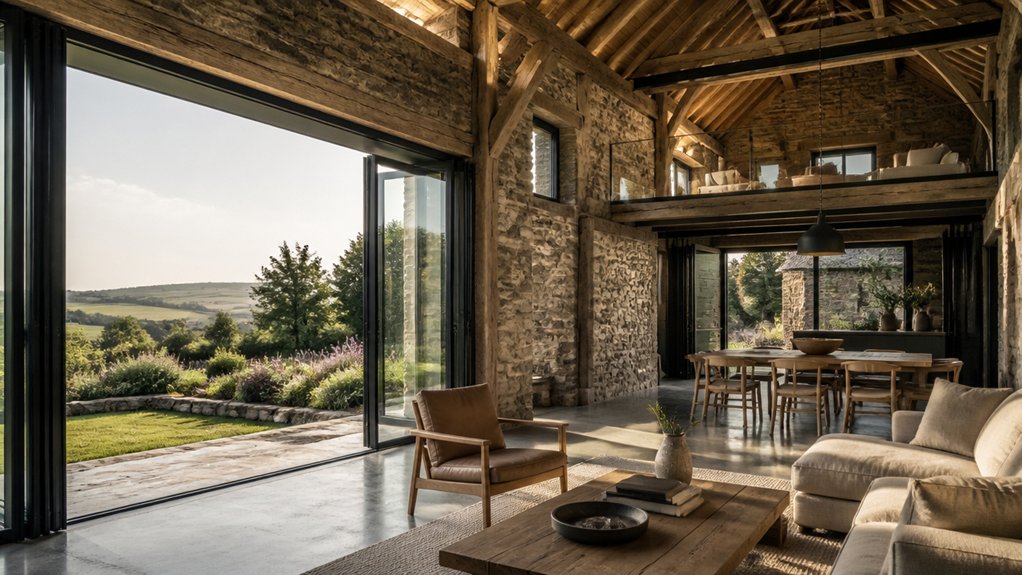
A modern layout can improve comfort without erasing a cottage’s character. Start by mapping how you move through each room, then identify cramped routes, dark corners and spaces that lack a clear purpose.
You might open the kitchen to a dining area, but keep a snug or separate sitting room if you value quiet. Preserve distinctive features, such as a hearth or exposed beams, as focal points, and arrange furniture to frame rather than obstruct them.
Plan storage where it reduces clutter without swallowing useful floor space. Add sightlines to windows and garden landscaping, so daylight and outdoor views strengthen the connection between rooms and garden.
Use interior decor to distinguish zones through lighting, furniture placement and restrained colour choices. Before finalising plans, check circulation, door swings and access to essential services; these practical details make your layout work every day.
Choose Materials That Suit the Cottage
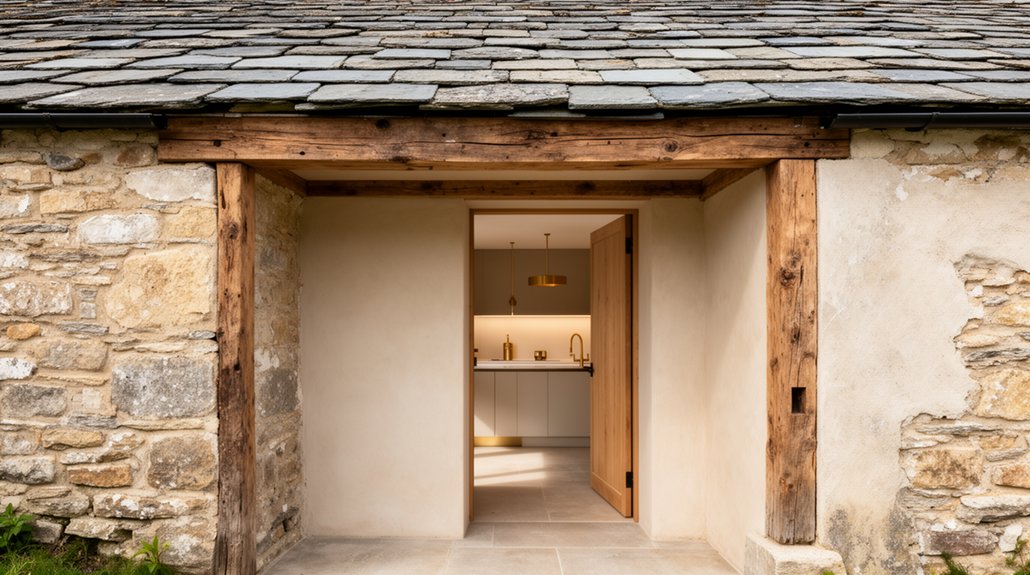
Choose materials that respect the cottage’s age while meeting modern demands for durability and comfort. Inspect existing brick, stone, timber, and plaster before deciding what to retain, repair, or replace. Matching original materials helps preserve character and prevents new work from looking out of place.
Choosing sustainable materials can reduce waste and support responsible sourcing. Consider reclaimed floorboards, locally quarried stone, certified timber, and low-impact paints. Check each product’s maintenance needs and suitability for the cottage’s structure; a material that performs well elsewhere may not suit older walls or joinery.
When sourcing period appropriate finishes, compare samples against original details and ask suppliers about dimensions, texture, and composition. Use compatible mortar and breathable finishes where the existing fabric requires them.
Record product specifications and keep spare tiles, boards, or fittings for future repairs. Choose quality over imitation, and coordinate finishes across adjoining rooms.
Improve Insulation, Heating, and Ventilation
Before adding insulation, assess how the cottage manages moisture and airflow. Check for damp patches, roof leaks, blocked vents, and draughts; fix water sources first to prevent trapped moisture and decay.
Then insulate the roof, walls, and floors to suit the cottage’s construction, preserving ventilation where needed. Choose breathable materials for older masonry, and seal gaps around doors and windows without closing essential air paths.
Upgrade to energy efficient windows where repairs won’t deliver adequate performance, and fit snug, well-sealed doors.
Select heating that matches the cottage’s size and insulation level; zone controls and a programmable thermostat help you heat rooms efficiently.
Add smart ventilation systems or extract fans in kitchens and bathrooms to control humidity.
After work, monitor indoor moisture and adjust ventilation to keep rooms comfortable, fresh, and free from condensation throughout the year.
Upgrade Wiring, Plumbing, and Essential Systems
Before closing walls, have a licensed electrician assess your wiring and upgrade it to meet current safety and capacity needs.
Replace aging pipes and fittings to reduce leak risks and support reliable water flow.
Coordinate both projects with inspections so you can address hidden problems before finishing the cottage.
Modernize Electrical Wiring
Once you’ve opened up an ageing cottage, modernize its electrical wiring before closing the walls. Have a licensed electrician inspect the existing system, identify damaged cables, and calculate whether the service can handle today’s appliances and heating equipment.
Replace outdated wiring, undersized circuits, and unsafe connections; add dedicated circuits for high-demand devices and enough outlets to reduce reliance on extension cords. Install modern circuit breakers, ground-fault protection in wet areas, and arc-fault protection where required.
Follow current safety standards and local codes, and obtain permits and inspections before covering the work. Plan smart wiring for reliable internet, lighting controls, security devices, and future upgrades.
Label the panel clearly, keep circuit diagrams, and photograph concealed cable routes. These records make later repairs safer and simpler for you.
Replace Aging Plumbing
How sound is the cottage’s plumbing? Check for leaks, corrosion, stains, damp smells, and slow drains before you plan renovations. Ask a licensed plumber to inspect visible pipes, test fixtures, and assess hidden lines where access allows.
Low or fluctuating water pressure may signal mineral buildup, leaks, undersized pipes, or a failing pressure regulator; don’t assume a new pump will solve it.
Replace brittle, corroded, or unsuitable pipe materials with options approved for your local code, such as copper or modern plastic piping. Choose based on water quality, temperature, installation conditions, and maintenance needs.
Have the plumber size supply lines correctly and install accessible shutoff valves at fixtures and key branches. Replace worn traps and supply connectors, too.
After work, flush the system, check every joint for leaks, and confirm steady flow at multiple taps.
Phase the Build to Control Costs and Disruption
A phased build lets you spread costs, keep essential rooms usable, and limit disruption while the cottage is being rebuilt. Start by grouping work into logical stages, such as structural repairs, plumbing and electrical upgrades, then interior finishes.
Ask your contractor to map dependencies so you don’t close a room before its replacement is ready. Set a realistic construction timeline that includes inspection delays, material lead times, and a contingency for hidden damage.
Careful contractor selection matters: choose a team experienced with older cottages, confirm who’ll coordinate trades, and agree on written stage budgets before work begins.
Protect completed areas with dust barriers, and schedule noisy tasks together. Before each phase, confirm access, utilities, and temporary cooking or washing arrangements.
Review costs and progress at stage boundaries, adjusting later work before overruns grow.
Conclusion
Rebuilding an ageing cottage takes careful choices, from evaluating its structure and setting a realistic budget to securing permissions and protecting period features. Plan a modern layout, select compatible materials, and upgrade insulation, heating, ventilation, wiring, and plumbing for lasting comfort. Could a phased build make the work easier to manage? Coordinate trades, track costs, and inspect each stage. With thoughtful planning, you can preserve your cottage’s character while creating a safe, efficient home suited to modern living for years to come.