 MartinShields
Your roof’s structure can weaken long before the damage is obvious. Watch for sagging, cracked materials, and signs of moisture or storm damage, then document what you find and arrange regular inspections. Some problems respond to repairs or reinforcement; widespread decay may call for a rebuild. Knowing which option fits—and when to bring in a professional—can protect your home and budget. The first step is spotting what your roof is telling you.
Key Takeaways
- Inspect for sagging ridges, bowed rafters, cracked ceilings, leaks, and damaged roofing; photograph and track changes over time.
- Identify causes such as moisture, rot, rust, storm damage, heavy snow, poor ventilation, or added loads before choosing repairs.
- Repair localized damage with suitable materials; reinforce weakened members using properly secured sister timbers or engineered supports.
- Consider rebuilding when rot, sagging, split trusses, or recurring failures are widespread and repairs cannot restore structural strength.
- Consult qualified professionals, check permit requirements, and budget for materials, labor, waste removal, temporary protection, and hidden damage.
Spot Signs of an Ageing Roof Structure
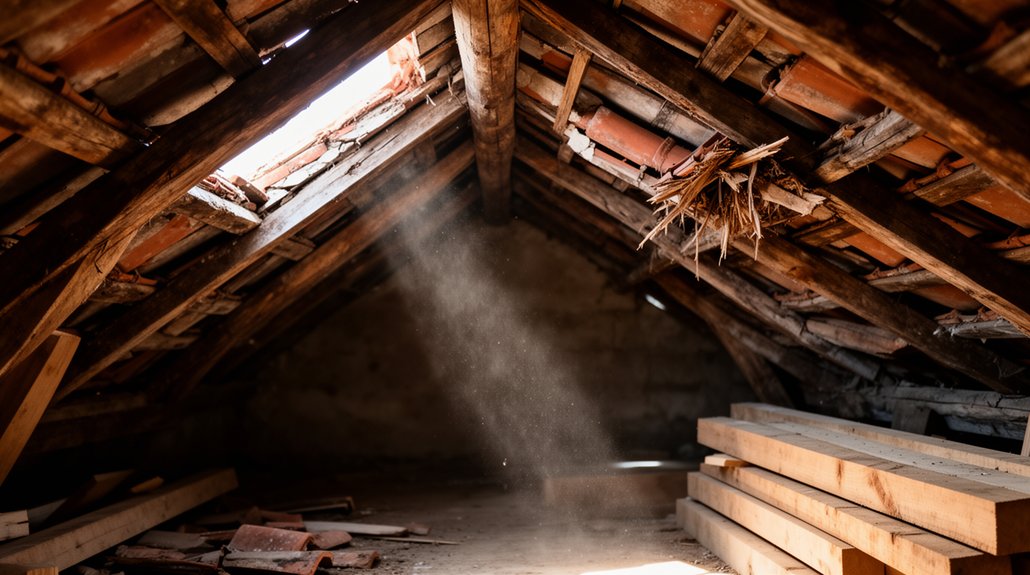
Ageing roof structures often show clear warning signs before they fail. Check your roof from the ground and, when safe, inspect the attic for changes. Look for a sagging ridge, uneven rooflines, or rafters that appear bowed. Inside, note cracked ceilings, new stains, and doors that suddenly stick; these can signal movement in the structure.
Examine the roof material for curling, slipping, cracked, or missing pieces, and check whether fasteners or flashing have loosened. Compare what you see with the roof’s age and expected wear. Weather effects, including wind, heavy rain, and snow, can make existing signs more obvious, so inspect after severe conditions.
Don’t climb onto a damaged roof. Photograph concerns, record when they appeared, and arrange a qualified roofer’s assessment promptly if the structure looks distorted or unstable.
Find Causes of Roof Structural Damage
To find the cause of roof structural damage, start by tracing how moisture, weight, and movement may have affected the frame. Check the attic for leaks, damp insulation, staining, and poor ventilation; trapped moisture can weaken timber and corrode metal connections. Look for plumbing leaks or condensation, too, so you don’t blame every wet patch on the roof.
Consider Material deterioration: timber may rot, split, or attract insects, while fasteners can rust and masonry can crumble. Assess Weather impact by noting storm damage, wind uplift, heavy snow, and repeated freeze-thaw cycles. These stresses can loosen joints or overload supports.
Also check whether renovations, added equipment, or stored items changed the roof’s load. Compare damage patterns across the structure, and record what you find. If the cause isn’t clear, ask a qualified building professional to assess it.
Repair or Reinforce Your Roof Structure
Once you’ve identified the cause and extent of the damage, choose repairs that restore the roof’s strength without hiding the underlying problem. Replace split rafters, decayed timber, or failed connectors with materials suited to the existing structure, and secure every joint properly.
If members have weakened but remain sound, a qualified roofer can reinforce them with sister timbers or engineered supports. Don’t simply cover cracks or sagging; confirm that the repair transfers loads safely to the walls.
Check Roof insulation for trapped moisture, compression, or gaps, and correct Ventilation issues that could encourage further decay. Keep insulation clear of eaves and maintain airflow through the roof space.
Before work begins, ask your contractor to explain the repair method, materials, and any required structural calculations. Inspect completed work and address leaks promptly to protect the strengthened frame.
Know When Roof Rebuilding Makes Sense
If repairs can’t restore a roof’s strength or the damage affects much of its frame, rebuilding may be the safer, more cost-effective choice. Look beyond visible leaks: widespread rot, sagging rafters, split trusses, or repeated failures can signal that the structure has reached its limit. Ask a qualified roofer to inspect the framing and explain whether sound sections can remain.
Consider how roof material and age affect the decision. Some coverings weigh more than the original structure can safely support, while discontinued materials may make consistent repairs difficult. Weather impact matters, too: recurring storms, heavy snow, or prolonged moisture can weaken multiple areas at once.
If damage keeps returning despite proper repairs, rebuilding can provide a stronger, more reliable roof. Choose this route when an expert confirms repairs won’t restore dependable structural performance.
Budget for Roof Work and Check Permits
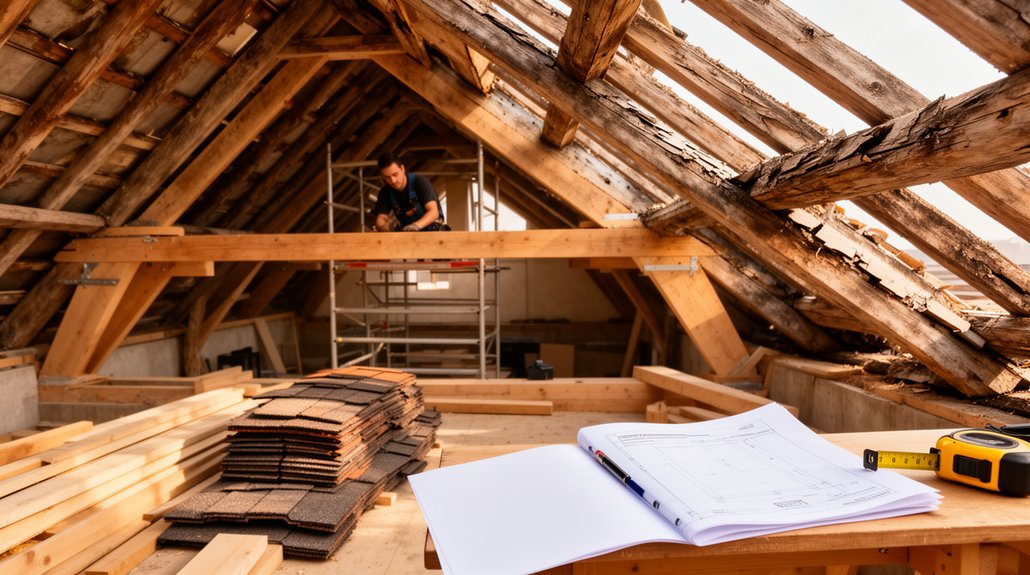
Before work begins, set a realistic budget that covers more than materials and labor. Include waste removal, equipment hire, temporary protection, and a contingency for hidden damage. Compare quotes carefully, checking that each specifies the same scope and finish.
Roof material choices affect both purchase costs and installation time, so weigh durability, weight, and maintenance needs against your budget. Weather impact can delay work, increase protection costs, or expose the interior to water; plan for suitable cover and schedule flexibility.
Check local permit requirements before ordering supplies or setting a start date. Your municipality may require approval for structural changes, altered rooflines, or certain materials. Ask the building department what applications, drawings, inspections, and fees apply.
Keep approvals and contractor documents together, and don’t assume previous permits cover new work. A clear budget and confirmed permissions help prevent costly delays.
Know When to Call a Roof Structural Professional
Watch for sagging ridges, spreading cracks, or roof framing that shifts—these signs can point to structural damage.
If repairs involve load-bearing members or the problem keeps returning, don’t rely on DIY fixes.
Choose a qualified roof structural professional with relevant experience and credentials to assess the roof and recommend safe repairs.
Signs Of Structural Damage
Structural damage often shows up in changes you can see or feel: a sagging roofline, cracked or bowed rafters, spreading ceiling cracks, or doors that suddenly stick. These signs can indicate shifting loads or weakened connections, not just cosmetic wear.
Check your attic for split timber, loose joints, damp insulation, and daylight where the roof should be sealed. Look for recurring leaks, uneven roof surfaces, and debris that suggests shingles or other roof material have loosened.
Consider weather impact: heavy snow, strong winds, and repeated storms can expose weaknesses or worsen existing damage.
Don’t dismiss changes because they appear gradually. Photograph what you notice and track when it occurs, especially after severe weather. If damage spreads, the roofline visibly dips, or framing looks compromised, contact a roof structural professional promptly for an assessment.
When DIY Repairs Fall Short
When warning signs point to weakened framing, a DIY patch may hide the damage without fixing its cause. A roof structural professional can trace sagging, spreading cracks, or recurring leaks to compromised rafters, trusses, or connections.
Don’t rely on surface repairs when the roofline has shifted, the ceiling bows, or doors suddenly stick; these clues may signal movement below the covering.
Your roof material and the weather impact it has endured affect how damage develops and what repairs will hold. If you find widespread rot, split framing, loose supports, or water damage near load-bearing parts, stop work and arrange an expert assessment.
Avoid climbing onto an unstable roof or cutting structural members. A qualified assessment can determine whether you need reinforcement or rebuilding before a small defect becomes a safety risk.
Choosing A Qualified Professional
Choose a roof structural professional when damage affects rafters, trusses, load-bearing connections, or the roofline. These components support your home; a poor repair can worsen instability or create serious safety risks. Call promptly if you notice sagging, spreading cracks, recurring leaks, or movement after a storm. Don’t climb onto a compromised roof to investigate.
Before hiring, verify licensing, insurance, and experience with structural repairs, not just routine roofing. Ask for references, a written scope, and an inspection that identifies the cause of damage. Your professional should explain suitable repair options, account for the existing roof material, and clarify whether permits or an engineer’s assessment are needed.
Compare detailed estimates rather than choosing on price alone. Once repairs are complete, ask for a maintenance schedule and keep inspection records to track changes and prevent small problems from becoming structural failures.
Conclusion
Your roof won’t announce structural trouble with a polite memo; it’ll sag, crack, or invite water inside. Don’t wait for that dramatic performance. Inspect regularly, document changes, and trace damage to its source before choosing repairs, reinforcement, or a full rebuild. Set a realistic budget, check permit requirements, and bring in a structural professional when the problem exceeds your expertise. A little vigilance costs less than letting your roof audition for a collapse.