 MartinShields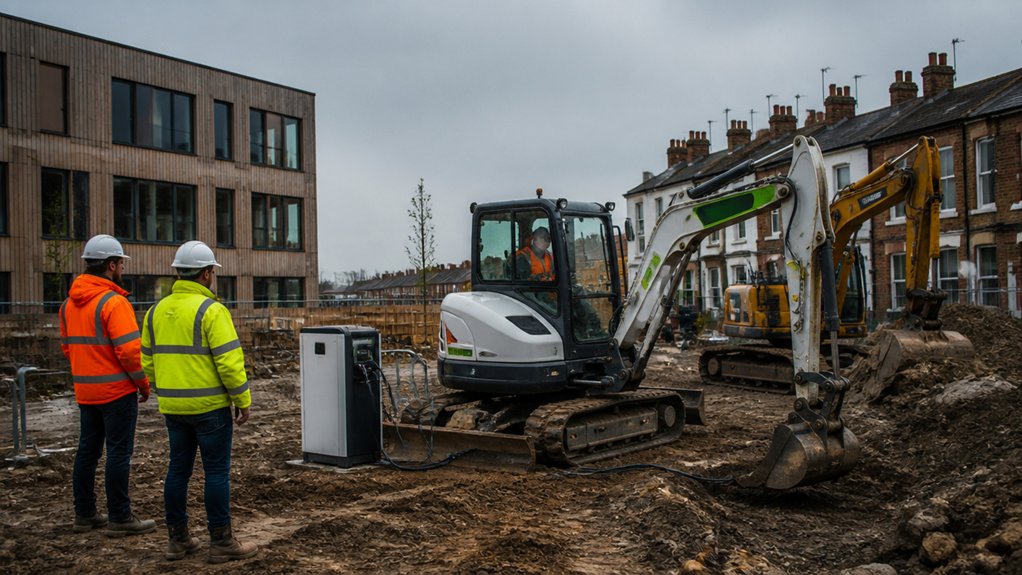
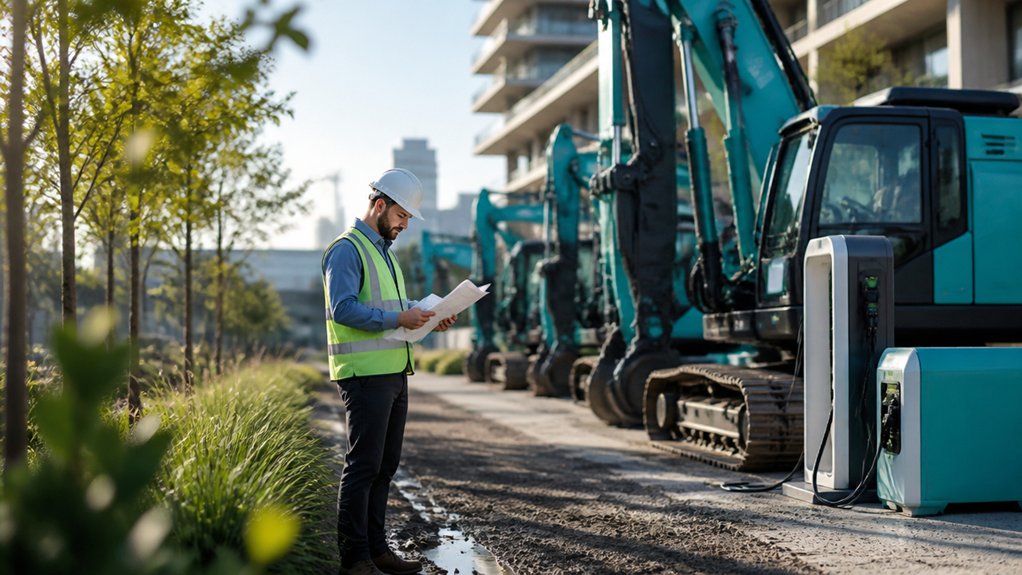
If you’re planning a UK renovation or construction project, electric diggers may now be a practical option, not just a greener alternative. They can reduce noise and on-site emissions, while lower running costs may help offset a higher purchase price. But performance depends on the job, shift length and access to charging. Before choosing one, you’ll need to know where it can work, how it handles remote sites, and whether the savings stack up.
Key Takeaways
- Electric diggers are increasingly practical for UK sites, especially indoor renovations, basements, and noise- or emissions-sensitive locations.
- Adoption depends on matching digging depth, lifting capacity, access dimensions, and battery capacity to each project.
- Lower energy, servicing, and downtime costs can offset higher purchase prices, but total ownership costs vary.
- Long shifts and remote jobs require realistic runtime estimates, planned charging, and reliable backup power.
- The sector is ready where site needs and charging infrastructure align; trial machines on representative jobs before buying.
Where Can Electric Diggers Work on UK Sites?
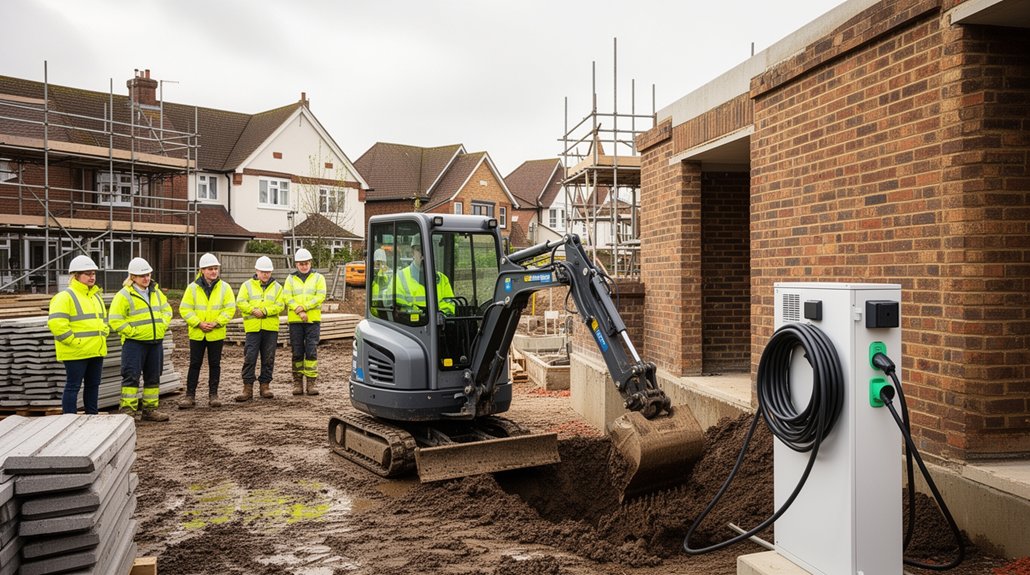
Electric diggers can work anywhere their size, reach and battery capacity suit the job, from indoor renovations and basement excavations to urban sites with strict noise or emissions limits.
You can use compact models inside occupied buildings, where zero exhaust fumes and lower noise help protect workers and neighbours. On tight city plots, they can excavate foundations, trenches and service routes without adding local emissions.
They also suit schools, hospitals and heritage properties, where disruption must stay low. Before choosing a machine, match its digging depth, lifting capacity and access dimensions to your plans.
Check Battery life against the tasks you’ll complete on site, and confirm Charging infrastructure is available where the machine will operate. If access, ground conditions and the work scope fit, an electric digger can handle renovation tasks effectively.
Can Electric Diggers Manage Long Shifts and Remote Jobs?
For long shifts or remote renovation jobs, an electric digger can work well if its battery capacity matches the workload and you can plan charging around breaks or shift changes. Before starting, estimate digging hours, ground conditions and attachment use, since harder tasks can drain power faster.
Check the machine’s real-world runtime, not just its advertised maximum, and keep a reserve for repositioning or unexpected groundworks. Battery longevity depends on sensible charging, temperature management and following the manufacturer’s guidance; avoid leaving the machine depleted between shifts.
At isolated properties, confirm charging infrastructure is available, including a suitable supply, safe cable routes and permission to connect. If grid access is limited, arrange a compatible mobile charger or backup power source.
With a clear charging plan, you can keep renovation work moving without compromising site safety or productivity.
Do Electric Digger Savings Offset the Purchase Price?
Once you’ve confirmed an electric digger can meet your renovation workload, compare its higher purchase price with the savings it can deliver. You’ll typically spend less on electricity than diesel, while fewer moving parts can reduce servicing and downtime.
On a renovation site, quieter operation may also help you work in noise-sensitive areas or extend permitted hours, improving productivity.
Don’t assume those savings guarantee a quick payback. Check the machine’s battery life against your daily digging schedule, and price charging infrastructure, installation and any site upgrades. If you’ll need a second battery or frequent public charging, costs can rise.
Compare the total cost of ownership over your expected holding period, including finance, maintenance, energy and resale value. Ask suppliers for realistic duty-cycle figures, then test the machine on a representative job before committing.
Conclusion
Electric diggers are no longer a niche choice for UK renovation and construction sites. You can use them indoors, in noise-sensitive areas and on many outdoor jobs, provided you plan charging around the work. Their upfront price still needs careful comparison with fuel, servicing and compliance costs. With construction responsible for around 25% of UK greenhouse gas emissions, switching suitable machines to electric can make a measurable difference. Assess your site, shift pattern and charging access before you buy.