 MartinShields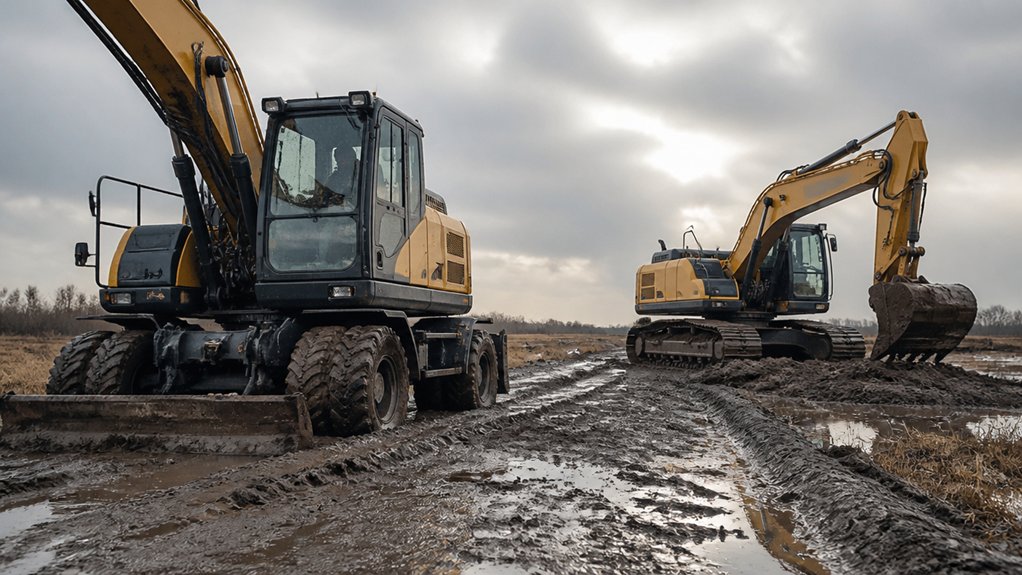
A tracked excavator can spread its weight across a much larger contact area than a wheeled model, helping it stay afloat on soft, wet ground. If you’re planning drainage, grading, or foundation work, that difference can determine whether you keep moving or lose time recovering a machine. But tracks aren’t always the safer or more practical choice—your soil, access routes, and plans for moving between work areas can change the answer.
Key Takeaways
- Choose a tracked excavator for deep mud, saturated soil, or uneven ground; its wider footprint improves traction and reduces sinking.
- Choose a wheeled excavator for firm, well-drained surfaces where faster travel between work areas matters.
- Assess soil type, water depth, recent weather, slopes, and ground firmness before selecting a machine.
- Match the excavator’s weight, ground pressure, reach, and attachments to the site and project requirements.
- Plan routes and use protective mats where needed; tracks can damage turf when turning, while wheels may sink on soft ground.
Which Excavator Works Best in Wet Terrain?
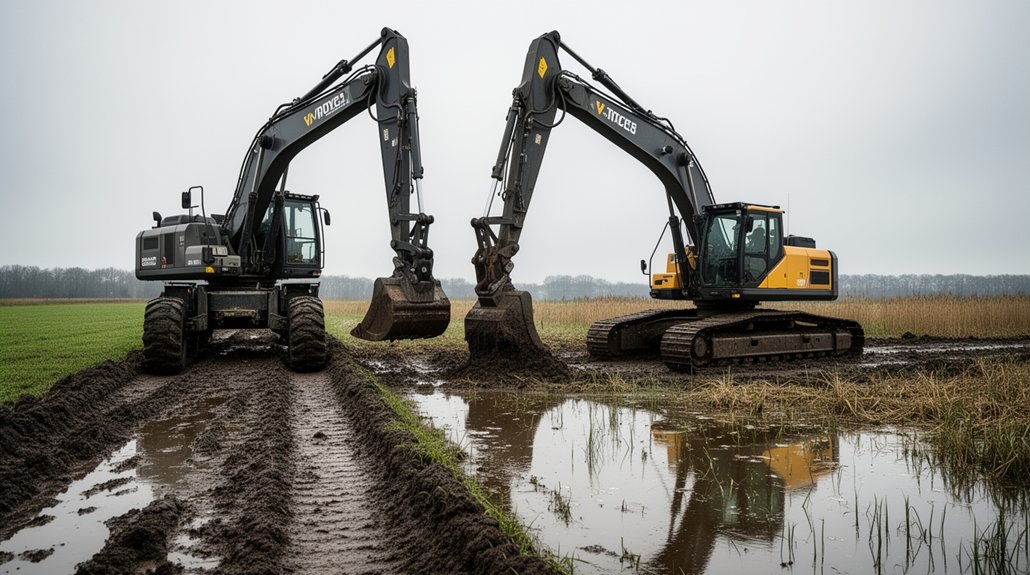
The best excavator for wet terrain depends on how soft the ground is and how much weight the machine must carry. Before you rent or buy, assess the work area, access routes, and renovation tasks.
A compact machine may suit a backyard drainage project, while larger excavation calls for greater lifting capacity and reach. Check the manufacturer’s ground-pressure ratings, operating weight, and attachment compatibility to match the machine to your site.
Reliable hydraulic systems help you control digging and grading precisely, especially when you’re working around foundations, utilities, or landscaping. Don’t overlook operator comfort: an adjustable seat, clear visibility, and intuitive controls can reduce fatigue during long shifts.
Ask your equipment supplier to review site conditions and recommend a model that meets your project’s load, reach, and access requirements.
When Do Tracked Excavators Handle Mud Better?
When mud is deep or the ground gives way underfoot, tracked excavators usually provide better traction and stability than wheeled models. Their wide tracks spread the machine’s weight across more ground, helping you avoid sinking while digging foundations, drainage trenches, or utility lines.
This added Mud traction matters on saturated lawns and soft construction sites where repeated passes can rut the surface or leave equipment stuck. Tracks also help you hold position as you swing a loaded bucket, improving Terrain stability on uneven, slippery ground.
Choose a tracked excavator when your renovation work requires steady digging in persistent mud, especially near slopes or excavations. Before you start, check access routes, track condition, and ground bearing capacity; even tracks can bog down in deep slurry or damage vulnerable surfaces without careful operation.
When Do Wheeled Excavators Make More Sense?
Wheeled excavators make sense when your renovation site has firm, well-drained ground.
Choose one if you need to travel frequently on roads between work areas.
You’ll also relocate faster without hauling the machine between nearby sites.
Firm, Drained Ground
On firm, well-drained ground, a wheeled excavator can move between work areas faster than a tracked machine, especially on paved or compacted surfaces. For renovation projects, that mobility helps you reposition around foundations, driveways, and utility trenches without laying temporary mats.
Choose wheels when the surface can support the machine’s weight and you need precise digging, lifting, or grading across a stable site.
Check the ground after rain, excavation, or deliveries; soft patches can still cause sinking or uneven footing. Use outriggers and stabilizers as specified, and avoid turning sharply on finished paving.
Although wheeled models can reduce track-related equipment maintenance, inspect tires, brakes, and hydraulic supports before work. Plan routes to limit soil compaction near planting beds and buried services.
If the ground loses firmness, pause and reassess access before continuing.
Frequent Road Travel
If your renovation project requires frequent travel between nearby work areas, a wheeled excavator can save time by driving on suitable roads instead of being hauled between sites. Choose one when your route is paved or firm, local rules permit road travel, and the machine’s tires and braking system suit the distance.
Before leaving, secure the attachment, check lights and mirrors, and confirm the machine’s travel speed and weight meet road requirements. Wheeled models can also reduce ground disturbance on finished driveways and landscaped areas, helping you protect renovation work.
They’re less suitable on saturated soil, where tires may lose traction or rut the surface. Remote operation can help you manage work in restricted areas, while noise reduction features may matter near occupied homes.
Match the machine to both the route and ground conditions.
Faster Site Relocation
Need to move between nearby renovation areas quickly? A wheeled excavator can make sense when your project spans several accessible work zones, such as building entrances, parking areas, and utility trenches. You can drive between locations without loading the machine onto a trailer, saving setup time and keeping crews productive.
On firm, prepared routes, wheels also help you avoid disturbing finished paving or landscaping as much as repeated track turns might.
Wet terrain changes the calculation. Check ground bearing strength, slope, and traction before traveling; soft or saturated soil can bog down wheels and damage the site. Use mats or choose a tracked excavator where access remains unstable.
Confirm local travel rules, and factor in tire checks, engine maintenance, and operator training. Skilled operators can relocate safely while protecting surfaces and nearby renovation work.
Which Machine Has Better Traction and Stability?
On wet ground, tracked excavators usually deliver better traction than wheeled models. Their wider footprint also helps you stay stable on soft terrain while digging or grading.
Choose a machine that can reach your renovation area without sinking or shifting.
Traction On Wet Ground
When wet ground threatens traction, choose an excavator that spreads its weight across a broad footprint and keeps the machine stable under load. For most renovation sites, tracked excavators grip mud better than wheeled models because their tracks distribute weight and resist slipping during digging, grading, and debris removal.
Wheeled machines can lose traction quickly on saturated soil, though suitable tires and careful operation may help on firmer access routes. Check the site after rain, especially around trenches, foundations, and spoil piles.
Match track width and machine size to the work area; wider tracks can improve grip but may limit access through tight spaces. Use smooth turns and controlled travel speeds to reduce ground damage.
Maintain Hydraulic systems and follow Operator safety practices so you can work confidently without sacrificing control.
Stability Across Soft Terrain
Soft terrain demands both traction and balance, so choose a machine that stays planted as it digs and turns. For most renovation sites with mud, saturated soil, or uneven ground, tracked excavators provide stronger ground stability. Their wide tracks spread the machine’s weight, reducing pressure and limiting sinkage near foundations, drainage trenches, and landscaping.
That broader footprint also helps you hold position while lifting or swinging a loaded bucket.
Wheeled excavators can work on firmer, compacted areas and move quickly between tasks, but they may shift or rut soft ground unless you fit suitable tires and outriggers.
Assess soil conditions, slope, access routes, and the loads you’ll handle. Choose tracks when terrain adaptability and steady digging matter most; use wheels when the surface supports safe travel and frequent repositioning.
How Do Soil and Site Conditions Affect Your Choice?
Soil type, water depth, and ground firmness determine how much flotation and stability your excavator needs. Before renovating, assess soil composition across the work area: clay can hold water and soften, while sand may drain quickly but shift under load. Organic topsoil and peat offer poor support, so you’ll need to limit pressure on these surfaces.
Check the planned digging depth and identify saturated pockets, standing water, and firm access pads. The weather impact matters, too; recent rain can turn a stable yard into a rut-prone work zone, and forecasts can help you plan excavation phases.
For shallow water and compacted ground, wheeled equipment may suit precise site work. On deep mud or yielding soil, tracked equipment typically spreads weight better. Match the machine to the weakest ground you must cross or excavate.
How Will You Move the Excavator Around the Site?
Plan the excavator’s route before work begins, especially if it must cross wet ground or tight access points. Mark turning areas, delivery paths, and work zones so you can move materials without blocking renovation crews or damaging finished surfaces.
Choose tracks when you need steady travel across soft, uneven ground; choose wheels when firm access lanes and frequent repositioning matter more.
Check gate widths, overhead clearance, slopes, and the space needed to turn before bringing the machine onsite. Keep travel routes clear of trenches, buried services, and temporary utilities.
Use operator training to guarantee your crew knows how to steer, reverse, and change direction safely in confined areas.
Schedule Excavator maintenance before mobilization, then inspect controls, tracks or tires, and attachments between work stages.
Reassess the route as site conditions change.
What Are the Costs and Ground-Impact Risks?
Once you’ve mapped the excavator’s route, compare rental, delivery, and operating costs with the risk of ground damage. Your cost comparison should include fuel, setup, mats, and any restoration work—not just the daily rate.
On a renovation site, rutting can damage lawns, compact soil around foundations, or disrupt drainage, adding labor and materials to your budget.
Tracked machines often spread weight across a wider area, but they can still tear soft turf while turning. Wheeled machines may travel faster on firm access paths, yet sink or leave deep ruts on saturated ground.
Check site conditions and ask the rental company about ground pressure and turning limits. Protect finished landscaping with mats, limit unnecessary passes, and inspect the route afterward.
These steps reduce environmental impact and help you avoid costly repairs.
Which Excavator Fits Your Wet-Ground Job?
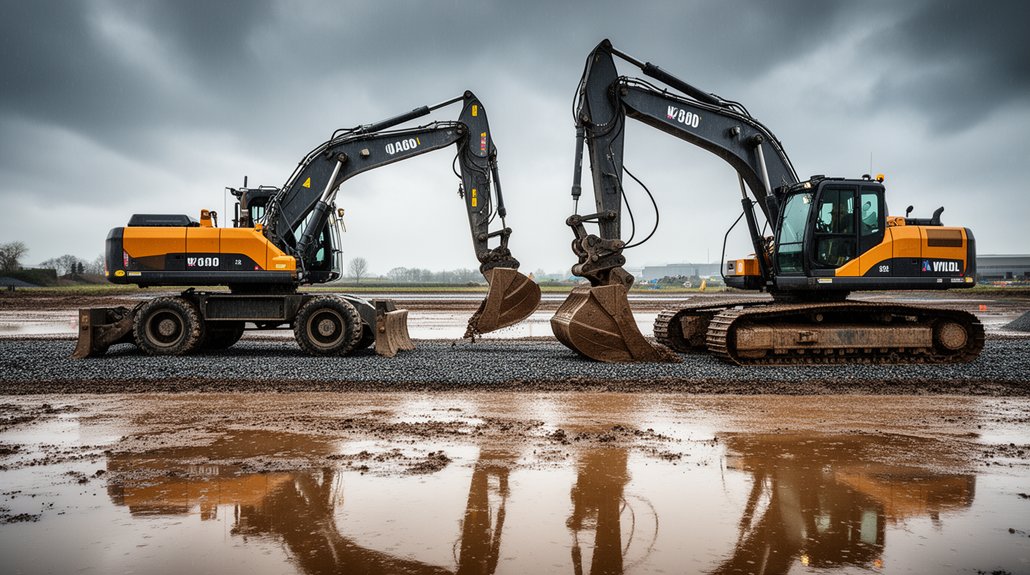
Choose an excavator by matching its weight, undercarriage, and reach to the wettest part of your renovation site—not just the firm access route. If you’re digging near a house, drainage trench, or foundation, a tracked excavator usually spreads pressure better and grips soft ground.
Choose rubber tracks when you need to protect paving or lawns; use steel tracks for rough, muddy areas where traction matters more.
A wheeled excavator can suit firm access routes and jobs that require frequent repositioning, but don’t take it onto saturated soil without checking bearing capacity.
Confirm reach and bucket size against excavation plans, overhead hazards, and tight access points.
Ask your rental provider about ground pressure, track options, and Excavator maintenance records.
Plan mats, spoil placement, and Operator safety controls before work begins, and stop if the ground shifts or sinks.
Conclusion
Choose a tracked excavator when your renovation site has deep mud, soft soil, or slopes: its wider tracks improve traction, stability, and weight distribution. A wheeled model can still be the smarter choice on firm access routes, especially when you need faster travel between work areas. Worried tracks will slow your schedule? Plan transport and machine access before work begins. Match the excavator to actual ground conditions, and you’ll reduce delays, sinking, and costly surface damage.