
 MartinShields
A second-hand roller can look sound and still hide faults that turn into expensive repairs. Before you commit, check its service history and hours, inspect the frame, tires, engine, hydraulics, drum, and vibration system, and listen closely during a test drive. Don’t rely on a clean exterior or the seller’s assurances; small warning signs often point to larger problems. Here’s what to check before you decide whether the machine is worth buying.
Key Takeaways
- Review maintenance records, verify engine hours against the meter, and investigate gaps or inconsistencies.
- Inspect the frame, welds, tires, and underside for cracks, damage, uneven wear, or signs of poor repairs.
- Check the engine, cooling system, hydraulic hoses, and cylinders for leaks, contamination, or unusual exhaust smoke.
- Examine the drum, scrapers, and vibration components for cracks, uneven wear, loose fittings, or damage.
- Test steering, braking, travel, and vibration repeatedly; investigate pulling, excessive play, unusual noises, or worsening shakes before buying.
Check the Roller’s Service History and Hours
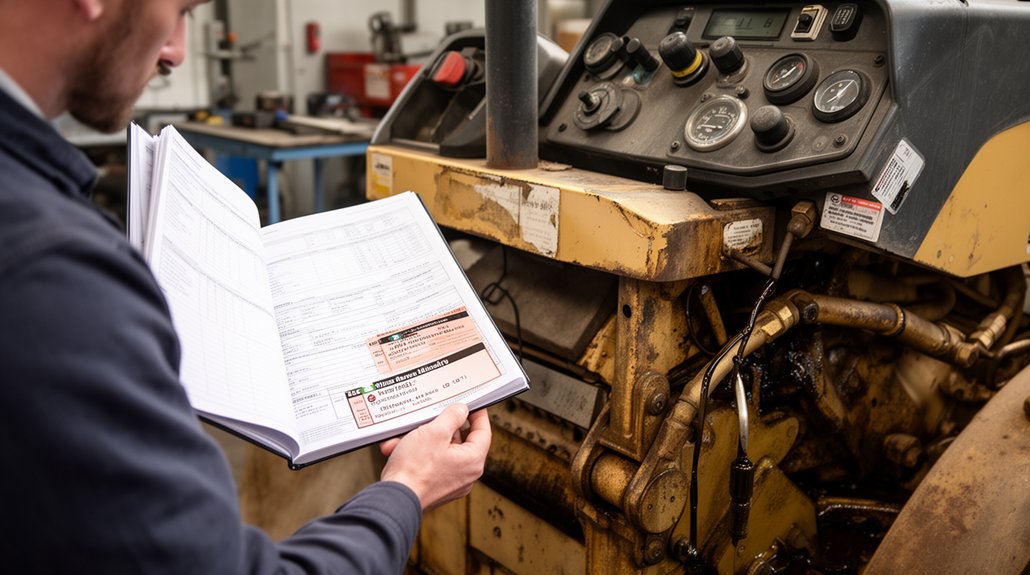
Before inspecting a second-hand roller, ask for its service records and verify the engine hours against the hour meter. Compare invoices, maintenance logs, and ownership dates to build a reliable Usage history.
Look for consistent oil changes, filter replacements, hydraulic servicing, and repairs to the engine or transmission. Missing entries aren’t proof of neglect, but unexplained gaps deserve clear answers.
Check whether the hour meter works and whether its reading matches dated service documents. A low figure paired with extensive repairs or long periods without records may signal a replaced meter or incomplete history.
Ask who performed the work and confirm major repairs with the shop, if possible. You should also compare the seller’s account with the paperwork.
If details conflict or records appear altered, pause the deal until you can verify the machine’s maintenance history independently.
Inspect the Frame, Tires, and Overall Condition
Once the service history checks out, inspect the roller itself for signs of damage or hard use. Start with Frame integrity: check the chassis, welds, mounting points, and protective structures for cracks, fresh paint, bent sections, or poorly matched repairs. Look underneath for dents or scrapes that could signal impacts, and compare both sides for alignment.
Next, assess Tire condition across the full tread and sidewalls. Look for deep cuts, bulges, uneven wear, missing chunks, and mismatched tires; these can point to damage or poor maintenance. Check that each tire sits evenly and appears properly inflated.
Walk around the machine in good light. Loose panels, damaged steps, missing fasteners, and careless repairs deserve questions. Don’t dismiss cosmetic damage automatically, but treat structural defects as serious. Ask the seller to explain anything you can’t verify.
Inspect the Engine for Leaks, Smoke, and Wear
If the seller agrees, inspect the engine cold before starting it; a warm engine can hide leaks and make smoke harder to spot. Look around the cylinder head, crankcase, seals, and drain plug for fresh wetness, baked-on grime, or oil trails.
Check the Engine oil level and condition; milky fluid may indicate coolant contamination, while a burnt smell or metallic flecks warrants caution.
Examine the cooling system for damp hoses, crusty residue, damaged clamps, and stains near the radiator or water pump. Don’t remove a hot radiator cap.
Once the seller starts the roller, watch the exhaust: persistent blue smoke suggests oil burning, black smoke points to excess fuel, and thick white smoke can signal coolant entering the engine.
Note uneven discoloration, corrosion, or neglected repairs, and ask for service records before you commit.
Listen for Engine and Transmission Warning Noises
With the engine running, listen for knocks, rattles, or sharp ticking that persist or grow louder as the roller warms up. A brief startup rattle may be harmless, but don’t dismiss a noise that continues under load.
Rev the engine gently and note whether the pitch changes, the idle stays steady, and power feels consistent. These clues reveal engine performance problems that a seller may not mention.
Next, test transmission sounds while moving slowly in a safe, open area. Shift through each gear and listen for whining, grinding, clunks, or repeated knocks.
Notice delayed engagement, slipping, or a sudden change in noise when you accelerate or decelerate. Don’t force a test if anything feels unsafe.
Ask when the noise began and whether a mechanic has diagnosed it. Treat unexplained sounds as a reason for inspection or negotiation.
Check for Hydraulic Leaks and Slow Response
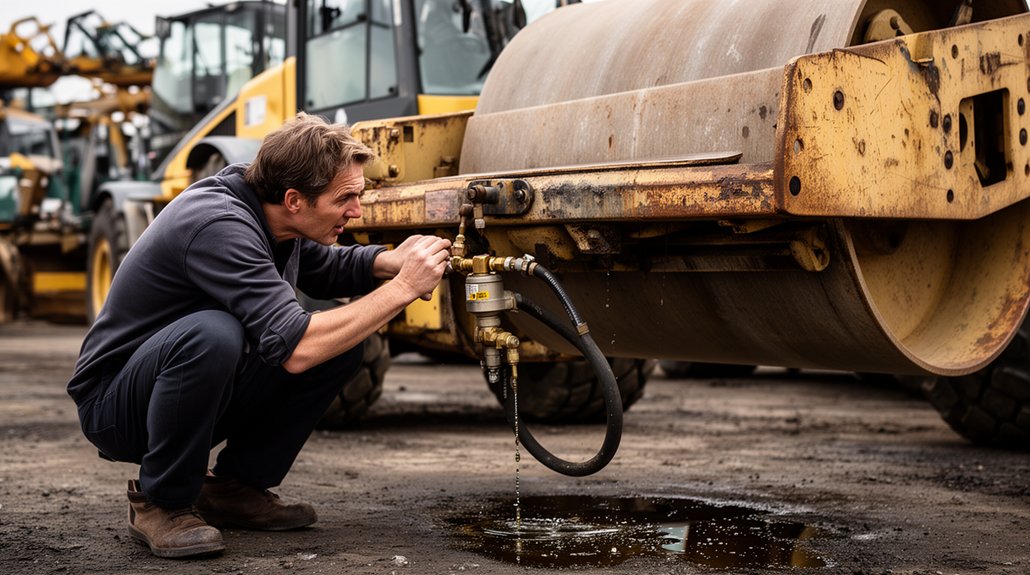
Before testing the controls, inspect hydraulic hoses, fittings, cylinders, and the ground beneath the roller for fresh oil or damp, grimy buildup. Check around connections and rod ends; damaged Hydraulic seals can leak under pressure, even when the machine looks clean. Don’t dismiss a small wet patch as harmless: leaks can worsen and reduce system pressure.
With the seller’s permission, start the roller and operate each hydraulic control through its normal range. Note the Response time. Functions should engage smoothly and promptly, without hesitation, jerking, or unusual noise. Slow movement may point to low fluid, a restricted filter, air in the system, or a failing pump.
Ask when the fluid and filters were last serviced, and check the reservoir level using the manufacturer’s procedure. If leaks or sluggish controls persist, arrange a qualified inspection before you buy.
Inspect the Drum, Scrapers, and Vibration System
Because the drum does the compaction work, inspect its surface for deep gouges, cracks, flat spots, and uneven wear that could affect performance. Check the drum edges and welds for damage. Then assess Drum alignment: the drum should sit squarely in the frame, without signs of shifting or uneven contact.
Examine each scraper for secure mounting, straight edges, and consistent clearance from the drum. Poor scraper condition can leave material buildup, score the surface, and reduce compaction quality.
Look for worn bushings, loose fasteners, or damaged mounts around the vibration system. Inspect accessible hoses and connections for leaks, and check that protective covers are intact.
Ask when the vibration components were last serviced and whether repairs were documented. Treat unusual looseness or visible damage as grounds for a qualified mechanic’s inspection before purchase.
Test Drive the Roller and Decide Whether to Buy
During the test drive, check that the controls respond smoothly and predictably.
Listen for unusual noises as you assess how the roller handles and how its vibration system performs.
If anything feels or sounds wrong, don’t commit until you’ve identified the cause and cost.
Check Controls and Response
Once the walk-around checks are complete, test the roller in a safe, open area to see how it responds under real operating conditions. Fasten your seat belt, confirm the work zone is clear, and follow the seller’s operating instructions.
Check steering at low speed, then make gradual turns in both directions. The machine should track predictably without excessive play or pulling.
Test forward and reverse travel, braking, vibration settings, and any available speed controls. Each control should engage smoothly and respond promptly; delayed, uneven, or erratic action can point to wear or adjustment problems.
Assess Response consistency across repeated inputs, and ask whether Control calibration has been checked.
Don’t push the roller beyond safe limits. If a control feels unreliable, pause the test and request a qualified inspection before negotiating or buying.
Listen for Unusual Noises
After checking how the controls respond, listen closely as you drive: a healthy roller should run with a steady engine note and consistent vibration. Unusual noises can reveal wear that a visual inspection misses.
Note when each sound occurs: a metallic knock under load may point to loose or damaged components, while a high-pitched squeal can indicate a slipping belt. A growl or rumble that changes with engine speed may signal a Faulty bearing.
Don’t dismiss intermittent sounds; repeat the same operating conditions and see whether they return. Ask the seller to explain any noise and request maintenance records or a mechanic’s assessment.
If a sound persists, grows louder, or has no clear explanation, pause the purchase. Price repairs only after a qualified technician identifies the cause.
Assess Handling and Vibration
On the test drive, judge how the roller tracks, turns, and responds over uneven ground. Keep your speed low at first, then test normal operating pace in a safe, open area. The machine should travel straight without constant steering corrections. Poor Tire alignment, uneven tire wear, or a bent component may pull it to one side.
Check Steering responsiveness through gradual turns and tight maneuvers. Controls should feel predictable, with no excessive play, delay, or sudden resistance.
Watch for vibration in the seat, steering wheel, and frame. A mild, consistent tremor may be normal, but strong shaking, pulsing, or vibration that worsens with speed can signal damaged tires, loose mounts, worn bearings, or drivetrain trouble.
Repeat the route if needed. Don’t buy until a mechanic investigates any persistent handling or vibration concerns.
Conclusion
Before you buy, connect the clues: compare service records and operating hours with what you see, hear, and feel during inspection and a test drive. A low hour meter alone doesn’t prove a roller’s in good condition; records and wear should tell a consistent story. Check for leaks, unusual noises, slow hydraulics, and vibration problems, then have a qualified mechanic assess anything uncertain. If the seller won’t allow a proper inspection, walk away. A careful check now can spare you costly repairs later.