 MartinShields
A well-planned quarry upgrade can cut fuel use, reduce downtime, and move more material per shift—but the gains depend on how the equipment works together. If you’re replacing a drill, crusher, conveyor, or haul truck, look beyond rated capacity to automation, maintenance needs, and operator protection. Modern quarrying machinery can improve output while reducing site risks, yet one overlooked bottleneck can limit the whole operation.
Key Takeaways
- Efficient engines, load-sensing hydraulics, and right-sized equipment increase output while reducing fuel use and downtime.
- Automated drilling, crushing, and material handling coordinate production, prevent bottlenecks, and maintain steady material flow.
- Predictive maintenance and telematics identify wear, excessive idling, and inefficient routes before they disrupt operations.
- Well-designed conveyors and accurately set crushers and screens improve throughput, product consistency, and stockpile management.
- Remote controls, enclosed cabs, sensors, guards, and trained operators reduce worker exposure and help prevent accidents.
What Makes Modern Quarry Machinery More Productive?
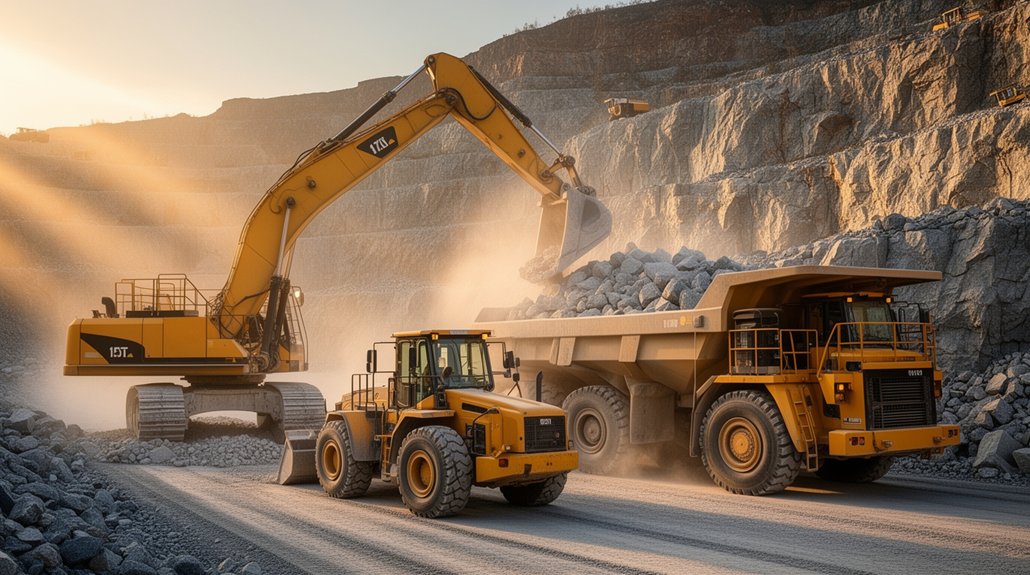
Modern quarry machinery boosts productivity by moving more material with less downtime, fuel, and manual effort. When you upgrade equipment, match its capacity to your site’s production targets and haul routes. Efficient engines and load-sensing hydraulics reduce fuel use while maintaining steady output.
Automated controls help you coordinate loading, crushing, and material handling, so crews spend less time correcting bottlenecks. Predictive maintenance systems flag wear early, letting you schedule repairs before a breakdown disrupts work.
These improvements can lower operating costs and limit Environmental impact by reducing idle time, emissions, and unnecessary material movement. You’ll get the best results when operator training covers safe controls, daily inspections, and efficient work practices.
Review performance data regularly, then adjust schedules and equipment settings to keep your upgraded operation productive, reliable, and ready for changing demand.
Which Machines Drill Quarry Rock Faster and More Precisely?
When you’re upgrading quarry operations, choose a drill that matches your rock conditions and accuracy needs.
Hydraulic rotary drills deliver fast, controlled penetration, while down-the-hole drills maintain precision in hard rock.
Automated drill rigs help you repeat hole patterns consistently and reduce setup time.
Hydraulic Rotary Drills
Because quarry production depends on accurate, consistent holes, hydraulic rotary drills use controlled feed pressure and rotation to penetrate hard rock efficiently. When you’re upgrading a quarry, these machines help you maintain hole alignment and depth, supporting predictable blasting and cleaner bench layouts.
Their hydraulic systems let operators adjust drilling force to suit changing rock conditions, reducing wasted effort and tool wear. You can also use automated controls to repeat settings across a pattern, improving consistency while limiting manual corrections.
Match the drill’s capacity to your site’s rock, bench height, and production targets before purchase. Regular maintenance keeps hydraulic components responsive and helps prevent costly downtime.
With Workforce training, your crew can operate equipment safely and spot faults early. Pair efficient drilling with Eco friendly practices, such as reducing fuel use and managing dust at the source.
Down-The-Hole Drills
For deeper benches and hard, abrasive rock, down-the-hole drills can deliver faster, straighter holes than top-hammer rigs. Their hammer sits near the bit, transferring impact energy directly into the rock. You’ll gain consistent hole diameter and alignment across deep production patterns, supporting cleaner blasting and more predictable bench renovation.
Match compressor capacity, bit design, and feed pressure to your geology; poor settings waste fuel and accelerate wear. Before committing, compare penetration rates, maintenance access, and service support with your existing fleet.
Track dust, noise, and fuel use to assess Environmental impact, then use suitable suppression and containment measures. Your workforce training should cover setup, rod handling, bit changes, and daily inspections.
With disciplined operation and maintenance, you can improve output, reduce rework, and keep drilling crews safer on demanding quarry benches.
Automated Drill Rigs
Automated drill rigs combine GPS guidance, onboard sensors, and programmable controls to place quarry blast holes faster and more precisely. When you upgrade an older drilling operation, these machines help you maintain consistent hole spacing, depth, and angle across uneven benches. That accuracy supports predictable blasting, reduces rework, and can improve fragmentation for downstream crushing.
Choose a rig suited to your rock conditions, bench layout, and production targets. Automated feed control and remote monitoring can limit operator exposure near moving equipment, while dust suppression and efficient drilling help reduce Environmental impact.
You’ll still need skilled operators: provide workforce training in setup, calibration, software, and emergency procedures before commissioning. Track penetration rates, fuel use, and hole deviations to verify gains.
With routine maintenance and reviewed drill plans, you can raise output without sacrificing control or site safety.
How Do Crushers and Screens Increase Quarry Output?
Crushers and screens help you process more rock in less time. They deliver consistent product sizes, so you can meet project specifications with fewer adjustments.
Upgrading or maintaining this equipment also reduces downtime and keeps your quarry renovation on schedule.
Faster Material Processing
When quarry output depends on steady material flow, crushers and screens help you process more rock with less delay. A well-planned equipment upgrade can remove bottlenecks between extraction and stockpiling.
Choose crushers that match your feed material and required throughput, then position screens to keep material moving without unnecessary handling. You’ll gain capacity when conveyors, feeders, and machines work as one coordinated line.
Use automation to monitor load and adjust feed rates before blockages slow production. Schedule maintenance strategies around operating hours, and replace worn parts before they trigger costly stoppages.
Keep dust suppression and efficient power use in your upgrade plan to reduce environmental impact while supporting reliable operation. By improving flow and uptime, you can increase daily output without expanding the quarry footprint or adding avoidable delays.
Consistent Product Sizing
To produce consistent aggregate, match crusher settings and screen openings to the sizes your market requires. When you upgrade a quarry line, choose crushers that let you adjust the closed-side setting for each material and product specification. Pair them with screens that separate particles accurately, then route oversize back for further crushing instead of letting it contaminate finished stockpiles.
Check gradation samples at the discharge and compare results with customer requirements. If sizes drift, adjust feed rate, crusher settings, or screen media before production falls out of spec. Consider how rock hardness, moisture, and worn components affect sizing as you plan renovations.
Innovative maintenance, such as scheduled inspections of liners and screen panels, helps preserve accuracy. These sustainable practices reduce rejected material and make better use of each tonne, increasing saleable output without expanding your footprint.
Reduced Equipment Downtime
Accurate sizing only boosts output if the line stays running. When you upgrade crushers and screens, choose models with accessible service points, durable wear parts, and clear fault alerts. These features help your crew find problems early and complete repairs faster, reducing unplanned stoppages.
Plan equipment maintenance around actual operating hours and material conditions. Inspect belts, bearings, liners, and screen media before wear causes a breakdown. Keep critical spares on site, and coordinate service windows with production schedules so repairs don’t disrupt peak runs.
Invest in operator training, too. Skilled operators can spot unusual vibration, adjust feed rates, and respond safely to alarms before small issues become costly failures.
With reliable equipment, timely parts, and capable crews, you’ll keep more tonnes moving through the plant and get greater output from your quarry investment.
How Do Conveyors Keep Quarry Materials Moving?
Conveyors keep quarry materials moving by carrying rock from crushers and screens to stockpiles or loading areas. When you upgrade a quarry, assess belt width, length, and capacity against your required throughput. Properly sized systems reduce bottlenecks and keep processing equipment supplied without unnecessary handling.
Choose durable belts, sealed bearings, and impact-resistant loading points to suit abrasive material and site conditions. Add skirts and transfer chutes to control spillage, while adjustable speed settings help you match flow to each stage. Separate belts or dedicated discharge points support material segregation, protecting product quality and simplifying stockpile management.
Plan access for inspections before installation. Conveyor maintenance, including belt tracking, roller checks, and prompt repairs, prevents small faults from interrupting production. Guarding, emergency stops, and clear walkways also help protect your crew during daily operation.
How Can Automated Haulage Reduce Quarry Delays?
When haul trucks arrive late or queue at loading points, automated haulage can keep quarry production on schedule. Autonomous trucks follow planned routes and coordinate movements, helping you maintain a steady flow between the face, crusher and stockpile.
They can operate consistently through shift changes, reducing delays caused by handovers or uneven staffing. Remote monitoring lets your team track truck locations and respond quickly when a route becomes blocked or a loading area needs attention.
Before introducing automation, review road layouts, loading points and traffic rules; upgrade signage and communications where needed. Clear operating procedures help drivers, operators and maintenance staff work safely alongside automated vehicles.
Start with a defined haul route, measure queue times and adjust dispatch settings as your site changes. You’ll reduce avoidable waiting without disrupting established quarry operations.
How Does Telematics Help Quarry Equipment Save Fuel?
By tracking fuel use alongside engine hours, idle time, and workload, telematics helps you spot where quarry equipment burns fuel without moving material.
Telematics analytics can show which machines idle too long, travel inefficient routes, or work outside their most productive range. Use those findings to adjust schedules, haul roads, loading practices, and operator settings before investing in replacements.
You can also compare fuel consumption across shifts and machines, then set realistic targets for improvement. Regular reviews help you confirm whether changes deliver measurable fuel efficiency gains or simply shift costs elsewhere.
Keep maintenance records alongside fuel data: clogged filters, worn components, and incorrect tyre pressures can raise consumption.
When you plan a site upgrade, use this evidence to prioritise equipment and process changes that cut waste while sustaining output.
How Does Modern Quarry Machinery Improve Site Safety?

Modern quarry machinery improves site safety by reducing workers’ exposure to moving equipment and hazardous areas. Remote controls let you operate crushers and conveyors from safer positions, while enclosed, reinforced cabs protect operators from dust, noise, and flying debris. Cameras, proximity sensors, and alarms help you spot people or obstacles before contact occurs. Automated shutdowns can stop equipment quickly when guards open or faults arise.
When upgrading a quarry, integrate these safeguards with clear traffic routes, barriers, and well-marked pedestrian zones. Train your crew to use each machine’s safety features and wear appropriate Personal protective equipment, including hard hats, eye protection, and hearing protection. Keep maintenance current so brakes, guards, and emergency stops work reliably.
Establish Emergency response protocols, post them where crews can see them, and practise drills before incidents occur. These steps make safer operations part of every shift.
What Should You Consider When Choosing Quarry Machinery?
Choosing quarry machinery means matching each machine to your site’s production needs, materials, and working conditions. Assess your target output, rock hardness, haul distances, and available space before comparing models.
Choose crushers, screens, and loaders that work together, so you won’t create bottlenecks during production upgrades. Check fuel use, parts availability, service access, and compatibility with your existing fleet.
Equipment maintenance matters: select machinery your crew can inspect and repair promptly, and confirm that suppliers provide dependable support.
Consider safety features, visibility, noise controls, and emissions to suit your site and regulations.
Factor in operator training, since skilled staff can use equipment efficiently and reduce avoidable wear.
Finally, compare total ownership costs—not just purchase prices—and choose machines that can adapt as your quarry’s needs change.
Conclusion
With modern quarry machinery, you can move more material, cut fuel use, and keep production flowing with fewer delays. Automated controls, efficient drilling, upgraded crushers, and well-managed conveyors help you get more from every shift. Telematics and predictive maintenance can flag issues before they become costly interruptions. Most importantly, remote operation, sensors, and guarded equipment help protect your crew from harm’s way. Choose machines that fit your site, and you’ll build a safer, more productive quarry for years to come.