 MartinShields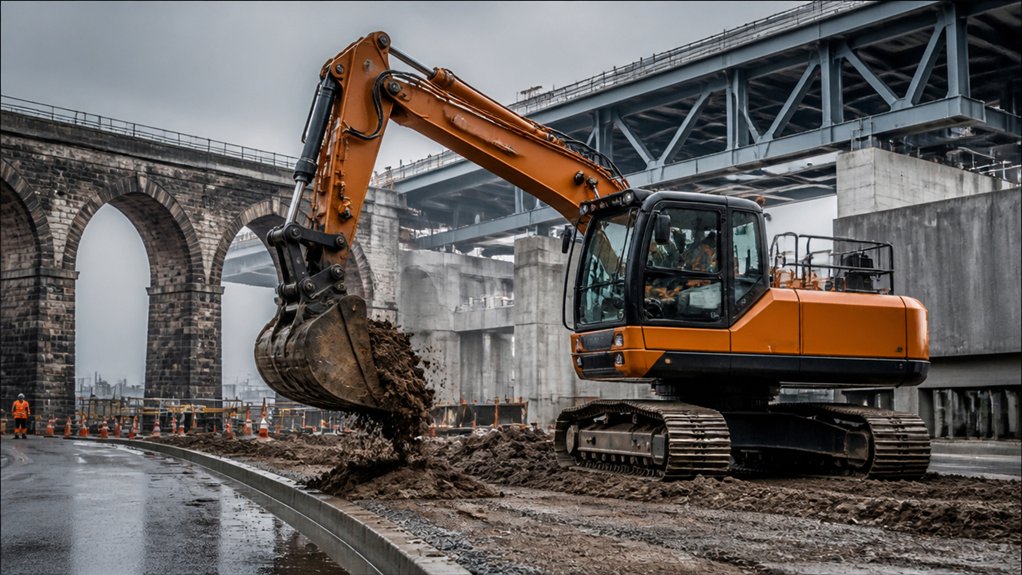
When you plan work on a British street, rail line or utility network, a 360-degree excavator can reach tight spots while keeping disruption down. These machines have changed from simple digging tools into adaptable, digitally guided equipment, with improvements in safety, emissions and maintenance shaping how you renovate and build. But their next role in Britain’s infrastructure may depend on a challenge many sites still face.
Key Takeaways
- Steam-powered machinery gave way to compact hydraulic excavators, whose rotating upper structures enabled efficient 360-degree operation.
- British sites drove adaptations such as narrower chassis and shorter tail swings for working safely in confined urban spaces.
- Modern excavators handle digging, lifting, grading, and material movement, with quick-change attachments expanding their versatility.
- Cameras, digital guidance, remote controls, and improved ergonomics support safer, more precise work around people and buried services.
- Efficient engines, electric and hybrid models, and careful maintenance help reduce emissions and disruption during infrastructure upgrades.
How Did 360-Degree Excavators Begin?
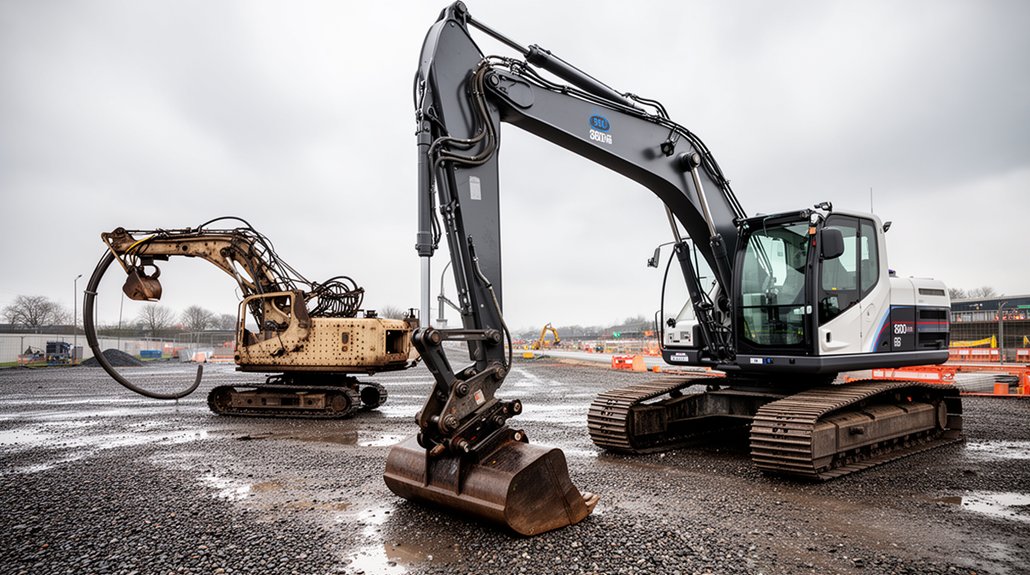
Before modern 360-degree excavators reshaped British construction sites, early steam-powered machines laid the groundwork. In the nineteenth century, contractors used steam shovels to move earth for railways, canals, and major building works. These machines could dig and lift, but their size, setup time, and limited movement made them unsuitable for many confined renovation jobs.
Historical milestones followed as manufacturers developed hydraulic systems and more compact excavators during the twentieth century. Hydraulic power gave operators smoother control over digging and lifting, while tracked undercarriages improved stability on uneven ground.
A rotating upper structure then allowed the cab and boom to turn without repositioning the tracks.
Those technological innovations created the basic 360-degree excavator you recognise today. When planning a renovation, you can trace its value to this shift: one machine could reach around a work area and handle varied tasks efficiently.
How Did UK Sites Change Excavator Design?
As 360-degree excavators spread across UK sites, narrow streets, tight access and mixed ground pushed manufacturers to make them more compact, manoeuvrable and adaptable. When you’re renovating a terraced property or repairing services in a confined yard, a shorter tail swing and narrower chassis help you work close to walls without disrupting neighbours.
Uneven ground and older infrastructure also demanded steadier platforms, durable components and controls that operators could manage precisely. These design adaptations reflected practical site constraints, not just engineering fashion.
Historical innovations such as improved hydraulic systems and compact undercarriages helped machines turn, lift and travel within restricted spaces. For your project, that evolution means you can plan excavation around existing foundations, access routes and buried utilities, while choosing a machine sized for the site rather than forcing the site to accommodate it.
What Can Modern 360-Degree Excavators Do?
Modern 360-degree excavators can dig, lift, grade and move materials without repositioning the whole machine, making them useful for varied renovation work. You can use one to trench beside existing foundations, clear spoil, place materials and shape access routes while keeping the work area compact.
A range of attachments, including breakers, grabs and augers, lets you switch between demolition, handling and ground preparation without bringing in separate machines.
On tight urban projects, precise hydraulic controls help you work around retained structures and buried services. Remote control can support operation from a suitable position, while Autonomous operation can handle selected repetitive tasks on compatible equipment.
You’ll also find digital guidance systems that help you follow set depths and grades, reducing rework and keeping excavation aligned with your renovation plans.
How Do 360-Degree Excavators Improve Safety?
When you’re excavating around existing buildings and services, clear sightlines help you spot workers and obstacles sooner.
A 360-degree excavator’s cameras and visibility aids can reduce blind spots, while careful machine positioning helps keep the work zone safer.
You’ll still need clear exclusion zones and agreed signals to protect everyone on site.
Improved Operator Visibility
A 360-degree excavator gives you a clearer view of the worksite, helping you spot ground workers, vehicles, and obstacles before the cab or boom blocks your line of sight. During renovation, that awareness helps you position the machine carefully around existing structures, buried-service markers, and restricted access points.
A well-designed cab supports Operator ergonomics, letting you adjust your seat and controls for a comfortable posture and a natural sightline across the digging area. Cameras, mirrors, and other visibility technology can fill blind spots, especially when you’re slewing or working close to a building façade.
Check that lenses stay clean and mirrors remain correctly set before each shift; dust and vibration can quickly reduce image quality. Use these aids alongside direct observation, not as a substitute, so you can judge clearances and excavation progress accurately.
Safer Work Zones
Clear sightlines help you build safer work zones, but the excavator’s controlled movement matters just as much. On a renovation site, you can rotate the upper structure through a full circle without repositioning the tracks, reducing unnecessary travel near workers, walls and buried services. That control helps you plan lifts and digging sequences within a smaller, clearly defined area.
You’ll still need firm boundaries. Set exclusion zones, use a trained banksman where visibility is restricted, and keep pedestrians away from the machine’s swing radius. Follow site-specific Safety protocols for underground utilities, lifting and reversing; don’t rely on the excavator’s reach to make a crowded workface safe.
Thorough operator training helps your crew judge clearances, coordinate movements and stop work when conditions change. Before each shift, check alarms, cameras and attachments, then brief everyone on access routes and hand signals.
How Do Excavators Cut Construction Emissions?
When you choose an excavator for a renovation, a fuel-efficient engine can reduce diesel use and emissions.
You can cut them further with lower-emission alternatives, such as electric or hybrid models.
Plan site operations carefully to limit idling, unnecessary travel, and wasted fuel.
Fuel-Efficient Engines
By matching engine output to the work at hand, modern 360-degree excavators can burn less fuel without sacrificing digging power. For renovation projects, that means you can clear foundations, lift materials and work in confined spaces while keeping operating costs in check.
Today’s engine technology adjusts power to demand, rather than running at full output during lighter tasks. Automatic idle control reduces consumption when you pause to reposition or check measurements, while efficient hydraulic systems help turn engine power into useful movement.
You’ll get better fuel savings by choosing a machine sized for the job, maintaining filters and cooling systems, and planning work to limit unnecessary idling. Track fuel use across shifts to spot changes early.
These practical steps cut emissions at the source and help keep refurbishment schedules and budgets on track.
Lower-Emission Alternatives
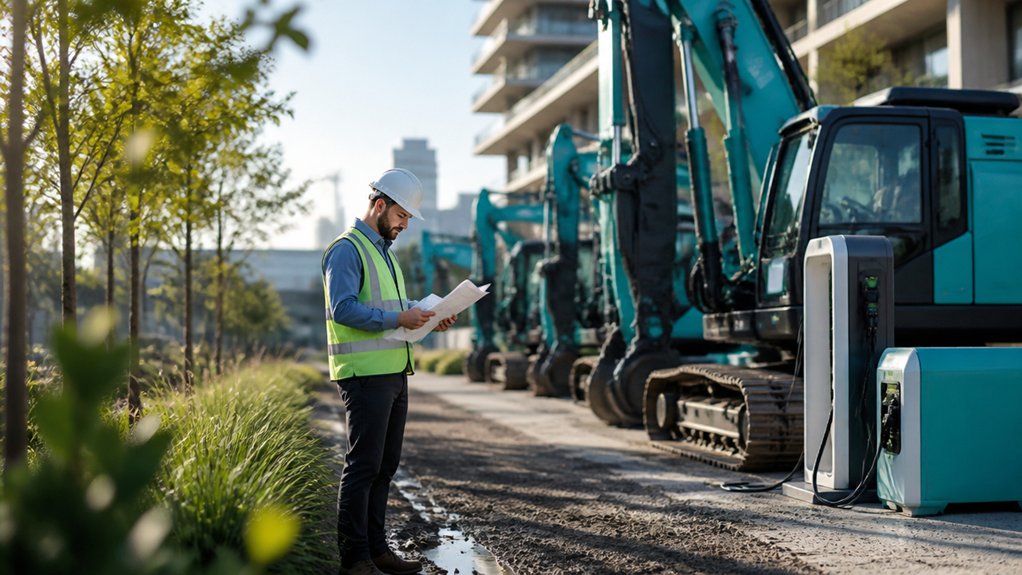
As British renovation projects face tighter emissions targets, you can choose lower-emission 360-degree excavators to reduce the impact of on-site work. Electric models offer a practical option for projects near homes, schools and businesses, where exhaust fumes and noise can disrupt occupants.
Their electric innovation can support emission reduction, especially when you charge machines using renewable electricity. Before hiring, check battery capacity, charging access and expected daily workload; a machine that can’t complete your shift may delay essential groundwork.
For sites without reliable charging, consider hybrid or low-emission fuel alternatives, and confirm they meet local air-quality requirements. Match machine size to access constraints and lifting needs, so you avoid overcapacity.
Ask suppliers about operating costs, maintenance and available attachments. With careful selection, you can cut site emissions while keeping renovation work productive and safe.
Smarter Site Operations
Choosing a lower-emission excavator is only part of the solution; efficient site operations also cut fuel use and exhaust. When you’re renovating a tight urban site, plan digging, loading and spoil removal to minimise idling and unnecessary machine movements.
Smart technology, including telematics and fuel monitoring, helps you spot waste, track performance and adjust working practices. Use site data to match the excavator’s size and attachments to each task, avoiding oversized equipment and repeated passes.
With automation integration, features such as machine control can guide operators to accurate depths and levels, reducing rework and wasted diesel. Keep tracks clear, schedule deliveries to prevent queues, and maintain engines, filters and hydraulic systems.
These practical steps help you complete upgrades efficiently, limit local emissions and control operating costs without compromising productivity or safety.
How Will Excavators Help Build Britain’s Future?
As Britain upgrades transport links, utilities and public spaces, 360-degree excavators will help crews tackle renovation and construction work with precision. You’ll see their value in Urban renewal projects, where operators must work around homes, shops and busy streets.
Compact machines can reach confined plots, remove old foundations and prepare sites while limiting disruption to neighbours.
Technological integration will make your planning more accurate. GPS guidance, machine-control systems and site data can help you dig to specified depths, avoid buried services and coordinate with other trades.
When you’re renewing roads or installing drainage, that accuracy can reduce rework and material waste.
Choose attachments suited to each task, and you can move from breaking concrete to grading ground without changing machines. With skilled operators and careful maintenance, excavators will help you deliver safer, more efficient upgrades across Britain.
Conclusion
From early digging machines to today’s agile 360-degree excavators, you can see how British sites have shaped every turn of their evolution. Compact frames, smart attachments and digital guidance help you renew streets, utilities and public spaces with greater precision, safety and less disruption. Cleaner power and simpler maintenance keep projects moving while reducing their footprint. As Britain builds for tomorrow, these machines are more than tools: they’re steady hands shaping a stronger, more sustainable foundation beneath your feet.