 MartinShields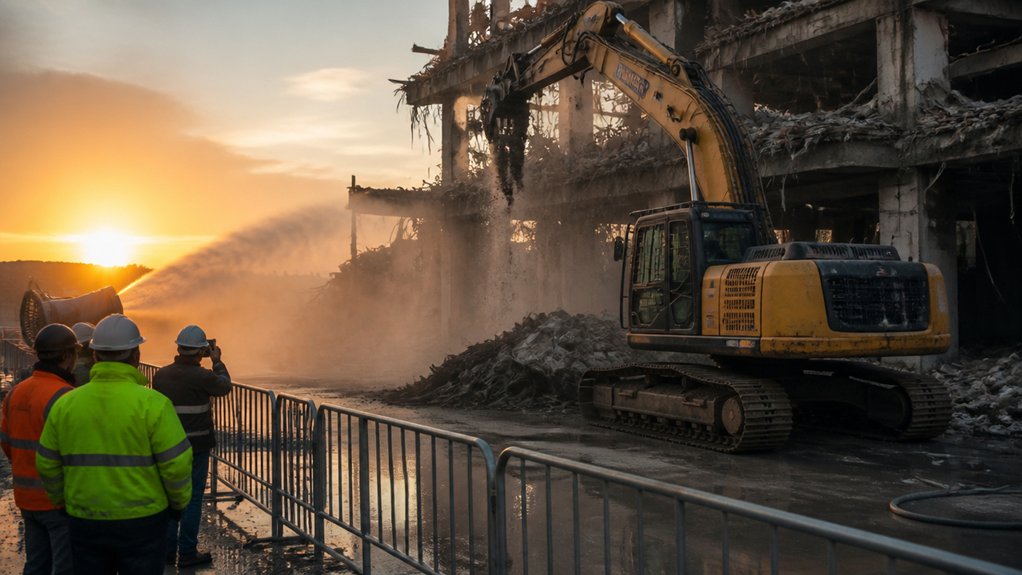
Demolition machinery can turn a controlled job into a serious incident when planning, communication, or equipment checks fall short. You need clear work zones, qualified operators, reliable signals, and strict shutdown procedures before machines start moving. Dust, noise, and debris also demand active control throughout the shift. The right protocols help you protect workers and keep work on schedule—but one overlooked hazard can undermine them all.
Key Takeaways
- Match machinery, attachments, reach, and capacity to the demolition sequence, ground conditions, and site access.
- Inspect equipment before each shift; report defects and tag unsafe machinery out of service until repaired.
- Assign trained, authorized operators and establish exclusion zones around travel paths, swing radii, and blind spots.
- Use trained spotters and clear, tested signals; stop machinery immediately if visibility or communication is lost.
- Control dust, noise, and debris with suppression, barriers, safe positioning, and appropriate protective equipment.
Plan Demolition Machinery Use Safely
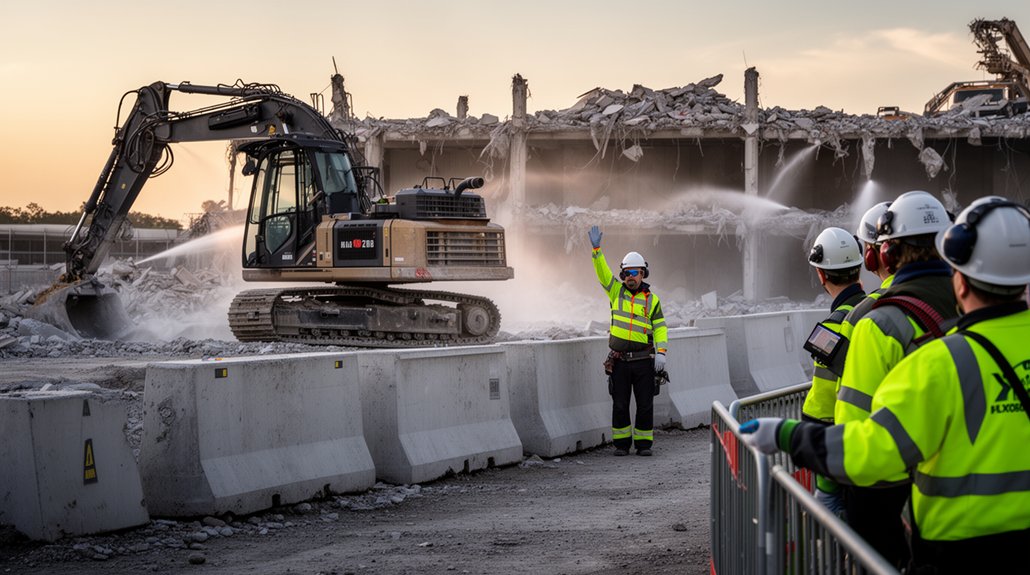
Before bringing machinery onto a demolition site, confirm the equipment suits the structure, work sequence, and ground conditions. Match each machine’s reach, capacity, and attachments to the task, and verify that access routes and working surfaces can support its weight.
Plan where equipment will operate, turn, and park; keep machines clear of unstable walls, overhead hazards, and marked exclusion zones. Coordinate demolition stages so operators don’t work beneath active debris or near unsupported sections.
Assign clear signals and communication methods, especially where noise or limited visibility could hide warnings.
Schedule equipment maintenance according to manufacturer requirements and site demands; reliable machinery reduces breakdowns that can create hazards.
Provide operator training for each machine and attachment, and confirm operators understand the demolition plan, site boundaries, emergency procedures, and stop-work authority before work begins.
Inspect Equipment Before Each Shift
Before each shift, check critical components for damage, wear, or loose connections.
Test safety systems to confirm they work before operating the equipment.
Document any defects and keep faulty equipment out of service until it’s repaired.
Check Critical Components
At the start of each shift, inspect demolition equipment to catch damage or defects before they cause a failure. Check critical components systematically, following the manufacturer’s instructions and your site’s inspection checklist. Look for cracks, bends, leaks, corrosion, loose fasteners, and unusual wear.
Examine hydraulic hoses and fittings for abrasion or fluid loss. Check tracks, tires, brakes, and steering parts for damage that could compromise movement or stability. Inspect buckets, blades, teeth, and attachment pins for secure connections and excessive wear.
Verify that guards and covers remain in place, and check fluid levels where required.
Record defects and report them to your supervisor promptly. Don’t operate equipment with a fault that could endanger you or others; tag it out until qualified personnel address the issue. Consistent checks support machinery maintenance and help prevent avoidable breakdowns.
Test Safety Systems
After checking critical components, test each safety system according to the manufacturer’s instructions. Confirm that alarms, warning lights, backup cameras, and proximity sensors work before you operate the machine.
Test brakes, steering, interlocks, and emergency stops in a clear area, following the required sequence.
Verify that guards and access controls engage properly, and make sure seat belts latch and retract.
Check that fire suppression equipment and communication devices remain accessible and functional.
Include these checks in your hazard assessment, considering site conditions, nearby workers, and the machine’s intended tasks.
If a system doesn’t respond as expected, don’t start or continue operation; secure the equipment and notify your supervisor.
Know the Emergency response procedures for the machine and site, and assure everyone nearby understands warning signals and safe stand-back zones before work begins.
Document Equipment Defects
Once you’ve tested the safety systems, record any equipment defects you find during the shift inspection. Note the machine, component, defect, time, and conditions, then add clear photos if they’ll help explain the issue. Accurate Equipment documentation gives your supervisor and maintenance team the facts they need to assess risk and arrange repairs.
Use your site’s defect reporting process immediately. Tell your supervisor about any fault that could affect safe operation, and tag or isolate the equipment according to site procedures. Don’t operate a machine with a defect that compromises braking, steering, guarding, hydraulics, or other critical functions. Record who you notified and any instructions you received.
Before each shift, review open reports and confirm repairs have been completed and verified by an authorized person. Keep records legible, factual, and accessible to the team.
Match Operators to Their Machines
Before demolition begins, match each machine to an operator trained and authorized to use it. Confirm credentials, site-specific orientation, and recent experience with the equipment’s controls and operating limits.
Operator training must cover startup, shutdown, emergency procedures, and the manufacturer’s instructions. Don’t assign a worker based on familiarity with similar machinery alone.
Check machinery compatibility with the task, attachments, ground conditions, and planned work sequence. Verify that the operator understands the machine’s capacity and limitations, including visibility restrictions and load ratings.
If equipment changes or conditions shift, reassess the assignment before work resumes.
Keep authorization records current and make responsibilities clear during the pre-task briefing. Replace an operator who’s fatigued, impaired, or unfamiliar with the assigned machine.
Never allow unqualified workers to operate equipment, even briefly, to save time.
Set Safe Zones Around Operating Machines
Set a controlled exclusion zone around every operating machine, using barriers or clear markings to keep workers and bystanders outside its swing radius, travel path, and blind spots.
Use perimeter fencing where practical, and post signs that clearly identify restricted areas.
Before work begins, brief your crew on zone boundaries, entry rules, and signals for stopping equipment if someone enters.
Keep designated walkways outside machine operating areas, and mark them so workers can reach workstations without crossing hazardous paths.
Check barriers and markings at the start of each shift and after site changes; repair gaps immediately.
Don’t rely on warning signs alone where physical barriers are needed.
Require operators to stop work when visibility or boundary control is compromised.
Reopen a zone only after the machine is secured and authorized personnel confirm it’s safe.
Coordinate Machines in Tight Spaces
In tight spaces, map each machine’s travel and swing path before work begins.
Assign a dedicated spotter to guide each operator and watch for hazards.
Agree on clear signals, and stop work if anyone loses sight or communication.
Map Equipment Movement Paths
When machines must work in tight spaces, map each travel path and coordinate movements to prevent collisions, struck-by incidents, and blocked escape routes. Before work begins, review the equipment layout and mark travel lanes, turning areas, loading points, and no-go hazard zones on a site plan.
Check clearances against walls, debris piles, overhead structures, and other machines. Set one-way routes where practical, and identify safe waiting areas so operators don’t improvise when paths become blocked.
Schedule machine movements to avoid overlapping routes, especially during backing, turning, or material transfer. Keep access to exits, emergency equipment, and pedestrian routes unobstructed.
Update the map whenever site conditions change, such as after debris removal or equipment relocation. Brief every operator on the approved paths, speed limits, and stop points before operations begin.
Assign Dedicated Spotters
Assign a dedicated spotter whenever machines maneuver in tight spaces or operators have limited visibility. Choose someone trained to recognize equipment blind spots, changing ground conditions, overhead obstructions, and nearby workers.
Before movement begins, confirm the spotter can see the machine and its travel area without entering the equipment’s path. Keep the operator and spotter focused on this single task; don’t assign either person competing duties.
Use reliable visual communication to maintain contact as the machine moves, and pause work immediately if the operator loses sight of the spotter.
Position the spotter where they’re protected from traffic, falling debris, and crush zones, while still able to assess hazards. Require hazard awareness throughout each maneuver, including when other crews or equipment approach.
Stop the machine whenever visibility or safe positioning can’t be maintained.
Set Clear Communication Signals
Before machines move in tight spaces, agree on clear hand signals or radio commands that every operator and spotter understands. Review each signal before work begins, and confirm everyone can see or hear it from their assigned position.
Prioritize hand signal clarity: use distinct gestures, keep commands consistent, and avoid signals that could be mistaken for routine movements. If visibility, noise, or radio reception makes communication unreliable, stop the operation and reposition personnel or equipment.
Establish emergency signal protocols, including one unmistakable stop command that anyone can use. When you receive it, halt movement immediately, secure the machine, and wait for instructions.
Test radios, set a dedicated channel, and use brief, confirmed messages. Don’t let operators move until they acknowledge directions and spotters confirm the travel path is clear.
Recheck signals whenever crews, conditions, or equipment change.
Keep Dust, Noise, and Debris Under Control
Control dust, noise, and flying debris before demolition begins to protect workers, nearby occupants, and the public.
Plan Dust suppression around the work area: use water sprays or misting systems at the point of impact, and keep materials damp without creating slippery surfaces or electrical hazards.
Establish debris containment with barriers, screens, and covered chutes; secure loose materials and keep exclusion zones clear.
Position equipment to direct dust and debris away from people, air intakes, and neighboring properties.
Monitor wind and weather, and pause work if conditions make controls ineffective.
Reduce noise by selecting suitable machinery, limiting simultaneous operations, and setting work hours that comply with local rules.
Provide hearing protection, enforce safe distances, and post clear warnings.
Inspect controls during each shift, and adjust them whenever demolition conditions change.
Fix Defects and Maintain Equipment
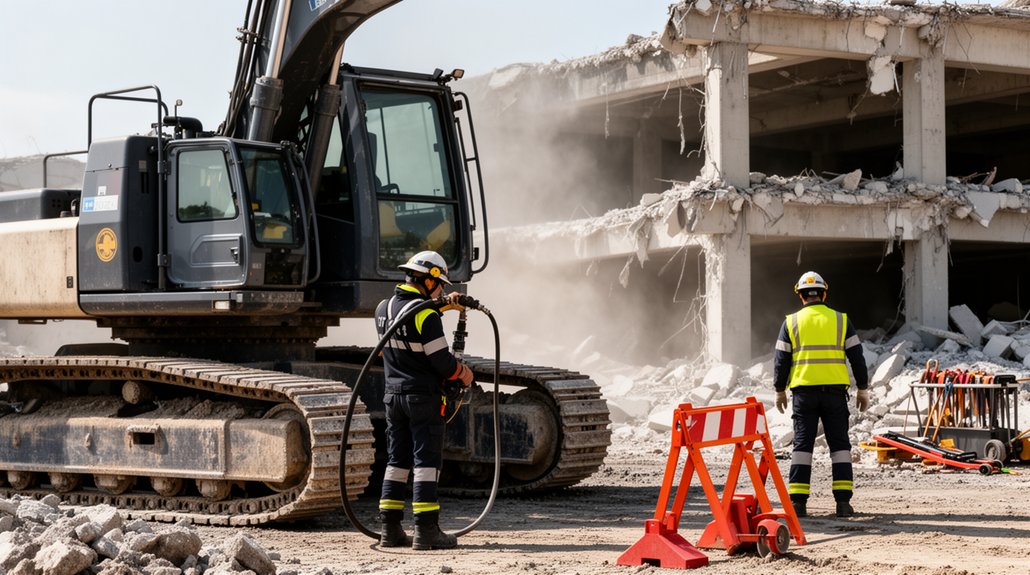
Inspect demolition equipment before each shift, and take any defective tool or machine out of service immediately. Check guards, hoses, hydraulic lines, tires, tracks, brakes, controls, and attachments for wear, leaks, cracks, or damage.
Don’t let workers use equipment until a qualified technician completes repairs and verifies safe operation.
Make defect reporting straightforward: require operators to document problems promptly and notify the supervisor. Tag faulty equipment clearly so nobody can mistake it for ready-to-use machinery.
Keep maintenance records current, including inspections, repairs, and replacement parts, and review them for recurring failures.
Follow manufacturer schedules for servicing and equipment calibration. Use trained personnel and approved parts, and test repaired equipment under controlled conditions before returning it to work.
If a defect affects stability, visibility, or control, reassess the task and provide a safe alternative while repairs are underway.
Shut Down and Secure Machines Safely
When a shift ends or work pauses, shut down each machine according to the manufacturer’s instructions. Lower attachments to the ground, engage parking brakes, and let moving parts stop completely. Turn off the engine, remove the key, and isolate electrical, hydraulic, or other stored energy before anyone approaches hazardous components.
Use machine locking procedures and personal locks where required; never rely on controls alone to prevent startup. Attach a clear tag identifying the person who applied the lock and the reason. Verify isolation by testing controls from a safe position, then return them to neutral.
For Emergency shutdowns, know each machine’s stop controls and keep access unobstructed. Report any shutdown failure immediately. Secure equipment against rolling, tipping, or unauthorized use, and keep keys under authorized control. Don’t restart until workers are clear and safeguards are restored.
Conclusion
Protect your crew by planning each move, inspecting every machine, and assigning qualified operators. Mark safe zones, coordinate through clear signals, and control dust, noise, and debris. Fix defects before work continues, and shut down and secure equipment at every break. Don’t rely on luck or assume someone else has checked. When you follow these protocols every shift, you reduce exposure, prevent costly incidents, and keep demolition work moving safely from the first pass to the final cleanup.