 MartinShields
Choosing the right quarrying equipment starts with the rock you’ll process, the aggregate sizes you need, and the output your project demands. If you match crushers, screens, and conveyors to those requirements, you can limit wear, avoid bottlenecks, and control operating costs. Site access, safety, and environmental rules matter just as much as capacity. Before you commit to a layout, consider how each choice affects the entire production line.
Key Takeaways
- Match crushers to the material’s hardness, abrasiveness, feed size, and required aggregate gradation.
- Size equipment for average and peak production needs, accounting for operating hours, downtime, and realistic feed conditions.
- Choose screens and conveyors to meet product specifications and handle expected volumes with minimal recirculation and wear.
- Compare purchase, rental, delivery, fuel, labor, maintenance, and transport costs before selecting equipment.
- Check site access, ground conditions, power, maintenance access, safety features, and noise or runoff requirements.
Match Quarry Equipment to Material and Output Needs
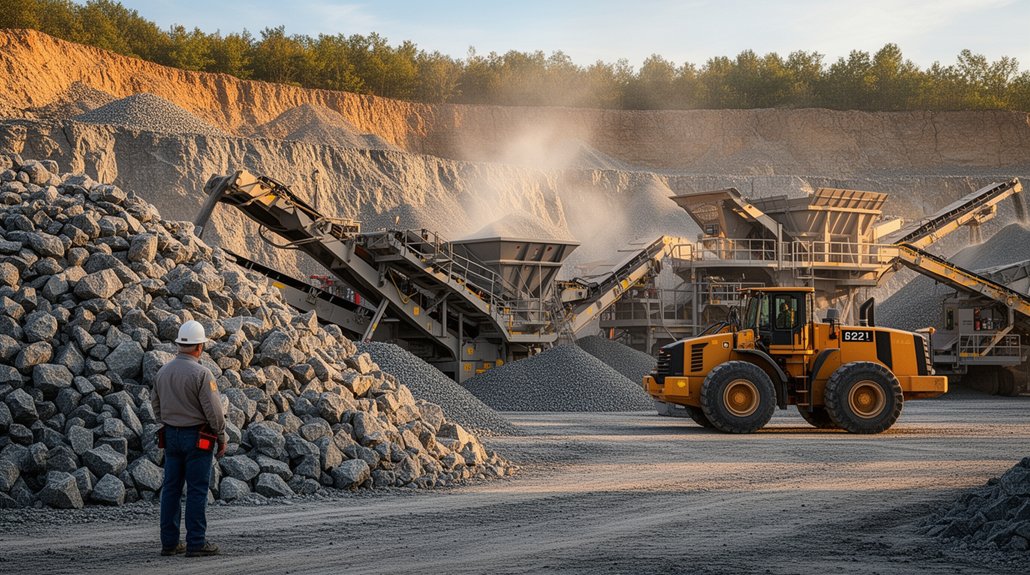
Start by identifying the material you’ll process, its hardness and abrasiveness, and the output size and volume your project requires. These details help you match quarry equipment to the demands of your renovation or aggregate job.
Hard rock can wear crushing surfaces quickly, while softer stone may need less aggressive processing. Choose components rated for your material’s conditions, and check how easily you can replace liners, screens, and wear parts. Material durability matters: robust parts can withstand repeated impact and abrasion, reducing interruptions during production.
Consider the feed size and the finished aggregate gradation you need, then select equipment that can produce the required sizes without unnecessary recirculation. Also assess access, power, and maintenance needs at your site.
A well-matched setup supports Equipment longevity and dependable work over time.
Choose Crushers for Your Target Capacity
Once you’ve matched equipment to your material and site conditions, size the crusher to meet your required production rate. Estimate your average tons per hour, then account for peak demand, planned operating hours, and downtime. Don’t choose a machine based only on its maximum rating; real output depends on feed consistency, material hardness, and operating conditions.
For a renovation project, compare crusher types against your site’s access, available power, and installation limits. A compact unit may simplify placement in a tight footprint, while a larger model can support sustained production if your foundation and utilities can handle it.
Check wear-part availability, service access, and crusher maintenance requirements before committing. Strong equipment durability matters when schedules are tight and replacement delays could stall work. Build capacity into your selection without paying for output you won’t use.
Size Screens and Conveyors for Product Specs
Size screens and conveyors around the finished product your renovation project requires, not just the crusher’s output. If you’re preparing base for a driveway, drainage stone for a foundation, or aggregate for a patio, match screen openings to the specified gradations. Review your mix design and separate oversize material before it reaches the stockpile.
Strong Screen efficiency helps you meet size tolerances while limiting recirculation and unnecessary handling.
Choose conveyor widths and belt speeds that move your expected volume without spilling material or creating bottlenecks between stages. Consider the aggregate’s abrasiveness and the transfer points where impact can wear belts.
Conveyor durability matters when you need consistent production through a renovation schedule. Set discharge heights and stockpile locations to keep products separated, accessible, and ready for delivery or placement.
Compare Equipment Costs, Safety, and Site Needs
Compare purchase, rental, and delivery costs against the volume of aggregate your renovation requires. A clear cost analysis should include fuel, operator time, maintenance, and transport—not just the equipment price.
Renting may suit a short driveway or foundation project, while buying can pay off across repeated jobs. Check whether delivery access, setup, and removal fit your schedule and budget.
Before choosing a crusher, screen, or conveyor, inspect the site’s ground conditions, working space, power supply, and haul routes. Confirm equipment can reach the work area without damaging finished surfaces or blocking neighbors.
Match capacity to your required material size and daily production, so you don’t overpay for unused output.
Protect your crew with guards, emergency stops, dust control, and clear operating procedures. Consider noise, runoff, and the environmental impact near homes.
A well-matched setup keeps renovation work safe, efficient, and on schedule.
Conclusion
Choose quarry equipment by matching material, target output, and product specs—not by chasing the biggest machine. The right crusher, screen, and conveyor keep production steady; poor sizing invites bottlenecks, excess costs, and avoidable wear. Before you buy, assess site access, safety, and environmental needs. A thoughtful layout can turn a challenging site into an efficient operation. When you balance capacity with practical constraints, you’ll produce reliable aggregate, protect your crew, and build a setup that pays off over time.