 MartinShields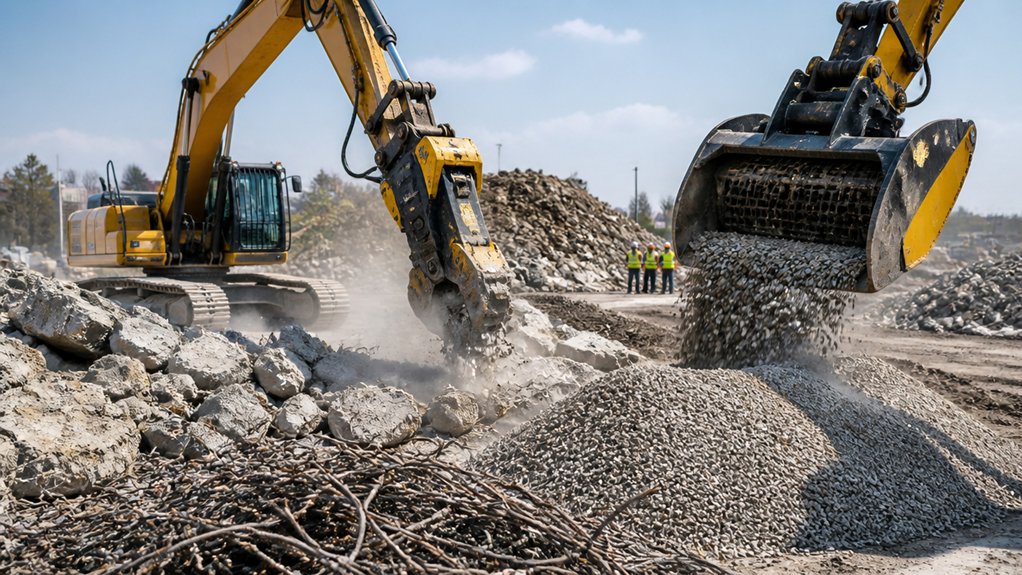
You break concrete, separate steel, and sort aggregate to keep a recycling job moving. The right attachment combination can cut handling time, reduce downtime, and produce cleaner material for reuse. Start by matching your tools to the concrete’s size, reinforcement, and final use; then check that each attachment fits your machine and works smoothly with the next. One mismatch can slow the entire process.
Key Takeaways
- Pair a hydraulic breaker with a crusher bucket to reduce oversized concrete into manageable, reusable aggregate.
- Combine a pulverizer with a shear to expose reinforcement, then cut rebar into manageable lengths.
- Use a grapple with a screening bucket to sort mixed debris and separate concrete, soil, and scrap.
- Add a magnet to crushing operations to remove ferrous metals and reduce contamination in recycled aggregate.
- Match attachments to excavator capacity, hydraulic specifications, site access, and material conditions; stage separate piles for each output.
Choose Concrete Recycling Attachments by Job
Choose concrete recycling attachments based on the material you need to process and the worksite’s constraints. Match each tool to the job’s volume, access, and sorting requirements.
For mixed demolition debris, choose a screening bucket to separate fines, soil, and reusable aggregate on site. If you need to move large slabs, select a grapple sized for your carrier and material; its grip should secure irregular pieces without blocking visibility.
For tight urban sites, favor compact attachments that preserve maneuverability and limit ground disturbance. Check carrier compatibility, hydraulic flow, operating weight, and available space before mobilization.
Consider Environmental impact when selecting tools that reduce hauling, dust, and unnecessary handling. Confirm regulatory compliance for noise, emissions, transport, and material separation.
Your choices should support safe, efficient processing from the first load onward.
Break Concrete With a Breaker and Pulverizer
When reinforced concrete resists initial separation, use a hydraulic breaker to fracture it, then switch to a pulverizer to crush pieces and expose reinforcing steel. Match the breaker’s tool and impact energy to the concrete’s thickness and strength. Work from supported sections, keep the carrier stable, and use controlled strikes rather than prolonged impacts that waste fuel or damage equipment.
For effective Breaking techniques, create manageable pieces before moving to the pulverizer. Check jaw capacity and operating pressure against your carrier’s specifications, then apply steady pressure to reduce chunks without overloading the attachment.
Pulverizer advantages include controlled crushing, reduced material size, and clearer visibility of embedded steel. Process concrete in batches and adjust your bite as reinforcement or aggregate changes the material’s resistance.
Keep bystanders clear, follow manufacturer guidance, and inspect attachment pins and hoses regularly. This sequence improves handling and prepares concrete for efficient downstream processing.
Separate Rebar With a Shear and Grapple
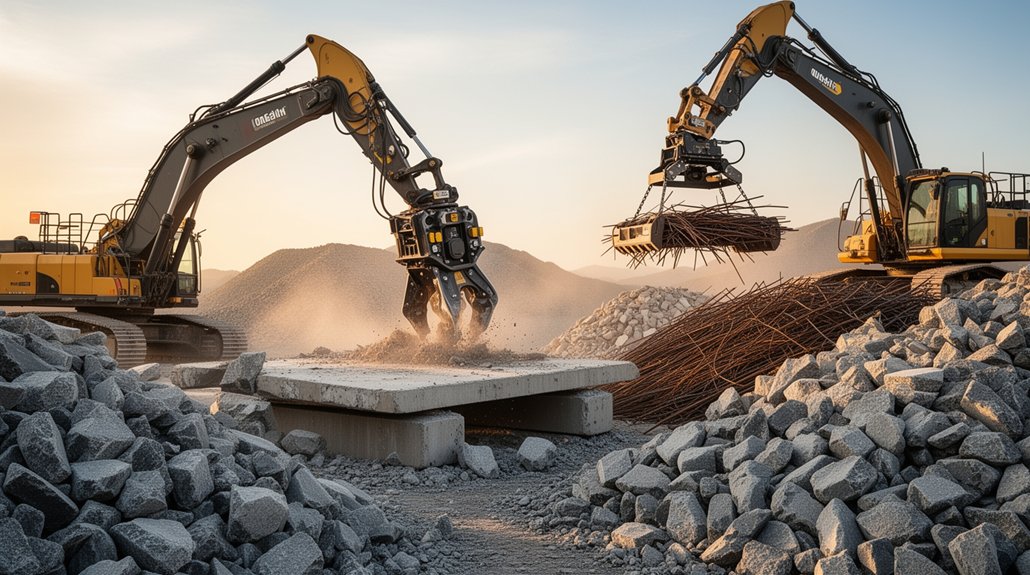
After the pulverizer exposes the reinforcing steel, use a hydraulic shear to cut rebar into manageable lengths and a grapple to lift and sort it. This sequence makes Rebar separation safer and more controlled.
Position your excavator on stable ground, keep workers outside the swing radius, and confirm the shear’s rated capacity before cutting. Align the blades squarely across each bar; avoid twisting the attachment or cutting bundled steel beyond its specifications.
Once severed, use the grapple to hold each piece securely, then place it in a designated steel container or stockpile.
A Shear grapple combination lets you switch between cutting and handling with fewer attachment changes, saving time on site.
Inspect hoses, pins, blades, and grapple teeth regularly, and clear tangled steel only after lowering attachments and shutting down the machine.
Crush Concrete and Sort the Debris
Crush concrete on-site with a pulverizer or crusher attachment to reduce hauling and prepare material for reuse.
Pair it with a grapple to separate debris by size and remove contaminants efficiently.
You’ll keep the work area organized and produce cleaner, more consistent recycled aggregate.
Crush Concrete On-Site
On-site concrete crushing lets you reduce hauling costs and turn demolition waste into reusable material. Choose a crusher attachment sized for your excavator and the concrete volume; check carrier weight, hydraulic flow, and jaw capacity before work begins.
Remove rebar or other oversized contaminants that could jam the jaws, and follow the attachment manufacturer’s operating limits.
Break material into consistent pieces with controlled bites rather than forcing the crusher through dense sections. Adjust the jaw setting to produce aggregate suited to your intended application.
Test the output before processing the full pile, since concrete durability depends on appropriate sizing and sound material.
Keep dust down with water suppression, establish an exclusion zone, and inspect wear parts regularly.
Confirm recycling regulations and local reuse specifications before crushing, and document the material’s source and intended use.
Sort Debris Efficiently
As you process concrete, separate clean aggregate from rebar, wood, plastic, and soil before each load moves to its next use. Pair your crusher with a magnet attachment to pull ferrous metal from the discharge stream.
Use a screening bucket or compact screener to size aggregate and remove fines; adjust the screen to match the next application’s specifications. For larger contaminants, pause the feed and remove them with a grapple or excavator bucket.
Keep stockpiles distinct, label each clearly, and place them on firm, drained ground to prevent cross-contamination. Effective debris sorting protects product quality and reduces disposal costs.
Plan material separation around your site layout, equipment reach, and material flow. Check each pile before loading, and redirect unsuitable material for further processing rather than mixing it into finished aggregate.
Screen Recycled Concrete for Clean Aggregate
Screen recycled concrete with a vibrating bucket or screening attachment to separate usable aggregate from soil, fines, and oversized debris. Choose a screen opening that matches your target gradation: smaller apertures retain finer material, while larger ones let more pass through.
Feed material steadily so the attachment can classify it consistently, and avoid overloading the screen, which can reduce separation quality. Innovative screening helps you recover more reusable stone and limit contamination before crushing or reuse.
For effective Aggregate cleaning, remove reinforcing steel and wood before screening, then inspect the output for stubborn contaminants. Adjust the process when moisture causes fines to cling to larger pieces; a controlled feed and repeat pass can improve the result.
Keep clean fractions separate by size to support reliable batching, placement, or resale, and reduce unnecessary handling across the worksite.
Check Machine Fit Before Choosing Attachments
Before choosing an attachment, confirm it’s compatible with your carrier’s weight, mounting system, and operating capacity.
Check that your machine’s hydraulic flow and pressure meet the attachment’s requirements.
A proper fit helps you work safely and avoid poor performance or equipment damage.
Verify Carrier Compatibility
Will the attachment fit your carrier and perform safely? Check the carrier’s make, model, operating weight, and approved attachment range against the manufacturer’s specifications. Don’t assume that a quick coupler or matching pin size guarantees compatibility; confirm the connection and locking system are approved for the tool.
Next, compare the attachment’s weight and dimensions with your carrier’s lifting capacity and stability limits. A tool that exceeds those limits can reduce control, strain components, and create unsafe working conditions. Review the load chart for the planned reach and working position, not just maximum capacity.
Consider Carrier durability when selecting tools for repeated impact and abrasive concrete. Choose attachment versatility only when your carrier can safely support each intended tool.
Ask your dealer or manufacturer to verify fit, coupler compatibility, and warranty requirements before purchase or rental. Keep the confirmation with your equipment records for future checks.
Check Hydraulic Requirements
Once the carrier and connection check out, confirm the hydraulics can run the attachment. Compare your machine’s Hydraulic flow with the attachment’s specified range, measured in gallons per minute or liters per minute. Too little flow can slow crushing and reduce productivity; too much can overheat components or damage seals.
Check pressure requirements against your carrier’s operating pressure, and verify that relief settings meet the attachment manufacturer’s limits. Don’t rely on model names alone: confirm the figures in both manuals, including any separate requirements for rotation or auxiliary circuits.
Inspect couplers, hose size, and return-line configuration, since restrictions can limit performance even when rated flow looks adequate. If your carrier falls outside the specified range, ask your dealer about approved adjustments or choose an attachment that fits.
Have a technician verify settings before operation.
Plan a Faster Concrete Recycling Workflow
A faster concrete recycling workflow starts with matching each attachment to the material and the next step. Inspect the concrete for rebar, embedded utilities, and contamination before choosing your tools.
Use a hydraulic breaker to reduce oversized sections, then switch to a crusher bucket to produce manageable, consistent pieces. If reinforcement remains, fit a pulverizer or shear to separate steel from concrete before screening.
Plan attachment changes around machine access and material flow. Keep the excavator positioned near the feed area, and stage separate piles for reusable aggregate, scrap metal, and waste. Check couplers, hoses, and cutting edges during each change to prevent avoidable downtime.
Track output size and adjust the sequence when material resists processing. This approach supports Concrete preservation, limits unnecessary handling, and reduces environmental impact by improving recovery and cutting transport needs.
Conclusion
Choose attachments around the concrete you’re processing, then confirm each tool fits your carrier’s hydraulic flow, weight, and coupler. A breaker, pulverizer, shear, grapple, crusher, magnet, and screening bucket can turn demolition debris into cleaner, reusable aggregate—but only when you sequence them well. Start with controlled breaking, remove rebar, crush, then screen and inspect the output. One overlooked fit or sorting step can stall the whole job. Check it before the first pass, and you’ll know what your material can become.