 MartinShields
Hiring heavy plant for a major project takes more than finding a machine that can do the job. You need to match equipment to the work, site conditions, schedule, and budget while keeping safety and downtime in view. Start by defining what the project requires, then weigh hiring against buying and compare suppliers carefully. A few decisions made early can prevent costly delays—but only if you plan the details that often get overlooked.
Key Takeaways
- Define each task’s capacity, reach, duration, access, ground conditions, hazards, and operating restrictions before requesting quotes.
- Hire for short-term or uncertain demand; compare ownership, leasing, and hiring costs for sustained equipment needs.
- Compare itemized supplier quotes, checking machine condition, maintenance history, delivery charges, breakdown support, insurance, and replacement terms.
- Book early, confirm availability and hire terms, and coordinate delivery, site access, off-hire notice, and collection with the project schedule.
- Use qualified operators, brief crews on site hazards and emergency procedures, inspect equipment on arrival, and report faults promptly.
Define the Scope of Your Heavy Plant Hire

Before you hire heavy plant, define exactly what the job requires: the work you need done, the site conditions, the load and reach involved, and how long you’ll need the equipment. Note access limits, ground conditions, overhead hazards, and any restrictions on noise or operating hours. These details help you specify the right machine capacity and attachments, rather than relying on guesswork.
Confirm whether the plant must work continuously, travel across rough terrain, or handle repeated heavy loads. Check equipment durability against those demands, including maintenance history and service support, so a breakdown doesn’t disrupt your schedule.
Ask your site supervisor to verify the requirements and document them before requesting quotes. When you compare options, assess supplier reputation, availability, delivery arrangements, and response times.
Clear specifications reduce mismatches, delays, and unexpected costs.
Decide Whether to Hire or Buy Equipment
Once you’ve defined the job, compare the cost and flexibility of hiring with the long-term value of buying. Hiring usually suits short projects, uncertain workloads, or equipment you’ll use only occasionally.
You avoid a large upfront payment and ongoing costs for storage, servicing, and depreciation, while keeping your capital available for other needs.
Buying can make sense when demand stays consistent and ownership costs less over the equipment’s working life. Include maintenance, insurance, transport, downtime, and resale value in your calculation—not just the purchase price.
Equipment financing can spread payments, but interest and fees affect the total cost. Compare leasing options too; terms may offer predictable payments without tying up as much capital.
Review your project pipeline and cash flow before deciding. Choose the arrangement that protects your margins and gives you reliable access without overcommitting.
Match Heavy Plant to Each Project Task
Before hiring, assess each task’s load, reach, ground conditions and access constraints.
Then select plant that meets those demands without paying for capacity you won’t use.
Check that the machine can work safely and efficiently on your site.
Assess Task Requirements
Match each machine to the work it needs to do, not just the project as a whole. Break the programme into specific tasks, then record the load, reach, working height, ground conditions and access limits each one involves.
Check how long the plant must operate and whether it needs to work continuously or move between locations. These details help you identify practical demands before you arrange a hire.
Consider Equipment safety at every stage. Confirm operators can work within site rules, maintain safe clearances and handle the task without overloading the machine.
Assess environmental impact too: note noise limits, emissions restrictions, sensitive ground and nearby residents. Include delivery routes, setup space and changing site conditions in your assessment.
If requirements are unclear, ask the site team to verify them before you proceed. This reduces delays and avoids preventable risks.
Select Suitable Plant
With the task requirements defined, choose plant that can handle each job safely and efficiently. Match machine capacity, reach, and attachments to the work, ground conditions, access limits, and programme.
An excavator suited to bulk earthmoving may be too large for a confined utility trench; a compact model with the right bucket can give you better control.
Check load charts and site constraints before hiring cranes, telehandlers, or lifting equipment, and allow for safe working distances and turning space.
Confirm the hire company’s Equipment maintenance records, inspection status, and breakdown support.
Ask whether operator training or familiarisation is needed for specialist controls and attachments, and verify licences before work starts.
Consider transport, fuel use, and availability across the project.
If conditions or tasks change, reassess the selection rather than forcing unsuitable plant to continue.
Compare Heavy Plant Hire Suppliers
When you compare heavy plant hire suppliers, look beyond the headline rate. Check whether each fleet includes Modern equipment suited to your ground conditions, programme and required output. Ask about machine age, maintenance records, inspection routines and replacement plans if a unit fails.
A supplier’s supplier reputation matters, but verify it: speak with contractors who’ve hired similar plant and ask how the company handled breakdowns, delivery changes and site access.
Compare the support behind the machines, too. Confirm who’ll coordinate mobilisation, provide operators if needed, and respond to technical issues during shifts. Check that servicing arrangements fit your working hours and that the supplier can meet your project’s delivery sequence.
Review hire terms, insurance responsibilities and damage procedures before signing. Choose a partner whose equipment, communication and operational support match your site’s demands.
Budget for Heavy Plant Hire Costs
Compare hire rates across suppliers, checking what each quote includes.
Add delivery and collection costs to your budget, and set aside a contingency for unexpected expenses.
Compare Hire Rates
Before you book, compare hire rates for the full job—not just the daily machine price. Request itemised quotes from several suppliers for the same machine specification and hire period. Check whether each rate covers routine servicing, wear parts, and breakdown support, and confirm how suppliers charge for overtime, weekends, or extensions. A lower headline rate may cost more if the terms leave you exposed to repair bills or lost working time.
Review Rental insurance requirements, excesses, and exclusions before comparing totals. Ask whether fuel is included, then assess fuel efficiency against your expected hours and workload; a more efficient machine can reduce operating costs over a long shift.
Match the hire period to your programme, but allow a realistic contingency for delays. Compare like with like, and choose the rate that gives you reliable coverage and predictable costs.
Account for Delivery Costs
Add delivery and collection charges to the hire rate before setting your budget. Heavy plant transport can materially change the cost of a hire, particularly when you’re moving large or specialist equipment across long distances. Ask your supplier for a clear breakdown of transportation costs, including any charges for loading, unloading, permits, escorts or restricted-access routes.
Confirm whether the quote covers both delivery and collection, and check how the supplier calculates waiting time if your site isn’t ready to receive the machine.
Plan delivery logistics around site access, working hours and the equipment’s arrival point. Make sure suitable ground, unloading space and lifting arrangements are available before the vehicle arrives. Coordinate with your site manager and supplier to avoid delays that could incur extra charges.
Compare transport terms alongside hire rates, not after you’ve committed, so your budget reflects the full cost of getting plant on site and removing it.
Plan for Unexpected Expenses
Even with delivery costs confirmed, set aside a contingency for unexpected expenses during the hire. Your budget should cover more than the quoted daily rate: allow for extra operating hours, fuel, cleaning, damage, and extensions if the programme slips. Check the hire agreement for minimum charges, overtime rates, and fees for late returns before you commit.
Good Contingency planning starts with realistic risks. Ask your supplier which costs commonly catch contractors out, then reserve funds against those specific exposures. Track usage and invoices throughout the job so you can spot Cost escalation early, not after the budget is exhausted.
If conditions change, tell the supplier promptly and agree any revised terms in writing. Keep your contingency separate from the core plant budget; release it only when an unforeseen cost is justified. This discipline protects cash flow and helps you make sound decisions under pressure.
Book Heavy Plant Before You Need It
When a project depends on specialist machinery, book it as soon as your schedule and plant requirements are clear. Popular models can be reserved weeks ahead, especially during busy construction periods. Early booking gives you a better chance of securing the right capacity and delivery window, rather than settling for an unsuitable substitute.
Confirm the hire period against your programme, allowing for likely delays without tying up equipment longer than necessary. Check availability with the supplier and ask how they’ll handle schedule changes or breakdowns.
Review rental agreements carefully, including cancellation terms, extensions, transport charges, and replacement arrangements. Compare options on more than price: Equipment durability matters when machinery must perform reliably across demanding shifts.
Keep written confirmation of the selected machine, rate, and dates, then update the supplier promptly if your timeline changes.
Prepare Site Access, Operators, and Safety Checks
Once the hire is booked, make sure the machine can reach and work safely on site. Check Site access early: confirm gate widths, overhead clearance, ground conditions, turning space, and any weight limits on roads or bridges.
Clear the route and work area before delivery, and tell the supplier about restricted entry points or unusual hazards.
Arrange a competent operator with the right tickets and experience for the machine and task. If your team will operate it, verify their authorisation before work starts; otherwise, confirm who’ll provide the operator.
Brief everyone on site safety protocols, exclusion zones, communication signals, and emergency procedures.
Inspect the machine on arrival, including guards, controls, tyres or tracks, and visible damage. Record concerns, resolve them before use, and make sure workers know how to stop the machine safely.
Manage Hire Dates, Maintenance, and Returns
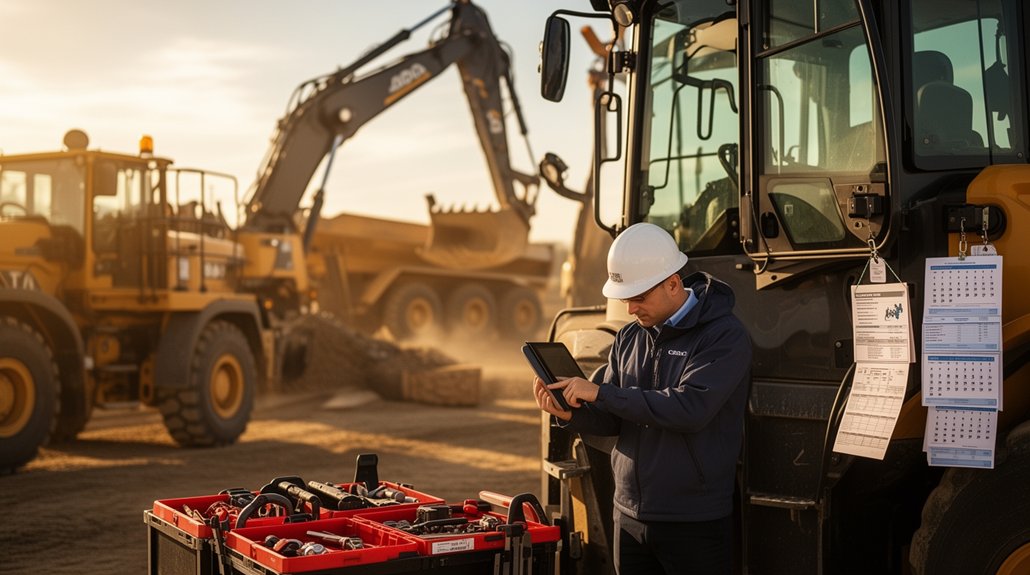
Track the hire period against your programme so the machine stays available when you need it and doesn’t incur avoidable extension charges. Confirm delivery, collection, and any off-hire notice periods with your supplier before work starts. Good scheduling logistics also means allowing time for transport, site access, and possible delays between tasks.
Use Equipment tracking to record each machine’s location, operating hours, condition, and assigned operator. Check the hire agreement for service intervals, breakdown procedures, and who pays for routine maintenance. Complete daily inspections, report faults promptly, and keep service records; don’t operate plant that’s unsafe or overdue for attention.
Before collection, clean the machine, remove attachments, and document its condition with dated photos. Agree a return time, secure the collection route, and get written confirmation that the hire has ended. Review the final invoice against your records.
Conclusion
Plan heavy plant hire as carefully as you map the project itself. Define the work, choose equipment that fits each task, compare suppliers, and weigh hire against ownership before costs gather like storm clouds. Book early, prepare access and operators, and make safety checks routine. Then track hire dates, maintenance, and returns closely. When every moving part is coordinated, your machinery becomes a well-oiled engine—keeping crews productive, budgets controlled, and major projects moving safely toward the finish line.